Understanding the Japan Rail Pass in 2026: Your Gateway to Japan
The Japan Rail Pass, often simply referred to as the JR Pass, is a special ticket designed exclusively for foreign tourists visiting Japan under the “Temporary Visitor” status. It offers unlimited travel on most services operated by the Japan Railways (JR) Group, which includes the iconic Shinkansen (bullet trains), limited express trains, local trains, JR buses, and even some JR ferry services. For travelers planning to explore multiple regions of Japan, this pass represents incredible value and convenience, transforming what could be a complex and expensive travel plan into a seamless and cost-effective adventure.
In 2026, the fundamental benefits of the JR Pass remain steadfast: the freedom to hop on and off trains across the country, the ease of making seat reservations, and the significant savings compared to purchasing individual tickets for long-distance travel. However, it’s important for prospective travelers to be aware of recent adjustments that have shaped its usage. A notable change introduced in late 2023 was a price revision across all types of national JR Passes. While this adjustment made the pass a larger initial investment, it also brought new flexibility: JR Pass holders can now purchase supplementary tickets to ride the faster Nozomi and Mizuho Shinkansen services, which were previously entirely excluded. This nuance means that while the core exclusion still exists, there’s an option for those moments when speed is paramount. Understanding these details is vital for effectively planning your 2026 itinerary and maximizing the utility of your pass.
Beyond the practicalities, the JR Pass symbolizes the spirit of exploration. It encourages travelers to venture beyond the well-trodden paths, connecting them not just to major cities but also to regional gems, scenic landscapes, and cultural treasures that might otherwise be overlooked. Whether you dream of speeding through the countryside on a bullet train or taking a leisurely local line to a charming coastal town, the JR Pass is your reliable companion for discovering the true essence of Japan.
Types of Japan Rail Passes and Eligibility for 2026
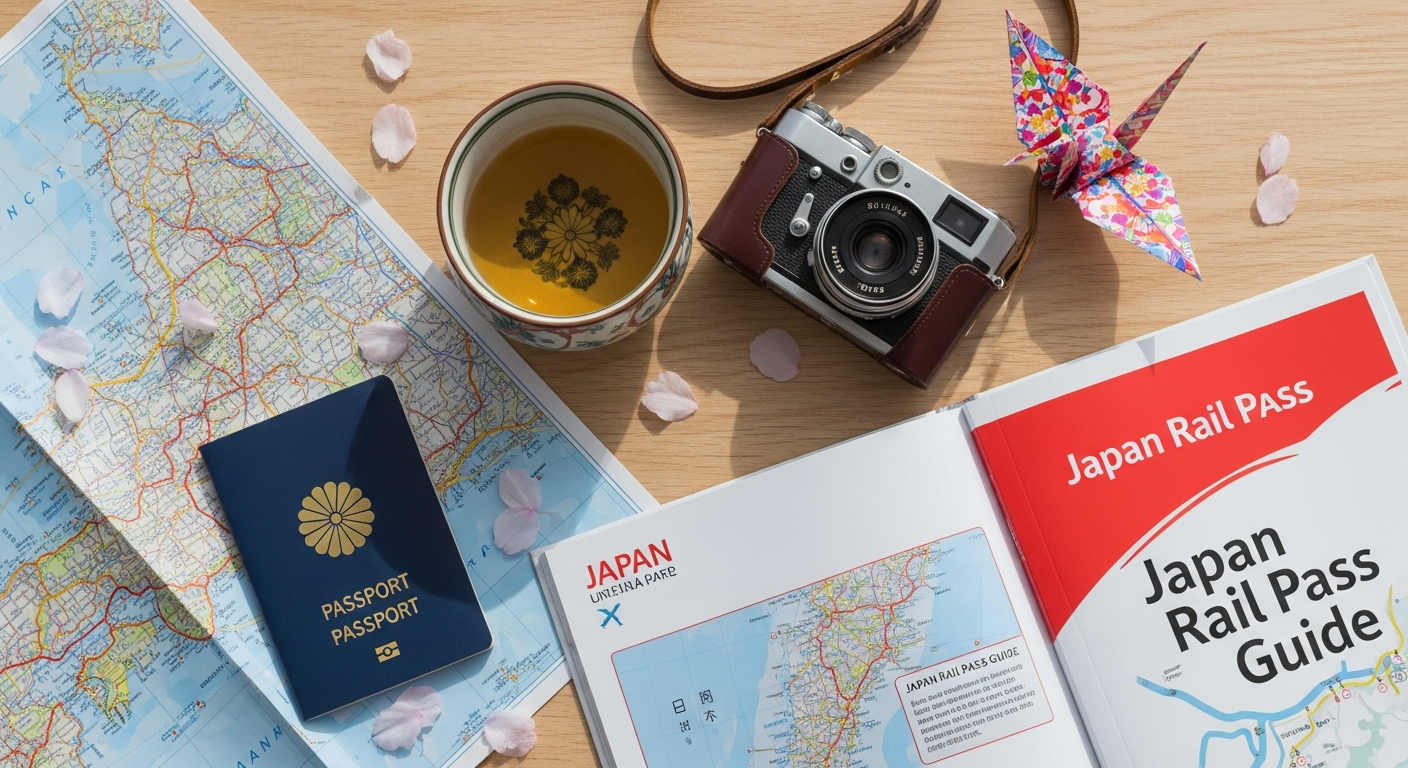
Choosing the right Japan Rail Pass for your 2026 trip involves understanding the various options available and ensuring you meet the eligibility criteria. The main distinction lies between the national Japan Rail Pass and several regional passes, each catering to different travel styles and itineraries.
The National Japan Rail Pass: Ordinary vs. Green Car
The National Japan Rail Pass is the most comprehensive option, covering JR lines across the entire country. It comes in two classes and three durations:
- Ordinary Car Pass: This is the standard pass, granting access to regular seating on JR trains. Ordinary cars are comfortable, clean, and provide an excellent travel experience. For most travelers, this class offers more than sufficient comfort and is the most popular choice.
- Green Car Pass: The Green Car is Japan’s equivalent of first class. It offers more spacious seating, greater recline, often footrests, and occasionally amenities like complimentary drinks or snacks on certain services. Green Cars are typically less crowded, providing a quieter and more luxurious travel environment. If you prioritize maximum comfort, especially on long journeys, or are traveling during peak seasons when ordinary cars can be busy, the Green Car Pass might be worth the premium.
Both Ordinary and Green Car Passes are available for 7, 14, or 21 consecutive days. The duration you choose should align with the length of your intensive travel period within Japan. It’s important to remember that once activated, the pass is valid for the chosen number of consecutive days, regardless of whether you travel every day.
Eligibility for the National Japan Rail Pass
To be eligible for the National Japan Rail Pass in 2026, you must meet specific criteria established by the JR Group:
- You must be a foreign tourist visiting Japan from abroad for sightseeing under the entry status of “Temporary Visitor.” This status is typically granted for short stays of up to 90 days.
- When you enter Japan, your passport will be stamped with a “Temporary Visitor” seal. This stamp is crucial for exchanging your Exchange Order (or activating your pass if purchased directly in Japan) for the actual JR Pass. Without this stamp, you will not be able to obtain the pass.
- Japanese nationals residing outside Japan are generally not eligible unless they meet specific conditions, such as holding permanent residency in another country for ten consecutive years or more, or being married to a non-Japanese national. These conditions require specific documentation, so it’s essential to verify eligibility if you fall into this category.
Regional Passes: A Viable Alternative
While this guide primarily focuses on the National Japan Rail Pass, it’s worth noting that numerous regional passes are available. These passes offer unlimited travel within specific regions (e.g., Hokkaido, Kansai, Kyushu) and are often more economical if your itinerary is concentrated in one area. Examples include the JR West Kansai Area Pass, the JR East Tohoku Area Pass, or the Shikoku Pass. For instance, if your trip focuses solely on the Setouchi region, exploring destinations like Hiroshima, Onomichi, and perhaps a quick hop to Shikoku, a regional pass might offer better value than a national pass. Always compare the cost of individual tickets for your planned itinerary against the price of both national and relevant regional passes to determine the most cost-effective option for your 2026 journey.
How to Purchase and Activate Your JR Pass for 2026
Purchasing Options for Your 2026 JR Pass
-
Online via the Official JR Pass Website (Recommended):
This is often the most convenient and sometimes the most economical method. You can purchase your JR Pass directly from the official Japan Rail Pass sales website. When purchasing online, you will receive an e-ticket (a QR code) via email. This method typically offers the best flexibility and allows you to make your first seat reservations online before even arriving in Japan, which is a significant advantage, especially during peak travel seasons.
-
Through Authorized Overseas Travel Agencies:
Many travel agencies outside Japan are authorized to sell the Japan Rail Pass. When you purchase through an agency, you will typically receive an “Exchange Order” (MCO – Miscellaneous Charges Order). This is a voucher that you will need to exchange for the actual JR Pass once you arrive in Japan. This option can be helpful if you prefer to deal with a local agent or want to package your JR Pass with other travel arrangements.
-
Directly in Japan at Major Stations or Airports:
While possible, purchasing the JR Pass directly in Japan at major JR stations (like Tokyo, Kyoto, Shin-Osaka) or international airports (Narita, Haneda, Kansai) is generally the most expensive option. The price difference can be significant, so it’s usually recommended to purchase it beforehand. If you choose this method, you will still need to present your passport with the “Temporary Visitor” stamp.
Regardless of your purchase method, always ensure your name on the pass matches your passport exactly.
Activating Your JR Pass in Japan
Once you arrive in Japan, the next step is to activate your pass. This involves exchanging your Exchange Order or e-ticket for the physical Japan Rail Pass. You can do this at dedicated JR Pass Exchange Offices located at major international airports and prominent JR stations across the country.
What you need for activation:
- Your Passport: Crucially, it must contain the “Temporary Visitor” stamp from immigration. Without this stamp, you cannot activate your pass. Do not use automated gates upon entry if you need this stamp.
- Your Exchange Order (MCO) or E-ticket (QR code): Depending on how you purchased your pass.
- Your Preferred Start Date: You will need to specify the date you wish your pass to become active. This date can be up to one month from the day you exchange your voucher. Plan this carefully to align with your most intensive travel days.
The staff at the exchange office will process your request, issue you the physical JR Pass, and provide you with a green ticket holder. This pass is your ticket to unlimited travel, so keep it safe! This is also an opportune time to make your initial seat reservations for any immediate long-distance travel plans you have.
Maximizing Your JR Pass Value: Routes, Reservations, and Smart Travel Tips
The Japan Rail Pass is an investment, and like any investment, you want to ensure you get the best return. Maximizing its value for your 2026 trip involves strategic planning of your routes, understanding the reservation system, and employing smart travel tactics.
Is the JR Pass Worth It for Your 2026 Itinerary?
The first step is to determine if the JR Pass is truly economical for your planned itinerary. Generally, a 7-day National JR Pass pays for itself with a round trip between Tokyo and Kyoto (or Osaka), plus a few day trips or additional long-distance journeys. For example, a common itinerary like Tokyo – Kyoto – Osaka – Hiroshima – Tokyo will almost certainly make a 14-day pass worthwhile. If your travel is limited to one or two cities with minimal intercity travel, or if your trip is very short, individual tickets or regional passes might be more cost-effective. Use online Japan Rail Pass calculators (e.g., Japan-Guide.com’s calculator) to compare the cost of individual tickets for your planned routes against the pass price.
Making Seat Reservations: Your Key to Stress-Free Travel
While many JR trains, especially local ones, have non-reserved cars, making seat reservations is highly recommended, especially for Shinkansen and limited express trains. Reservations are free with your JR Pass (excluding the supplementary fee for Nozomi/Mizuho services) and guarantee you a seat, which is invaluable during peak hours, holidays (like Golden Week or Obon), or when traveling with specific departure times in mind.
- How to Reserve:
- At JR Ticket Offices (Midori-no-Madoguchi): Found in most major JR stations, these green counters are where friendly staff can assist you. Present your JR Pass and tell them your destination, desired train time, and whether you prefer an aisle or window seat.
- At Ticket Vending Machines: Many modern vending machines in major stations now support JR Pass reservations. Look for machines with English language options and a JR Pass logo. You’ll typically scan your pass or enter its number.
- JR Pass Online Reservation Service: If you purchased your pass online via the official JR Pass website, you can use their online reservation portal to book seats up to a month in advance, even before arriving in Japan. This is a significant convenience.
- Green Car Reservations: If you have a Green Car Pass, ensure you request Green Car seats when making reservations.
Navigating with Precision: Essential Apps and Tools
Japan’s rail network is incredibly efficient, but navigating it requires good tools:
- Hyperdia and Jorudan: These are the gold standards for train route planning in Japan. They allow you to input your start and end stations, desired date/time, and crucially, filter out trains not covered by the JR Pass (e.g., Nozomi and Mizuho Shinkansen, unless you plan to pay the supplement). They provide detailed information on platforms, transfer times, and fares.
- Google Maps: Excellent for overall public transport planning, including local JR lines, private railways, and subways (which are generally not covered by the JR Pass). It’s also great for walking directions to/from stations.
Luggage Considerations on Shinkansen
Japan’s Shinkansen have specific rules regarding luggage. For oversized luggage (total dimensions exceeding 160 cm but not more than 250 cm), you are required to make a reservation for a dedicated oversized luggage space, usually behind the last row of seats. Failing to do so can incur a surcharge. For regular luggage, overhead racks and space in front of your seat are available. Consider using Japan’s excellent luggage delivery services (Takuhaibin) to send larger bags ahead to your next hotel, allowing you to travel light between cities.
Exploring Beyond the Main Routes: Integrating Regional Gems with Your JR Pass
While the Japan Rail Pass excels at connecting you between major cities like Tokyo, Kyoto, and Osaka, its true magic often lies in its ability to unlock access to Japan’s diverse and enchanting regional destinations. For those who yearn to delve deeper into Japan’s cultural tapestry and discover hidden gems, the JR Pass is an indispensable tool. It allows you to seamlessly integrate visits to lesser-known, yet incredibly rewarding, areas into your itinerary.
One such region, often celebrated for its scenic beauty and unique cultural offerings, is the Setouchi Inland Sea area. Here, the JR Pass becomes your ticket to explore places like Hiroshima, a city of profound historical significance, and the charming coastal towns that dot the Seto Inland Sea, including our very own Onomichi and the captivating island of Innoshima.
Discovering Onomichi with Your JR Pass
From major hubs like Shin-Osaka or Hiroshima, you can easily reach Onomichi using your JR Pass. A Shinkansen ride to Shin-Onomichi Station (a short taxi or local bus ride from the city center) or, more conveniently, taking the Shinkansen to Fukuyama Station and then transferring to a local JR Sanyo Main Line train directly to Onomichi Station will get you there. The journey itself offers glimpses of the beautiful Japanese countryside.
Once in Onomichi, a town renowned for its sloping temple-filled hills, picturesque waterfront, and a vibrant arts scene, you’ll find an abundance of experiences. For those wondering What To Do In Onomichi Japan, the answer is a delightful blend of history, culture, and scenic beauty:
- The Temple Walk: Follow the winding paths up the hillside, connecting dozens of ancient temples, each with its own unique charm and story.
- Senkoji Park and Ropeway: Take the scenic ropeway up to Senkoji Park for breathtaking panoramic views of the Seto Inland Sea, Onomichi’s rooftops, and the surrounding islands. It’s especially stunning at sunset.
- Literature Path: Explore the path adorned with stones inscribed with poems and literary excerpts from famous Japanese authors who found inspiration in Onomichi.
- Shimanami Kaido Cycling: Onomichi is the official starting point for the world-famous Shimanami Kaido, a 70km cycling route across six islands connecting Honshu to Shikoku. Even if you don’t tackle the whole route, cycling a portion of it is an unforgettable experience.
- Onomichi U2: A stylish complex located in a renovated warehouse on the waterfront, offering a hotel, cafe, restaurant, and specialty shops. It’s a hub for cyclists and a great place to relax.
For photographers, Onomichi is a dream. The town offers myriad Onomichi Photography Spots that capture its unique character: the narrow, cat-filled alleys of the hillside, the vibrant red pagoda of Tenneiji Temple, the iconic view from Senkoji Park, the bustling waterfront, and the intricate details of traditional Japanese architecture juxtaposed with modern life. Every corner offers a new perspective, making it a paradise for capturing memorable images.
Venturing to Innoshima: A Pirate Island
Just a short journey from Onomichi, either by local ferry or as one of the first islands you encounter on the Shimanami Kaido, lies Innoshima. For a comprehensive Innoshima Japan Travel Guide, you’d discover an island steeped in history, particularly its strong ties to the Murakami pirate clan who controlled the Seto Inland Sea during the medieval period. Key attractions include:
- Innoshima Suigun Castle: A reconstruction of the Murakami clan’s stronghold, offering insights into their seafaring legacy and commanding views.
- Innoshima Flower Center: A beautiful park showcasing a variety of seasonal flowers, perfect for a leisurely stroll.
- Citrus Orchards: Innoshima is famous for its citrus fruits. Depending on the season, you might see orchards laden with lemons, mandarins, and other delights.
The ability of the JR Pass to connect you effortlessly to such distinct destinations – from the historical gravitas of Hiroshima to the charming slopes of Onomichi and the pirate lore of Innoshima – truly highlights its value. It transforms a trip from merely traveling between major cities into an immersive exploration of Japan’s diverse landscapes and rich cultural tapestry, allowing you to create an itinerary that is both efficient and deeply personal.
Alternatives to the JR Pass and When to Consider Them
While the Japan Rail Pass is an exceptional tool for many travelers, it isn’t always the most economical or practical choice for every itinerary in 2026. Understanding the alternatives and when to consider them is crucial for smart travel planning.
Individual Tickets: For Shorter or Focused Trips
If your trip to Japan is short (e.g., 5-7 days) and primarily focused on one or two cities with minimal long-distance travel, purchasing individual train tickets might be more cost-effective. For instance, if you’re spending most of your time in Tokyo with just a single day trip to Hakone or Nikko, the cost of these individual tickets, even including a round trip on a Shinkansen if necessary, might not exceed the price of a 7-day JR Pass. You can easily purchase individual tickets at station vending machines or ticket counters.
Regional Passes: For Deep Dives into Specific Areas
Japan offers a plethora of regional passes tailored for exploring specific areas. These passes are often significantly cheaper than the national JR Pass and can provide excellent value if your itinerary is concentrated in one region. Examples include:
- JR West Kansai Area Pass: Perfect for exploring Osaka, Kyoto, Nara, and Kobe.
- JR East Tohoku Area Pass: Ideal for discovering the scenic northern Honshu.
- JR Kyushu Rail Pass: For exploring the diverse island of Kyushu.
- Setouchi Area Pass: Specifically designed for travelers exploring the Setouchi Inland Sea region, potentially including Onomichi, Hiroshima, and Shikoku.
If your 2026 trip involves an in-depth exploration of a single large region, a regional pass will almost certainly offer better value and more extensive coverage within that specific area than a national pass.
Domestic Flights: When Time is of the Essence
For extremely long distances or when time is a critical factor, domestic flights can sometimes be a faster option than the Shinkansen, even with the JR Pass. For example, traveling from Tokyo to Hokkaido or from Tokyo to Kyushu’s southernmost points might be quicker by air. Japan has several budget airlines (e.g., Peach Aviation, Jetstar Japan, Spring Japan) that offer competitive fares, especially if booked in advance. Additionally, ANA and JAL offer special tourist fares for foreign visitors, making domestic flights surprisingly affordable.
Highway Buses: The Budget-Friendly Option
Highway buses (kosoku bus) are the most economical option for intercity travel in Japan, though they are significantly slower than trains. They are a popular choice for budget travelers or for overnight journeys, saving on accommodation costs. Services like Willer Express operate extensive networks, offering comfortable seating and sometimes even premium options. While slower, they can reach destinations not easily accessible by train and offer a different perspective of the Japanese landscape.
When Not to Get the JR Pass:
- Your itinerary is primarily concentrated in one major city (e.g., just Tokyo).
- You are only making one or two short intercity trips.
- Your trip duration is very short, and a 7-day pass would cover only a fraction of it.
- You prefer slower, more scenic travel by bus or local trains.
Ultimately, the best choice for your 2026 Japan trip depends entirely on your specific itinerary, budget, and travel preferences. Always take the time to map out your planned routes and compare costs before committing to any pass.
Essential Tips for a Seamless Japan Rail Journey in 2026
Traveling by train in Japan is an experience in itself, renowned for its efficiency, punctuality, and comfort. To make your Japan Rail journey in 2026 as seamless and enjoyable as possible, keep these essential tips in mind.
Embrace Punctuality: Japan Time is Serious Time
Japanese trains are legendary for their punctuality. Delays are rare and usually met with sincere apologies. This means you should also strive for punctuality. Arrive at the station with ample time to spare, especially if you need to locate your platform, purchase snacks, or make last-minute reservations. Missing a train due to tardiness is entirely on the traveler.
Master Train Etiquette
Japanese train etiquette is designed to ensure a comfortable experience for all passengers:
- Keep Quiet: Speak softly, avoid loud phone conversations, and silence your phone’s ringer. Reserved cars are typically very quiet.
- Mind Your Luggage: Keep aisles clear. Store smaller bags on overhead racks and larger luggage in designated areas or as per Shinkansen rules.
- Priority Seating: Respect priority seats (often marked in blue) for the elderly, pregnant women, individuals with disabilities, or those traveling with infants.
- Queuing: Form orderly queues at designated platform spots before the train arrives.
- Eating and Drinking: It’s generally acceptable to eat and drink on long-distance trains like the Shinkansen, especially if you’re enjoying an ekiben (station bento box). On local commuter trains, it’s generally frowned upon.
Stay Connected: Essential Apps and Wi-Fi
Reiterate the importance of navigation apps:
- Hyperdia/Jorudan/Google Maps: These are your best friends for real-time train schedules, platform numbers, and route planning. Ensure you know how to filter for JR Pass compatible trains.
- Translation Apps: Google Translate or similar apps with camera translation features can be incredibly helpful for deciphering signs or menus.
For constant connectivity, consider renting a pocket Wi-Fi device or purchasing a local SIM card upon arrival. While some Shinkansen and JR stations offer free Wi-Fi, it can be inconsistent or require registration, so having your own reliable internet source is highly recommended for navigation and communication.
Indulge in Ekiben Culture
A journey on a Japanese train is incomplete without experiencing an ekiben. These elaborately prepared bento boxes, sold at train stations and on some trains, are culinary treasures. Each region often boasts its unique ekiben, featuring local specialties. They are fresh, delicious, and an integral part of the Japanese rail travel
Recommended Resources
Related reading: How To List Your Home On Airbnb Tips (Vacation Rental Planners).
For more on japan rail pass, see Vacation Rental Safety Tips Checklist on Vacation Rental Planners.