Navigating Japan’s Seasons: Your 2026 Wardrobe Essentials
Japan experiences four distinct seasons, each offering a unique charm and demanding a specific approach to your wardrobe. Planning your clothing around the time of year you visit is the single most critical aspect of your Japan packing list for 2026. Failing to account for the weather can lead to discomfort, unexpected expenses on replacement clothing, and a less enjoyable trip.
Spring (March, April, May): Cherry Blossoms and Mild Days
- Layering is Key: Spring brings pleasant, mild temperatures, but mornings and evenings can still be cool, especially in early spring. Pack light sweaters, cardigans, or a versatile fleece jacket that can be easily added or removed.
- Light Outerwear: A trench coat, a stylish denim jacket, or a waterproof anorak is perfect for unexpected spring showers and cooler breezes.
- Comfortable Bottoms: Jeans, chinos, or comfortable travel trousers are ideal. For women, skirts or dresses with leggings or tights are also suitable.
- Footwear: Comfortable walking shoes are a non-negotiable. You’ll be doing a lot of walking, whether exploring the temples of Kyoto or ascending the charming, winding paths of Onomichi to find the best Onomichi Photography Spots. Consider a pair that is water-resistant.
- Accessories: A light scarf can add warmth and style. An umbrella is essential for spring showers.
Summer (June, July, August): Heat, Humidity, and Festivals
- Light, Breathable Fabrics: Japan’s summers are notoriously hot and humid. Pack clothing made from cotton, linen, rayon, or moisture-wicking synthetic materials. Think loose-fitting t-shirts, tank tops, shorts, and sundresses.
- Modest Options: While it’s hot, remember that temples and some traditional sites may require more modest attire. Pack at least one outfit with longer sleeves or trousers/skirts that cover the knees, or bring a light scarf to cover shoulders when needed.
- Sun Protection: A wide-brimmed hat, sunglasses, and high-SPF sunscreen are vital. Consider UV-protective clothing.
- Rain Gear: June is the rainy season (tsuyu), but summer also brings occasional heavy downpours. A compact umbrella and a light, breathable rain jacket or poncho are invaluable.
- Footwear: Sandals or open-toed shoes are acceptable, but also pack comfortable, breathable walking shoes for extensive sightseeing. Blister prevention is key.
Autumn (September, October, November): Vibrant Foliage and Crisp Air
- Similar to Spring, but Cooler: Autumn is often considered one of the best times to visit Japan due to comfortable temperatures and stunning fall foliage. Layering remains crucial.
- Medium-Weight Outerwear: A warmer jacket than spring, such as a sturdy trench coat, a light down jacket, or a wool blend coat, will be necessary, especially towards late autumn.
- Versatile Clothing: Long-sleeved shirts, sweaters, jeans, and warm trousers.
- Footwear: Waterproof walking shoes or ankle boots are excellent choices, especially if you plan to explore rural areas or hike.
- Accessories: A scarf, light gloves, and a beanie might be welcome in late autumn, particularly in northern regions or mountainous areas.
Winter (December, January, February): Chilly, Snowy, and Cozy
- Warm Outerwear: A heavy, insulated winter coat (down or synthetic) is essential. Look for one that is windproof and waterproof.
- Thermal Layers: Pack thermal underwear (base layers) for added warmth, especially if you plan to visit snowy regions or spend time outdoors.
- Warm Mid-Layers: Sweaters, fleeces, and cardigans.
- Warm Bottoms: Lined trousers, jeans, or warm leggings.
- Waterproof Boots: Insulated, waterproof boots with good grip are crucial, especially if you anticipate snow or ice.
- Accessories: A warm hat, gloves or mittens, and a thick scarf are non-negotiable for staying comfortable in the Japanese winter.
Core Travel Documents & Financial Preparedness for Japan
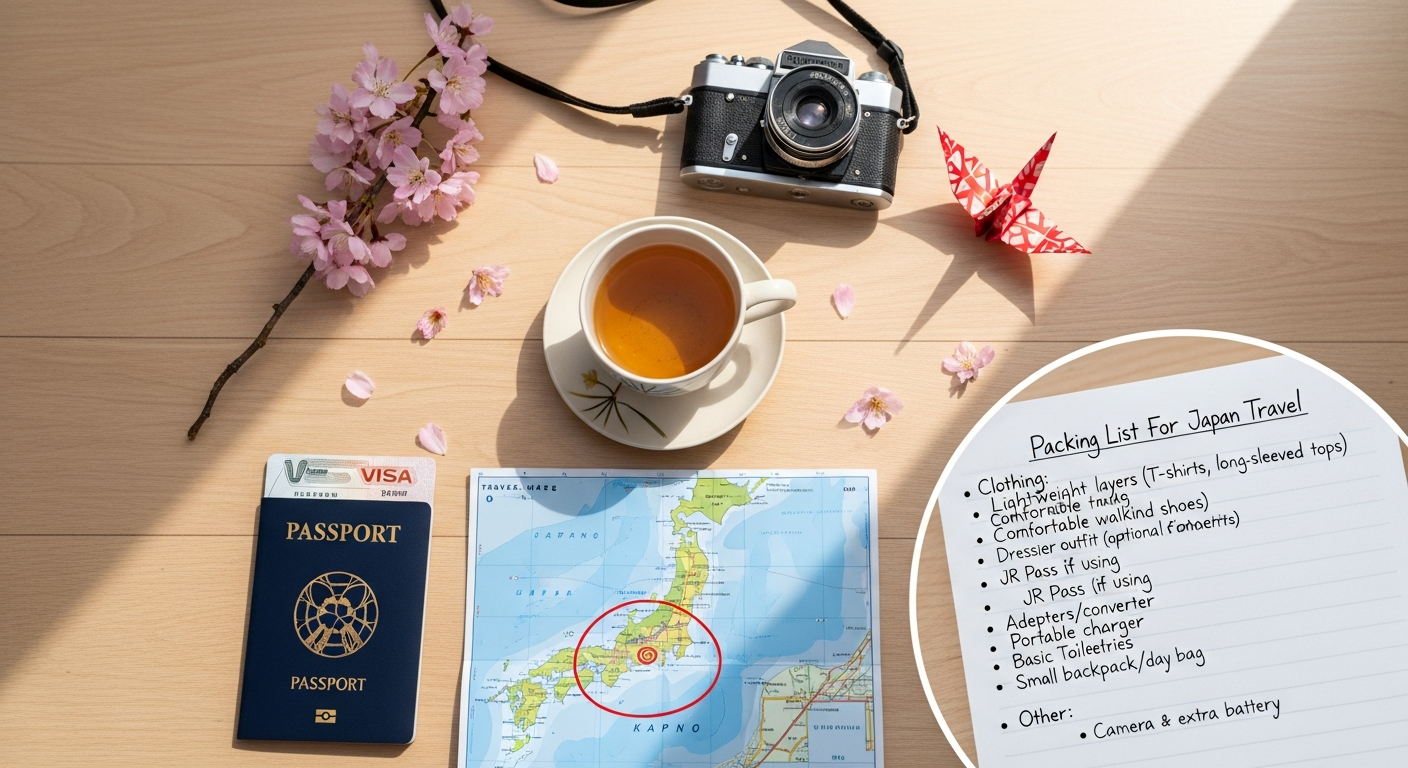
Before you even think about clothes, ensure your essential documents and financial tools are in order. These are the absolute non-negotiables for any international travel in 2026.
Essential Documents
- Passport and Visa: Ensure your passport is valid for at least six months beyond your intended departure date from Japan. Check if your nationality requires a visa and apply well in advance. Keep digital and physical copies of your passport separate from the original.
- Flight and Accommodation Bookings: Printouts or digital copies of all your flight tickets, hotel reservations, and any tour bookings.
- Travel Insurance: Proof of comprehensive travel insurance is highly recommended. It covers medical emergencies, trip cancellations, lost luggage, and more.
- International Driving Permit (IDP): If you plan to rent a car, an IDP is legally required in Japan, along with your national driver’s license. This might be useful if you’re exploring regions around Onomichi, though public transport is excellent.
- Copies of Important Documents: Keep photocopies of your passport, visa, flight tickets, and insurance policy in a separate bag from the originals. Also, store digital copies on your phone and a cloud service.
Financial Preparedness
- Yen (JPY) Cash: While credit cards are widely accepted in major cities, Japan remains a cash-centric society, especially in smaller towns, local restaurants, and for smaller purchases. Aim to have a good supply of yen on hand. ATMs are readily available at convenience stores (7-Eleven, FamilyMart, Lawson) and post offices.
- Credit/Debit Cards: Notify your bank of your travel dates to avoid any fraud alerts or card freezes. Visa and Mastercard are the most widely accepted. Consider a card with no foreign transaction fees.
- Travel Money Card (Optional): A pre-loaded travel money card can be a secure way to manage your budget and offers a backup to your primary credit/debit cards.
Everyday Comfort: Clothing & Footwear for Exploring Japan’s Landscapes
Clothing Specifics
- Comfortable Walking Shoes (Primary): This cannot be stressed enough. Japan involves a lot of walking, whether through city streets, temple grounds, or up Onomichi’s hilly paths. Choose well-broken-in, supportive, and comfortable sneakers or walking shoes. Consider water-resistant options.
- Second Pair of Shoes (Optional but Recommended): A second pair of comfortable shoes offers a backup and allows your primary pair to air out. This could be dressier sneakers, comfortable flats, or sturdy sandals for warmer weather.
- Socks: Pack several pairs of comfortable, breathable socks. Wool or moisture-wicking synthetic socks are excellent for managing foot health during long walking days. Remember that you will often remove your shoes when entering homes, temples, and some restaurants, so clean socks are a must.
- Underwear: Pack enough for your trip duration, plus a few extra. Quick-drying fabrics can be a lifesaver if you need to wash items on the go.
- Pyjamas/Sleepwear: Something comfortable for sleeping.
- Swimsuit (Optional): If you plan to visit an onsen (hot spring) or a hotel with a pool. Note that many traditional onsen have strict rules regarding tattoos and require separate bathing for men and women.
Cultural Considerations for Clothing
- Modesty: While Japan is generally tolerant, showing respect at religious sites (temples, shrines) is important. Bring clothing that covers your shoulders and knees when visiting such places.
- Cleanliness: Japanese culture places a high value on cleanliness. Ensure your clothes are presentable.
Health, Hygiene, and Personal Care: Staying Refreshed on Your Journey
Maintaining your health and hygiene is crucial for an enjoyable trip. While Japan has excellent pharmacies and convenience stores, having your preferred items on hand is always best.
Health Essentials
- Prescription Medications: Bring an ample supply of any prescription medications you need, along with a copy of your prescription and a doctor’s note, especially if they are controlled substances. Keep them in their original packaging.
- Basic First-Aid Kit: Small bandages, antiseptic wipes, pain relievers (ibuprofen/acetaminophen), allergy medication, motion sickness tablets (especially if you plan to take ferries or buses on winding roads), and any personal blister treatment.
- Hand Sanitizer: Always useful, especially when public restrooms might not have soap or you’re on the go.
- Insect Repellent: Particularly important during summer months, especially if you’re exploring rural areas like parts of Innoshima.
- Eyeglasses/Contact Lenses and Solution: Bring spares if possible.
Personal Hygiene and Toiletries
- Travel-Sized Toiletries: Shampoo, conditioner, soap/body wash, toothbrush, toothpaste, deodorant. While most hotels provide these, having your preferred brands can be comforting.
- Facial Care: Cleanser, moisturizer, sunscreen.
- Feminine Hygiene Products: While available, you might prefer your specific brands.
- Shaving Kit: Razor, shaving cream.
- Hairbrush/Comb:
- Small Towel: A quick-drying travel towel can be incredibly useful for various situations.
Essential Tech & Photography Gear: Capturing Japan’s Beauty and Staying Connected
In our increasingly digital world, a well-thought-out tech and photography packing list is vital for navigation, communication, and immortalizing your memories, especially if you’re keen on finding the perfect Onomichi Photography Spots.
Connectivity & Power
- Universal Travel Adapter: Japan uses Type A/B outlets (two flat pins) and operates on 100V. Ensure your adapter is compatible.
- Portable Power Bank: Absolutely essential. You’ll be using your phone for maps, translation, searching What To Do In Onomichi Japan, and, of course, taking photos. A power bank will keep your devices charged throughout long days of exploration.
- Charging Cables: Don’t forget cables for all your devices (phone, camera, tablet, e-reader).
- Portable Wi-Fi Device (Pocket Wi-Fi) or eSIM: While public Wi-Fi is available, a personal device or eSIM offers reliable internet access anywhere, which is invaluable for navigation, translation apps, and staying connected. You can rent Pocket Wi-Fi devices at airports or pre-order them online.
Photography Gear
- Camera and Lenses: Whether it’s your smartphone, a mirrorless camera, or a DSLR, bring what you’re comfortable with. If you’re serious about photography, consider a versatile zoom lens.
- Extra Batteries: Especially crucial for those long days capturing the beauty of Onomichi’s temples or the scenic views along the Shimanami Kaido.
- Memory Cards: Bring several, as Japan offers endless photo opportunities.
- Small Tripod (Optional): For stable shots at dusk or night, or for self-portraits at scenic locations.
- Waterproof Bag/Cover: For protecting your electronics from unexpected rain, especially important during summer or spring.
Other Tech
- Smartphone: Loaded with useful apps (Google Maps, Google Translate, JR Pass app, weather app).
- Headphones: For listening to music, podcasts, or blocking out noise on trains.
- E-reader/Tablet: For entertainment during downtime or long train journeys.
Convenience & Cultural Considerations: Miscellaneous Items for a Smooth Trip
These smaller items often make the biggest difference in comfort and convenience, helping you navigate cultural norms and unexpected situations.
For Comfort and Convenience
- Reusable Water Bottle: Japan has excellent tap water, and staying hydrated is important, especially during warmer months or when cycling towards Innoshima Japan.
- Reusable Shopping Bag/Eco Bag: Japan has moved away from free plastic bags. A compact reusable bag is handy for shopping, snacks, or souvenirs.
- Small Backpack/Daypack: Essential for daily excursions to carry water, snacks, camera, umbrella, and any souvenirs you pick up.
- Travel Pillow & Eye Mask: For comfort on long flights or train rides.
- Earplugs: Useful for light sleepers, especially in hostels or busy city hotels.
- Portable Umbrella: Regardless of the season, a compact, sturdy umbrella is a wise addition. Japan experiences unpredictable showers.
- Snacks: While Japan has incredible food, having a few familiar snacks for busy travel days or specific dietary needs can be helpful.
- Laundry Bag: To keep dirty clothes separate.
Cultural & Practical Items
- Small Gifts (Omiyage): While not strictly necessary, it’s customary in Japan to exchange small gifts. Having a few small, consumable items from your home country (e.g., local chocolates or specialty tea) can be a lovely gesture if you’re hosted or interact closely with locals.
- Chopstick Etiquette Guide (or practice!): While forks are often available, mastering chopsticks adds to the experience.
- Coin Purse: Japan uses a lot of coins (up to ¥500). A coin purse makes managing change much easier.
- Basic Japanese Phrases: A small phrasebook or a translation app can greatly enhance your interactions.
Smart Packing Strategies: Maximizing Space and Minimizing Hassle
The art of packing isn’t just about what you bring, but how you pack it. Efficient packing can save you time, stress, and even money on luggage fees.
Before You Pack
- Check Baggage Allowance: Be aware of weight and size limits for both checked and carry-on luggage for your specific airline.
- Make a List: Use this guide to create your own personalized checklist.
- Lay Everything Out: Before putting anything in your suitcase, lay out all the items you think you need. This helps visualize and often leads to cutting unnecessary items.
Packing Techniques
- Roll, Don’t Fold: Rolling clothes saves space and minimizes wrinkles.
- Packing Cubes: These are game-changers for organization. They compress clothes, make it easy to separate outfits, and simplify unpacking/repacking.
- Wear Your Heaviest Items: Wear your bulkiest shoes and heaviest jacket on the plane to save space and weight in your luggage.
- Utilize Dead Space: Stuff socks, underwear, or small items into shoes.
- Liquids in Ziploc Bags: Place all toiletries and liquids in sealed plastic bags to prevent leaks, especially in your carry-on for security checks.
Carry-On Essentials
Pack a smaller bag with everything you need for the first 24-48 hours, plus critical items, in case your checked luggage is delayed.
- Passport, visa, wallet, phone.
- Prescription medications.
- Basic toiletries.
- A change of clothes.
- Any valuable electronics (camera, laptop).
- Entertainment for the flight (book, e-reader).
By following this comprehensive guide for your 2026 Japan adventure, you’ll be well-equipped to enjoy every moment, from the bustling markets of Osaka to the serene beauty of Onomichi’s temples and the exhilarating cycling routes of Innoshima. Pack smart, travel light, and prepare for an incredible journey!
Frequently Asked Questions
Recommended Resources
Learn more about this topic in Best Beaches In The Us To Visit 2026 at Vacation Rental Planners.
Learn more about this topic in Bachelorette Party Destination Ideas at Vacation Rental Planners.