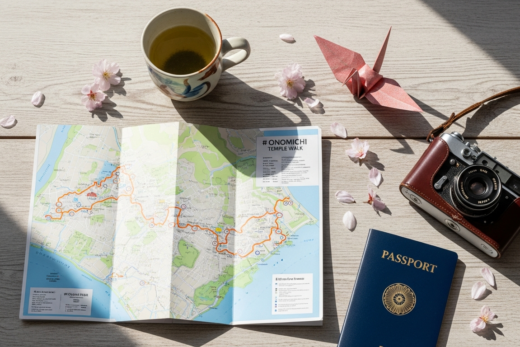
Onomichi Ropeway vs. Walking the Temple Path: Which Is Best for Your Journey?
This decision isn’t merely about physical exertion; it’s about how you choose to experience the soul of the city. While the ropeway offers a cinematic bird’s-eye perspective of the shipyards and islands, the walking path invites you into the intimate lives of the locals, where laundry dries beside centuries-old stone Buddhas and resident “community cats” doze on sun-warmed stairs. Whether you are a photography enthusiast, a history buff, or a slow-traveler seeking the “real” Japan, understanding the nuances of these two routes is essential for a perfect Setouchi itinerary.
1. The Onomichi Ropeway: A Shortcut to the Clouds
The Onomichi Ropeway is the town’s most popular attraction for a reason. Connecting the base near Ushitora Shrine to the summit of Senkoji Park, this three-minute aerial journey provides an immediate and breathtaking orientation of the region. As the cabin rises, the perspective shifts from the narrow, cluttered roofs of the old town to a sprawling vista of the Seto Inland Sea, dotted with the rugged islands that form the beginning of the Shimanami Kaido cycling route.
Practical Logistics:
The ropeway typically operates every 15 minutes. A one-way ticket is surprisingly affordable (around 500 yen), while a round-trip ticket offers a slight discount. For most travelers, the “Golden Strategy” is to buy a one-way ticket up and walk back down. This allows you to enjoy the views without the uphill climb, saving your energy for exploring the hidden nooks of the hillside.
At the summit, you’ll find the recently renovated “PEAK” observatory. This architectural marvel features a long, glass-walled walkway that makes you feel as though you are floating over the town. On a clear day, you can see as far as the Shikoku mountains in the distance. The ropeway is also the best option for those traveling with small children or visitors with limited mobility, as the Temple Path’s stairs can be notoriously uneven and steep.
2. The Temple Walk: A Spiritual and Historic Pilgrimage
If the ropeway is the “highlight reel,” the Temple Walk (Koto-no-michi) is the full-length feature film. Onomichi is home to 25 historic temples, most of which are concentrated along the base and slopes of the mountain. Walking the entire path—or even a segment of it—is a deep dive into Japanese Buddhist history and the maritime wealth that once funded these magnificent structures.
Key Highlights on the Path:
Walking the path allows you to notice the small things: the smell of incense drifting from a hidden altar, the sound of the San-yo Main Line train echoing through the valley, and the intricate wood carvings on temple eaves. It is a sensory experience that no cable car can replicate.
3. Comparing the Two: Which One Should You Choose?
Deciding between the ropeway and the walk depends largely on your time, fitness level, and what you want to get out of your day.
Choose the Ropeway if:
Choose the Temple Walk if:
The Hybrid Approach (Recommended):
The overwhelming recommendation from local guides is to **take the ropeway up and walk down.** This allows you to start at the highest point (Senkoji Park), visit the observatory, and then gravity-assist your way through the temples and “Cat Alley” on the descent back to the shopping arcade and train station.
4. Don’t Miss: Cat Alley and the Art of the Hillside
One of the most charming segments of the descent from Mt. Senkoji is **Neko no Hosomichi (Cat Alley)**. This narrow, 200-meter-long path is a testament to Onomichi’s status as a sanctuary for felines. The area was revitalized by artist Shunji Sonoyama, who began placing “Fukuishi-neko” (lucky stone cats) along the path in the late 1990s.
Today, the alley is a surreal, magical space filled with painted stones, cat-themed shrines, and several real-life feline residents who have become local celebrities. Even if you aren’t a “cat person,” the creativity of the area is infectious. You’ll find the “Maneki-neko Art Museum” here, housed in a charming old building. This section of the walk perfectly encapsulates Onomichi’s unique blend of traditional piety and modern, quirky artistic expression. It is a place where you are encouraged to get lost, as every turn reveals a new mural or a hidden viewpoint overlooking the ceramic-tiled roofs.
5. Practical Tips for Visiting Onomichi
To make the most of your trip to this vertical town, a bit of preparation goes a long way. Onomichi is quite different from the flat urban centers of Osaka or Hiroshima.
6. Expanding Your Journey: The Setouchi Context
Onomichi serves as the gateway to the Setouchi region, an area increasingly recognized as one of the world’s premier travel destinations. While the Ropeway vs. Temple Walk debate will occupy your morning, consider how the rest of your day fits into the regional puzzle.
Just a short ferry ride from the Onomichi waterfront lies **Mukaishima**, the first island on the Shimanami Kaido. If you have any energy left after your temple explorations, renting a bicycle for a few hours to ride across the first bridge (the Innoshima Bridge) offers a completely different perspective of the landscape you just viewed from the mountain top.
Furthermore, Onomichi’s proximity to Hiroshima City (about 70-90 minutes by local train or 40 minutes by Shinkansen via Mihara/Fukuyama) makes it an excellent day trip or a transitional stop. The town’s quiet, contemplative atmosphere provides a wonderful contrast to the heavy history of Hiroshima’s Peace Memorial Park or the bustling tourist crowds of Miyajima.