



The Philosophy Behind Japanese Etiquette: Respect and Harmony
At the heart of Japanese etiquette lies a profound philosophy centered on respect (sonkei) and harmony (wa). These principles permeate every aspect of daily life, from the way people greet each other to how they conduct business or share a meal. Understanding this foundational ethos is more important than memorizing every single rule, as it provides the context for why certain behaviors are expected. One of the most celebrated manifestations of this philosophy is omotenashi, the unique Japanese approach to hospitality that anticipates guests’ needs and provides exceptional service without expectation of anything in return, even a tip. It’s a genuine desire to make others feel welcome and comfortable, reflecting a deep-seated consideration for others’ well-being. This spirit of omotenashi is palpable in every interaction, whether you’re checking into a traditional ryokan in Onomichi, browsing a local artisan’s shop, or simply asking for directions to a scenic viewpoint. By embodying a similar spirit of consideration and respect, travelers can reciprocate this hospitality and foster positive interactions throughout their trip. It’s about being mindful of your surroundings, recognizing the collective good, and ensuring your actions contribute to a peaceful and pleasant atmosphere for everyone. This mindful approach to travel not only prevents misunderstandings but also deepens your appreciation for the culture, transforming a mere visit into a truly immersive experience. As you explore the charming alleyways and temples of Onomichi, or cycle along the scenic routes of Innoshima, remember that every polite gesture you make is a bridge to understanding and connection.
Navigating Greetings, Gestures, and Personal Space


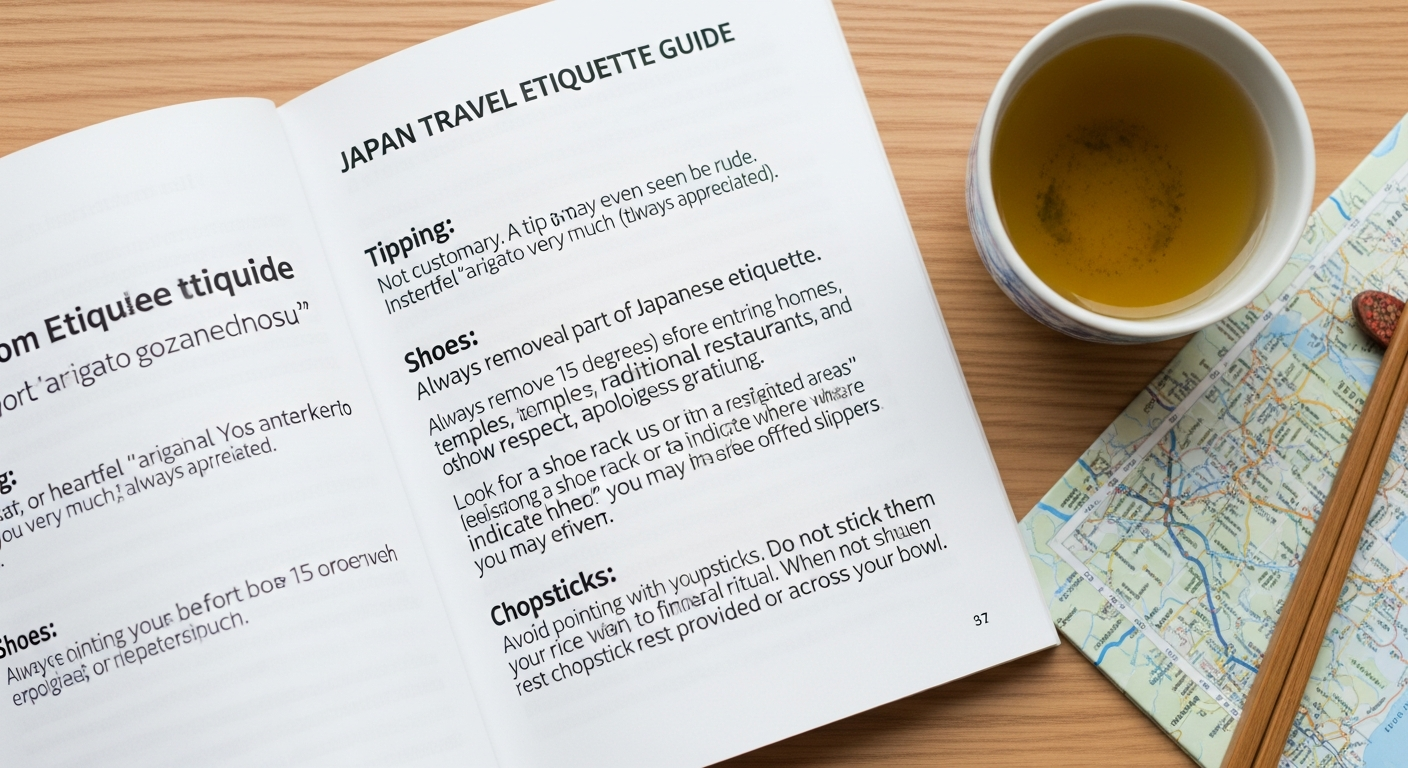
First impressions matter immensely in Japan, and understanding the nuances of greetings and body language can set a positive tone for all your interactions. The most iconic Japanese greeting is the bow (ojigi). While foreigners are not expected to bow perfectly, a slight nod or a small bow shows respect. Generally, a deeper bow indicates greater respect, but a simple 15-degree bow is sufficient for casual greetings. When bowing, keep your back straight and your hands either at your sides (for men) or clasped in front of you (for women). You’ll often hear the phrase “Konnichiwa” (hello) during the day, “Ohayō gozaimasu” (good morning) in the morning, and “Konbanwa” (good evening) after dusk. When thanking someone, “Arigato gozaimasu” is the polite form. For apologies or to get someone’s attention politely, “Sumimasen” is incredibly versatile, meaning “excuse me” or “I’m sorry.” It’s often preferred over “Gomen nasai” (a more direct apology) in casual situations. Physical contact, such as hugging or back-patting, is generally uncommon in public and between strangers; a polite distance is preferred. Pointing with a finger is considered rude; instead, gesture with an open hand towards the object or direction. Direct eye contact can sometimes be interpreted as aggressive or confrontational, especially in longer interactions with elders or superiors. A softer gaze, with occasional eye contact, is more appropriate. Keeping your voice down in public spaces is also crucial. Loud conversations, especially on mobile phones, are considered disruptive and disrespectful on trains, buses, and in other shared environments. This applies whether you’re on a local train heading to an Onomichi Photography Spot or waiting for a ferry to explore the beautiful island of Innoshima. By observing these simple gestures, you demonstrate your respect for local customs, fostering smoother and more pleasant interactions with the hospitable people you encounter.
Mastering Dining Etiquette: From Chopsticks to Cheers
Public Transportation & Public Spaces: Seamless Travel
Japan’s public transportation system is renowned for its efficiency, punctuality, and cleanliness, making it an ideal way to explore the country, from the bustling cities to the serene landscapes surrounding Onomichi and Innoshima. To ensure a smooth journey for everyone, a few etiquette rules are paramount. First and foremost, queuing is a fundamental aspect of Japanese public life. Whether you’re waiting for a train, bus, or even a popular café, always form an orderly line and wait your turn patiently. On trains and buses, keep your voice low, especially when speaking on your phone. In fact, most people refrain from talking on their phones altogether, opting for text messages instead. If you must take a call, keep it brief and hushed, or ideally, wait until you’ve disembarked. Listening to music or watching videos is fine, but always use headphones and ensure the volume isn’t audible to others. Offering your seat to the elderly, pregnant women, or those with small children is a polite gesture, though not always explicitly expected, especially if priority seating areas are available. Avoid eating or drinking on local trains and buses, although it’s generally acceptable on longer-distance Shinkansen bullet trains. When walking, particularly in busy areas or on escalators, typically people stand on one side (often the left in Tokyo, but the right in Osaka and some other regions) to allow others to pass. Observe what locals are doing. Littering is virtually unheard of; public rubbish bins are surprisingly scarce, a testament to the culture of personal responsibility. It’s common practice to carry a small bag for your rubbish until you find a bin, which are often located inside convenience stores or train stations. When cycling, especially if you’re exploring the Shimanami Kaido towards Innoshima, be mindful of pedestrians and follow local traffic rules diligently. Ringing your bell excessively is generally considered rude; use it only when absolutely necessary to alert someone. By adhering to these simple guidelines, you contribute to the harmonious flow of public life and ensure a pleasant experience for yourself and your fellow travelers as you navigate Japan’s incredible infrastructure.
Accommodation & Onsen: A Guide to Traditional Stays
Staying in traditional Japanese accommodation, such as a ryokan (traditional inn) or a minshuku (family-run guesthouse), offers a truly authentic cultural experience. Similarly, visiting an onsen (hot spring) is a quintessential Japanese activity that requires adherence to specific customs for comfort and respect. Upon entering a ryokan or many guesthouses, the first thing you’ll do is remove your outdoor shoes at the entrance (genkan) and place them in a shoe locker or a designated area. You’ll then typically change into provided slippers. Be mindful that different slippers might be designated for different areas, such as special toilet slippers to be used only inside the bathroom. When entering your tatami-matted room, remove all slippers before stepping onto the tatami. This preserves the mats and keeps the room clean. Sleeping on a futon laid directly on the tatami floor is common, and staff will often prepare and put away your futon for you. Onsen etiquette is particularly important. Before entering the communal bath, you must thoroughly wash and rinse your body at the designated washing stations (showers with stools) in the changing area. This is not just about hygiene; it’s a sign of respect for the shared water. Enter the bath naked; swimsuits are not permitted. If you have tattoos, be aware that many onsen, especially traditional ones, may prohibit tattooed guests due to historical associations with yakuza. Some establishments are becoming more lenient, particularly with small tattoos that can be covered with a bandage. Always check the rules beforehand. Keep your small modesty towel (tenugui) out of the bathwater; it can be placed on your head or at the side. Speak softly and avoid splashing. The onsen is a place for quiet relaxation. If you are staying at a ryokan in Onomichi, these rules will apply, offering you a serene and respectful way to unwind after a day of exploring local attractions or capturing the perfect Onomichi Photography Spots. By following these customs, you ensure a respectful and enjoyable experience for yourself and others, embracing the tranquility and tradition of Japanese hospitality.
Shopping, Photography, and Cultural Sensitivity
Engaging with local businesses and capturing memories through photography are integral parts of travel, but in Japan, these activities come with their own set of cultural nuances. When shopping, whether in a bustling department store or a charming local boutique in Onomichi, haggling over prices is generally not customary and can be considered impolite. Prices are fixed, and attempting to negotiate can cause discomfort. As with dining, when paying for goods, present your money (cash or card) on the small tray provided at the counter rather than directly handing it to the cashier. This is a sign of respect and cleanliness. The cashier will then return your change or receipt on the same tray. When entering smaller shops or galleries, especially those with traditional flooring, you might be asked to remove your shoes, so always be observant. Photography is a wonderful way to document your journey, especially when discovering the beautiful Onomichi Photography Spots, but discretion and respect are paramount. Always ask for permission before taking photos of people, especially children, or if you are photographing inside private establishments like small shops, restaurants, or homes. Many temples and shrines have specific rules regarding photography, with some areas being completely off-limits to preserve their sanctity. Look for signs indicating “No Photography” (撮影禁止 – Satsuei Kinshi) or “Photography Prohibited.” Even when photography is allowed, be mindful not to disrupt others or block pathways, particularly during ceremonies or busy times. Drones are also heavily regulated, and flying them in many public spaces, including parks, residential areas, and near castles or temples, is often prohibited without special permission. When visiting sacred sites like shrines and temples, approach with reverence. Before entering the main hall of a shrine, typically cleanse your hands and mouth at the purification fountain (temizuya). At temples, you might offer a small coin at the offering box and bow. Remember that these are active places of worship, not just tourist attractions. Finally, consider bringing small gifts (omiyage) from your home country if you anticipate meeting people who extend exceptional kindness or hospitality, such as a homestay host or someone who goes out of their way to help you. It’s a thoughtful gesture to express gratitude, reflecting the spirit of reciprocation. By being culturally sensitive in your shopping and photography, you’ll not only avoid awkward situations but also gain a deeper appreciation for Japanese customs and leave a positive impression on the communities you visit.
Essential Phrases and Local Interactions
While many people in Japan, particularly in major tourist hubs, have some English proficiency, making an effort to learn a few basic Japanese phrases can significantly enhance your travel experience and show genuine respect for the local culture. Even a simple “Arigato gozaimasu” (thank you) or “Sumimasen” (excuse me/I’m sorry) will be warmly received. Here are a few essential phrases to get you started:
- Hello (daytime): Konnichiwa (こんにちわ)
- Good morning: Ohayō gozaimasu (おはようございます)
- Good evening: Konbanwa (こんばんわ)
- Thank you (polite): Arigato gozaimasu (ありがとうございます)
- Excuse me/I’m sorry: Sumimasen (すみません)
- Please (when offering something): Dōzo (どうぞ)
- Please (when requesting): Onegaishimasu (お願いします)
- Yes: Hai (はい)
- No: Iie (いいえ)
- Where is…? ~ wa doko desu ka? (~ はどこですか?)
- I don’t understand: Wakarimasen (わかりません)
- Can I have…? ~ o kudasai (~ をください)
- Cheers! (when drinking): Kanpai! (乾杯!)
When asking for help or directions, approach someone politely with “Sumimasen,” and speak slowly and clearly. Even if there’s a language barrier, a patient and polite demeanor goes a long way. Many Japanese people are eager to help and appreciate the effort you make. Don’t be afraid to use translation apps or point to maps. In smaller towns like Onomichi or when seeking information for an Innoshima Japan Travel Guide, you might find fewer English speakers, making your effort to use Japanese even more impactful. Locals will often appreciate your attempt and might try harder to communicate with you. Remember that politeness and a calm, composed attitude are highly valued. Avoid showing frustration or anger, as this can be seen as losing face and can make interactions more difficult. Embrace the journey of communication, even with its challenges, as it’s part of the rich tapestry of experiencing Japan. Your willingness to engage respectfully will be met with warmth and cooperation, fostering genuine connections that are often the most cherished memories of any trip.
FAQ Section: Japan Travel Etiquette Guide
Q1: Is tipping customary in Japan?
A1: No, tipping is not customary in Japan and can even be considered rude or confusing. Excellent service is expected as a standard, not as something that requires extra compensation. If you try to leave a tip, staff may politely refuse it or even chase after you to return the money, thinking you’ve forgotten it. Instead, express your gratitude with a sincere “Arigato gozaimasu” (thank you) and a polite bow.
Q2: Can I visit an onsen if I have tattoos?
A2: Traditionally, tattoos were associated with organized crime (yakuza) in Japan, leading many onsen (hot springs) to prohibit tattooed guests. While some larger, more tourist-oriented onsen or those within hotels are becoming more lenient, particularly with small tattoos that can be covered with waterproof bandages, it’s always best to check the specific onsen’s policy beforehand. Look for “no tattoo” signs or inquire at the reception. If your tattoos are small, discreetly covering them is often a good solution. For larger tattoos, consider seeking out tattoo-friendly onsen (which are growing in number) or opting for private baths (kashikiri onsen) if available.
Q3: What is the best way to say thank you in Japan?
A3: The most common and polite way to say thank you is “Arigato gozaimasu” (ありがとうございます). For a more casual “thanks,” you can use “Arigato,” but the longer form is always safe and appreciated. Accompanying your thank you with a slight bow or nod adds to the sincerity and respect. In situations of exceptional gratitude, you might use “Domo arigato gozaimasu” (どうもありがとうございます).
Q4: Should I bow when greeting people or saying goodbye?
A4: While foreigners are not expected to master the intricacies of bowing, a slight bow or head nod is always appreciated as a sign of respect, especially when greeting, thanking, or saying goodbye to people. For casual interactions, a small nod (around 15 degrees) is perfectly acceptable. You’ll observe Japanese people bowing frequently, and reciprocating even a small bow shows that you are making an effort to understand and respect their customs.
Q5: Is it okay to eat and drink while walking in public?
A5: Generally, eating and drinking while walking in public, particularly on busy streets, is frowned upon in Japan. It’s considered untidy and can potentially inconvenience others. If you purchase street food, it’s best to find a designated eating area, a bench, or step to the side out of the main flow of pedestrian traffic to enjoy your snack. Similarly, if you buy a drink from a vending machine or convenience store, it’s polite to finish it before continuing your journey or to step aside while you drink. The only exception often observed is for ice cream or specific festival foods, but even then, people tend to eat them neatly and dispose of waste properly.
Q6: What is the etiquette regarding noise on public transportation?
A6: Keeping noise levels to a minimum is extremely important on Japanese public transportation, such as trains and buses (including those going to Onomichi or ferries to Innoshima). Loud conversations, particularly on mobile phones, are considered highly disrespectful and disruptive. It is common for people to refrain from talking on their phones altogether, opting for text messages. If you must take a call, keep it brief and speak in a hushed tone, or ideally, wait until you’ve exited the vehicle. Use headphones for music or videos, ensuring the volume is not audible to others. The aim is to maintain a quiet, peaceful environment for all passengers, reflecting the Japanese value of consideration for others.
Recommended Resources
Learn more about this topic in Travel Checklist Before You Leave Home at Vacation Rental Planners.
You might also enjoy Best Travel Credit Cards 2026 from Vacation Rental Planners.