


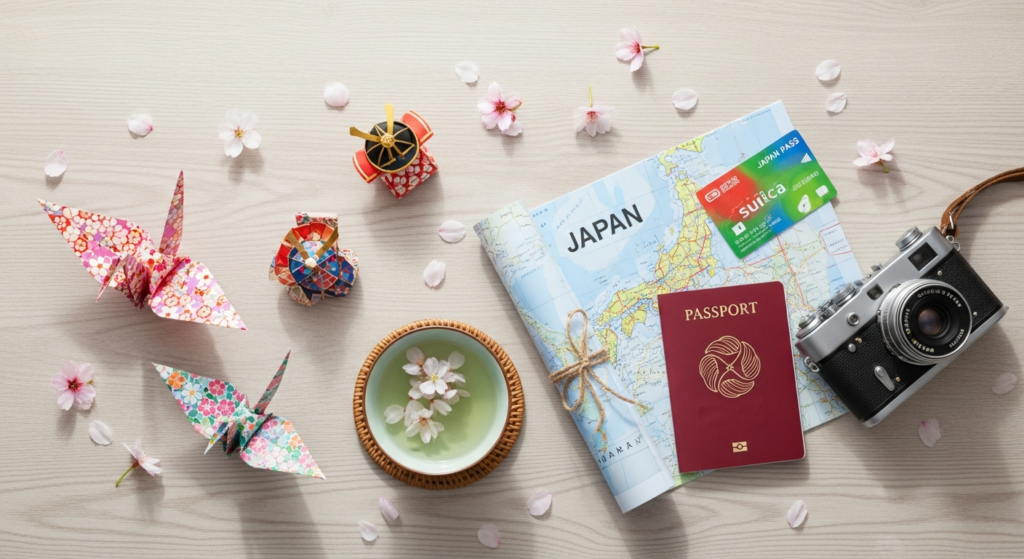
Understanding Japan’s IC Card System: Your Gateway to Seamless Travel
Japan’s public transportation network is renowned worldwide for its punctuality, efficiency, and extensive coverage. However, for first-time visitors, the sheer number of different railway companies, subway lines, and bus operators can seem daunting. This is where the IC (Integrated Circuit) card system steps in as a true game-changer, unifying disparate systems under a single, user-friendly payment method. Imagine navigating Tokyo’s sprawling subway, hopping on a local bus in Kyoto, or even exploring the scenic routes around Onomichi, all with a single tap of a card. That’s the power of the IC card.
At its core, an IC card is a prepaid smart card designed to store monetary value. Instead of buying individual tickets for each journey, you simply load money onto your card and tap it on the designated reader at the entrance and exit gates of train stations, or upon boarding and alighting buses. The system automatically calculates the correct fare, deducting it from your card’s balance. This eliminates the need to understand complex fare tables, search for ticket machines, or worry about having the exact change, especially during peak travel times when stations can be bustling.
The history of IC cards in Japan dates back to the early 2000s, with various railway companies introducing their own regional cards. Over time, a remarkable level of interoperability has been achieved, meaning that major IC cards issued by different companies can now be used across most public transport networks nationwide. This interconnectedness is a testament to Japan’s commitment to traveler convenience, making it incredibly easy for visitors to explore different regions without needing multiple cards. Whether you pick up a Suica in Tokyo or an ICOCA in Osaka, you’ll find it accepted in virtually all major cities and many regional areas across the country.
Beyond its primary function as a transit pass, the IC card has evolved into a versatile electronic payment method. It’s widely accepted at convenience stores (konbini), vending machines, coin lockers, and even some restaurants, shops, and taxis. This dual functionality means your IC card can streamline not just your commute, but also your daily purchases, further reducing the need to carry large amounts of cash. For those planning an extensive trip in 2026, an IC card is an essential item, offering unparalleled convenience and peace of mind.
The benefits of using an IC card are manifold:
- Convenience: No more buying individual tickets or counting change. Just tap and go.
- Speed: Pass through ticket gates quickly, especially during rush hour.
- Versatility: Use it for trains, subways, buses, and a wide array of retail purchases.
- Cost-effectiveness: Often, using an IC card provides slightly discounted fares on certain lines compared to paper tickets.
- Flexibility: Easily switch between different transport operators without hassle.
- Tracking: Some mobile IC card versions allow you to track your travel history and spending.
Understanding and utilizing the IC card system will undoubtedly enhance your travel experience in Japan, allowing you to focus more on the beautiful sights, delicious food, and unique culture, rather than the logistics of getting around.
The Major Players: Suica, Pasmo, and Beyond
While the concept of the IC card is unified, several major brands dominate the market, each originating from a specific region or railway company. Fortunately, thanks to a nationwide interoperability agreement, you generally only need one major IC card for most of your travels across Japan. Understanding these key players, however, can provide valuable context and help you decide which card might be easiest to acquire upon arrival.
Suica and PASMO: The Kanto Region Powerhouses
When most people think of Japan’s IC cards, Suica and PASMO are often the first names that come to mind. These two cards are synonymous with travel in the Greater Tokyo Area and the wider Kanto region, home to some of Japan’s busiest and most extensive transportation networks.
- Suica: Issued primarily by JR East (East Japan Railway Company), Suica is arguably the most recognizable IC card. Its name is a playful pun on “Super Urban Intelligent Card” and the Japanese word sui-sui, meaning “smoothly.” You’ll find Suica accepted across JR lines, private railways, subways, and buses throughout Tokyo and beyond. It’s often the go-to choice for travelers arriving at Narita or Haneda airports due to its widespread availability at JR stations.
- PASMO: Introduced by private railway and subway operators in the Kanto region (such as Tokyo Metro, Toei Subway, Keio, Odakyu, etc.), PASMO serves a similar function to Suica. While Suica originated from a JR company, PASMO was developed by companies that often run parallel or complementary routes. For practical purposes, a PASMO card is interchangeable with Suica for most transit and retail uses across Japan.
Both Suica and PASMO are incredibly popular and accessible. If your journey begins in Tokyo, picking up either of these cards is a straightforward process at most major train stations. They offer the same core functionality and nationwide interoperability, meaning your choice between them often comes down to which vending machine or ticket office you encounter first.
ICOCA: Western Japan’s Essential Companion
As you venture west into the Kansai region, which includes popular destinations like Osaka, Kyoto, Nara, and Kobe, ICOCA (issued by JR West) takes center stage. Like Suica, ICOCA’s name is a pun, derived from “IC Operating CArd” and the phrase ikoka, meaning “Shall we go?” in the Kansai dialect. ICOCA is the primary IC card for JR West lines, private railways, subways, and buses throughout Western Japan.
If your Japanese adventure begins at Kansai International Airport (KIX) or you plan to spend significant time exploring the Kansai region, acquiring an ICOCA card makes perfect sense. Despite its regional origin, an ICOCA card is fully interoperable with the other major IC cards, meaning you can use it to travel in Tokyo, Hokkaido, or Kyushu without any issues. Its acceptance extends to the same retail outlets as Suica and PASMO, making it just as versatile for everyday purchases.
TOICA, SUGOCA, nimoca, Hayakaken, Kitaca: Regional IC Cards
Beyond the major metropolitan areas, Japan has a host of other regional IC cards, each serving its specific area but also participating in the nationwide interoperability scheme. While you likely won’t need to purchase these if you already have a Suica, PASMO, or ICOCA, it’s good to be aware of them:
- TOICA: Issued by JR Central, primarily for the Nagoya and Tokai region.
- SUGOCA: Issued by JR Kyushu, used across Kyushu island, including Fukuoka.
- nimoca: Issued by Nishitetsu (Nishi-Nippon Railroad), another popular card in Fukuoka and Kyushu.
- Hayakaken: Issued by Fukuoka City Transportation Bureau, specific to Fukuoka’s subway system.
- Kitaca: Issued by JR Hokkaido, the primary IC card for Hokkaido, including Sapporo.
The beauty of the interoperability agreement is that you don’t need to worry about collecting all these cards. A single Suica, PASMO, or ICOCA will typically function seamlessly in the regions where these other cards are prevalent. For example, your Suica will work perfectly on the JR Kyushu lines in Fukuoka, just as a SUGOCA would.
The Interoperability Advantage: Using Any Major IC Card Nationwide
The most crucial takeaway regarding Japan’s IC cards is their remarkable interoperability. Since 2013, ten major IC cards—Suica, PASMO, ICOCA, TOICA, SUGOCA, nimoca, Hayakaken, Kitaca, manaca, and PiTaPa (though PiTaPa is post-pay and functions differently for visitors)—have been integrated into a nationwide system. This means that if you purchase any one of the primary prepaid cards (Suica, PASMO, ICOCA, TOICA, SUGOCA, nimoca, Hayakaken, or Kitaca), you can use it on virtually all major train, subway, and bus lines, and for purchases at IC card-compatible vending machines and convenience stores across the entire country.
This “one card for all” principle significantly simplifies travel planning. You don’t need to stress about which card to get based on your itinerary. Whether you start in Tokyo and travel to Onomichi, then continue to Hiroshima and Kyoto, your initial IC card will remain a reliable travel companion. This ease of use is a cornerstone of Japan’s efficient public transport and a major boon for international visitors in 2026.
Getting Your IC Card: Where, When, and How Much?
Purchasing a Physical IC Card
The most traditional way to get an IC card is to purchase a physical one. This is recommended for most visitors, especially if you prefer a tangible item or anticipate issues with mobile payment setups.
- Where to Buy: You can purchase major IC cards like Suica, PASMO, and ICOCA at ticket vending machines or ticket offices (Midori no Madoguchi) located at most major train stations (JR, private railways, and subways). Look for machines with the IC card logo (e.g., Suica penguin, PASMO robot).
- The Process:
- Select “Purchase a new IC card” (or similar phrasing) on the vending machine screen. English language options are almost always available.
- Choose between a regular IC card or a specific type like a “Child IC Card” if applicable.
- Pay the initial fee. This typically includes a 500 yen refundable deposit for the card itself, plus your initial desired charge amount (e.g., 1,500 yen for a total of 2,000 yen paid). Common initial charge options range from 1,000 yen to 10,000 yen.
- The machine will dispense your card.
- JR Pass Holders: Even if you have a JR Pass, an IC card is highly recommended for non-JR lines (subways, private railways, buses) and for convenient retail purchases.
- Welcome Suica / PASMO Passport: For tourists, JR East introduced the “Welcome Suica” and private railway companies offer “PASMO Passport.” These cards waive the 500 yen deposit but are valid for only 28 days and cannot be refunded for any remaining balance. They are designed for short-term visitors and can be convenient if you don’t want to deal with the refund process. They are typically available at specific airport stations (Narita, Haneda) and major city stations. Note: As of late 2023, due to semiconductor shortages, regular Suica and PASMO cards have been difficult to purchase for tourists, making Welcome Suica and PASMO Passport the primary options for physical cards. This situation may evolve by 2026, so always check the latest information closer to your travel date.
Child IC Cards
If you’re traveling with children aged 6 to 11 (or 12 if they are still in elementary school), you can purchase a Child IC Card. These cards offer discounted fares (typically half price) on public transport.
- Eligibility: Children aged 6 to 11.
- How to Buy: Child IC Cards usually require purchase at a staffed ticket office (Midori no Madoguchi) rather than a vending machine. You’ll need to present a passport or other proof of age for the child.
- Refunds: The same refund rules apply as for adult cards, including the 500 yen deposit.
Embracing Digital: Mobile IC Cards (Mobile Suica, Mobile PASMO, etc.)
For tech-savvy travelers, Japan’s IC card system has largely transitioned to mobile platforms, allowing you to use your smartphone or smartwatch as your IC card. This is incredibly convenient as you never have to worry about losing a physical card or running out of balance unexpectedly.
- Apple Pay (iPhone/Apple Watch):
- Most iPhones (iPhone 8 or newer) and Apple Watches (Series 3 or newer) sold globally support FeliCa, the NFC technology used for Japan’s IC cards.
- You can add a Suica or PASMO card directly to your Apple Wallet. This can be a new card (without a deposit) or by transferring an existing physical card (which will then be deactivated).
- Recharging is done through Apple Pay using a linked credit or debit card. This is where foreign cards can sometimes encounter issues. While some international Visa, Mastercard, and American Express cards work, others may not be accepted for in-app top-ups. A reliable workaround is often to use a Revolut or Wise card, or a Japanese credit card if you have one.
- Once added, you can use your device just like a physical card, tapping it on readers.
- Google Pay (Android):
- Android phones must have FeliCa support to use Mobile Suica or Mobile PASMO directly. Many Japanese-market Android phones have this, but international models often do not.
- If your phone supports FeliCa, you can download the Mobile Suica or Mobile PASMO app from the Google Play Store (though this often requires a Japanese Google account).
- Similar to Apple Pay, recharging can be done in-app, with similar potential issues for foreign credit cards.
- For international Android users without FeliCa, a physical card is usually the best option.
- Benefits of Mobile IC Cards:
- No physical card to lose or misplace.
- Easy to check balance and top up on the go.
- No 500 yen deposit (for newly issued digital cards).
- Can be linked to specific travel apps for integrated planning.
Given the potential for foreign credit card issues with mobile top-ups, many travelers opt to purchase a physical card initially and then top it up with cash at convenience stores or station vending machines, which is always reliable. However, by 2026, payment gateways for international cards may improve significantly.
Charging Your IC Card
Keeping your IC card sufficiently charged is crucial for uninterrupted travel. Fortunately, topping up your card is incredibly easy:
- Station Vending Machines: The most common method. Look for machines with IC card logos. Insert your card, select “Charge” (or “Top Up”), choose the amount (e.g., 1,000 yen, 2,000 yen), insert cash (notes and coins are accepted), and your card will be recharged.
- Convenience Stores (Konbini): 7-Eleven, FamilyMart, Lawson, and other convenience stores offer IC card top-up services. Simply tell the cashier “IC card charge” (IC kado chāji) and the amount you wish to add, hand over your card and cash, and they will process it.
- Mobile Apps: As mentioned, if you have a mobile IC card, you can recharge directly through the app using a linked credit card.
- Fare Adjustment Machines: If your balance is insufficient at the exit gate, you can use a fare adjustment machine (norikoshi-seisan-ki) to top up your card and pay the difference before exiting.
It’s always a good idea to keep an eye on your balance, especially if you’re planning a longer journey or several purchases. Most gate readers display your remaining balance as you tap through.
Using Your IC Card for Transit and Beyond
The beauty of the Japan IC card lies in its simplicity and versatility. Once you have your card, using it becomes second nature, allowing you to navigate Japan’s bustling cities and serene countryside with ease. From trains and buses to everyday purchases, your IC card is your key to convenience.
Tapping In and Out: Train, Subway, and Bus Travel
The primary use of your IC card is for public transportation. The process is remarkably consistent across different modes of transit and regions.
- Trains and Subways:
- Entry: At the ticket gate, locate the IC card reader (usually a flat, illuminated panel). Hold your IC card flat against the reader for a second until you hear a beep and the gate opens. The display will show your remaining balance.
- Exit: Upon reaching your destination, repeat the process at the exit gate. The system automatically calculates the fare for your journey and deducts it from your card. Your remaining balance will be displayed again.
- Important: Always tap both in and out. Failing to tap out can lead to complications, as the system won’t know where your journey ended and may charge you the maximum possible fare for the line, or simply prevent you from entering the system again until the discrepancy is resolved at a ticket office.
- Insufficient Balance: If your card doesn’t have enough money for the fare at the exit gate, the gate will not open, and a red light or error message will appear. Simply go to a nearby fare adjustment machine (norikoshi-seisan-ki), insert your card, top it up with the required amount, and then proceed back to the gate.
- Buses:
- Bus usage can vary slightly depending on the region and bus company, but the IC card process is generally similar.
- Fixed-Fare Buses (common in cities): On these buses, you typically tap your IC card on the reader when you board at the front door. The fare is deducted immediately. You do not need to tap out when alighting.
- Distance-Based Fares (common in some rural areas or longer routes): On these buses, you might tap in when you board (often at the rear door), receiving a numbered ticket (you don’t need this with an IC card, but observe if others take one). Then, when you alight (usually at the front door), you tap your card again on the reader next to the driver. The fare is calculated based on the distance traveled.
- Check local instructions: Always observe how local passengers use their cards, or look for signage, especially on regional buses. For example, when exploring areas around Onomichi, local bus services might have slightly different boarding/alighting procedures, but the IC card functionality remains intuitive.
Beyond Transit: Convenience Stores, Vending Machines, and More
The utility of your IC card extends far beyond just getting around. It serves as a versatile electronic wallet, making everyday transactions incredibly convenient.
- Convenience Stores (Konbini): This is perhaps the most common non-transit use. Major chains like 7-Eleven, FamilyMart, and Lawson widely accept IC cards. Just tell the cashier you want to pay with an “IC card” (IC kado) or “Suica” (or your specific card name), and tap your card on the payment terminal. This is perfect for grabbing snacks, drinks, or even light meals.
- Vending Machines: Countless vending machines across Japan, selling drinks, snacks, and even hot food, are equipped with IC card readers. Look for the IC card logo on the machine, tap your card, and select your item.
- Coin Lockers: Many station coin lockers, particularly newer models, accept IC cards for payment. This means no more scrambling for 100-yen coins to store your luggage while you explore `Onomichi Photography Spots`.
- Restaurants and Shops: A growing number of restaurants (especially fast-food chains), cafes, and retail shops, particularly in urban areas, accept IC card payments. Keep an eye out for the IC card logo at checkout.
- Taxis: Some taxis, especially in larger cities, accept IC card payments. It’s always a good idea to confirm with the driver before your journey if you plan to pay this way.
Using your IC card for these purchases simplifies your daily life in Japan, reducing the need to carry cash and speeding up transactions.
Special Cases: Shinkansen, Limited Express, and Specific Bus Routes
While IC cards are incredibly versatile, there are a few important exceptions and nuances to be aware of:
- Shinkansen (Bullet Trains): IC cards generally cannot be used as a standalone ticket for Shinkansen travel. Shinkansen tickets are separate and typically require a reservation for a specific seat on a specific train. However, some newer systems, like “Touch and Go! Shinkansen” on specific routes (Tohoku, Joetsu, Hokuriku Shinkansen), allow you to link your IC card to a Shinkansen reservation made online. For most visitors, buying a separate Shinkansen ticket (or using a JR Pass) is the standard procedure.
- Limited Express Trains: Similar to Shinkansen, most Limited Express trains (which require an express surcharge in addition to the base fare) cannot be fully paid for with just an IC card. You’ll need to purchase a separate Limited Express ticket in addition to tapping your IC card for the base fare, or use a JR Pass.
- Highway Buses and Intercity Buses: While many local and regional city buses accept IC cards, longer-distance highway or intercity buses often require separate tickets, which can be purchased online or at bus terminals. Always check specific bus company websites for payment methods.
- Small Local/Rural Lines: In very remote or rural areas, some local train lines or tiny bus routes might still operate on a cash-only basis or use a paper ticket system. These are becoming rarer, but it’s something to be mindful of when venturing far off the beaten path. For instance, while major transport to Onomichi will accept IC cards, some very specific, tiny ferry routes to even smaller islands might be cash-only.
For the vast majority of your urban and intercity travel in 2026, your IC card will be your best friend. Just remember these special cases to avoid any surprises on your journey.
Troubleshooting and Essential Tips for IC Card Users
Even with the most intuitive systems, questions and minor hiccups can occur. Being prepared with solutions to common IC card issues will ensure your travels remain stress-free. Here are some essential tips and troubleshooting advice for using your Japan IC card.
What to Do If Your Card Has Low Balance or Runs Out
This is perhaps the most common scenario. You reach the ticket gate, tap your card, and an error message flashes, or the gate simply won’t open. Don’t panic!
- At the Exit Gate: Look for a “Fare Adjustment Machine” (Norikoshi-seisan-ki, 乗り越し精算機) usually located near the gates. Insert your IC card, and the machine will display the outstanding balance you need to pay. Insert cash to top up your card to cover the fare, and the machine will print a receipt. You can then use your now-sufficiently-charged IC card to exit through the gate.
- Before Your Journey: It’s always best practice to check your balance before starting a new journey, especially if you’re planning a longer trip. You can check your balance at station vending machines, convenience store cashiers, or via your mobile IC card app. Top up your card proactively to avoid delays.
- Mobile IC Cards: One of the biggest advantages of mobile IC cards is the ability to top up instantly from your phone, usually even when standing at a gate. This can be a lifesaver, assuming your linked credit card works reliably for in-app purchases.
Lost or Stolen Cards
Losing an IC card can be a hassle, but depending on the type of card, you might be able to recover your balance.
- Registered IC Cards (e.g., specific commuter passes, or if you registered your name for a regular card): If your card was registered with your name and contact information (which is rare for tourist-purchased cards like Welcome Suica/PASMO Passport), you can report it lost or stolen at a station ticket office. A new card can be issued with your remaining balance transferred, usually for a small reissuing fee (e.g., 520 yen). You’ll need to present identification.
- Unregistered IC Cards (most common for tourists): Unfortunately, if you lose an unregistered physical IC card (which includes Welcome Suica and PASMO Passport), the balance cannot be recovered, as the card is essentially like cash. This is why it’s wise not to keep an excessively high balance on your card, and why mobile IC cards offer an advantage as they are linked to your device.
- Mobile IC Cards: If your phone or smartwatch is lost or stolen, your mobile IC card is typically linked to your Apple ID or Google account. You can often suspend or transfer the card to a new device, protecting your balance.
Always treat your IC card like cash and be mindful of its whereabouts. Consider taking a photo of your card’s ID number if it’s a regular card, as this might help in some situations, though recovery is still not guaranteed for unregistered cards.
Refunds and Returning Your Card
At the end of your trip, you might have some remaining balance and wish to get back the 500 yen deposit (for regular IC cards).
- Where to Get a Refund: Refunds can only be processed at ticket offices (Midori no Madoguchi) of the railway company that issued the card. For example, if you have a Suica, you must refund it at a JR East station office. An ICOCA must be refunded at a JR West station office. You cannot refund a Suica in Osaka or an ICOCA in Tokyo. This is an important distinction.
- The Refund Process:
- Present your IC card at the appropriate ticket office.
- The staff will calculate the remaining balance.
- A small handling fee (typically 220 yen) will be deducted from your remaining balance. If the remaining balance is less than the handling fee, only the deposit will be returned.
- You will receive your 500 yen deposit back in cash, along with any remaining
Recommended Resources
Explore Bachelorette Party Destination Ideas for additional insights.
Related reading: Honeymoon Destination Ideas 2026 (Vacation Rental Planners).