Ikuchijima Island: Your Comprehensive Guide to a Shimanami Kaido Gem – Art, Citrus, and Serenity
Why Ikuchijima Should Be Your Next Shimanami Stop
Positioned roughly halfway along the Shimanami Kaido, Ikuchijima is the fifth island you’ll encounter if you’re cycling from Onomichi, and the second if you’re coming from Imabari. This strategic location makes it an ideal spot for a well-deserved break, an overnight stay, or even a full day of exploration. But its appeal goes far beyond mere geography.
Ikuchijima is a captivating blend of experiences:
- An Art Island: Home to the renowned Hirayama Ikuo Museum of Art and the utterly unique Kosanji Temple with its “Hill of Hope” marble garden, the island is a haven for art lovers. Various outdoor sculptures and installations are also dotted across its landscape, creating an open-air gallery.
- A Citrus Paradise: Known affectionately as Japan’s “Lemon Island,” Ikuchijima’s terraced hillsides are blanketed with citrus groves. Lemons, hassaku oranges, and mikan are grown in abundance, influencing everything from local cuisine to souvenirs. The air itself often carries a faint, refreshing citrus scent.
- Historical Charm: The main town of Setoda, around Setoda Port, retains a nostalgic, retro Showa-era feel with its narrow streets, traditional houses, and inviting local shops. It’s a wonderful place to wander and feel a step back in time.
- Relaxed Pace: Unlike some more bustling tourist spots, Ikuchijima encourages a slower pace. The cycling paths are generally flat and scenic, making it perfect for families or those who prefer a leisurely ride.
For those cycling the Shimanami Kaido, Ikuchijima offers a fantastic opportunity to break up the journey, recharge, and immerse yourself in a truly unique island culture. It’s a place that rewards curiosity and a willingness to explore beyond the main path.
Exploring the Art and Architecture of Ikuchijima

Ikuchijima’s artistic heart beats strongly, primarily through two magnificent institutions that are essential visits for any traveler.
Hirayama Ikuo Museum of Art
Dedicated to the works of Hirayama Ikuo, one of Japan’s most celebrated painters, who was born on Ikuchijima, this museum is a serene and inspiring space. Hirayama-sensei was known for his evocative depictions of the Silk Road and Buddhist themes, often rendered in his signature hazy, ethereal style. The museum showcases his early works from his childhood on Ikuchijima, his experiences as an atomic bomb survivor, and his grand landscape paintings that capture the spirit of his travels.
- Address: 407-2 Sawa, Setoda-cho, Onomichi, Hiroshima 722-2413
- Opening Hours: Typically 9:00 AM – 5:00 PM (last entry 4:30 PM). Closed on Tuesdays (or the following day if Tuesday is a national holiday). It’s always wise to check their official website for current opening hours and any temporary closures.
- Admission: Adults usually ¥900, High school/College students ¥400, Junior high students ¥200. Prices can vary, so confirm upon arrival.
- Local Tip: Take your time in the museum’s tranquil garden before or after your visit. The gift shop also offers beautiful postcards and books that make for wonderful souvenirs. The museum is just a short cycle or walk from Setoda Port.
Kosanji Temple and The Hill of Hope
Prepare to be utterly amazed by Kosanji Temple. This isn’t your typical Japanese temple; it’s a flamboyant, eclectic, and utterly fascinating complex built by a wealthy businessman, Kozo Kanemoto, in honor of his mother. Construction began in 1936 and continued for decades, with Kanemoto replicating famous structures from throughout Japan’s history, from the Heian to the Edo periods. You’ll find a stunning replica of the Phoenix Hall of Byodo-in, a gorgeous five-story pagoda, and lavishly decorated halls.
But the true showstopper is The Hill of Hope (Miraishin no Oka), a breathtaking, all-white marble garden designed by sculptor Itto Kuetani. Perched atop a hill within the temple grounds, this monumental artwork covers 5,000 square meters and features abstract sculptures carved from 3,000 tons of Carrara marble imported from Italy. It’s a truly surreal and Instagram-worthy experience, offering panoramic views of the temple complex and the Seto Inland Sea.
- Address: 553-2 Setoda, Setoda-cho, Onomichi, Hiroshima 722-2411
- Opening Hours: Typically 9:00 AM – 5:00 PM (last entry 4:30 PM). Open daily.
- Admission: Adults typically ¥1500, children ¥800.
- Local Tip: Allocate at least 2-3 hours to fully explore Kosanji. Don’t miss the impressive underground cave (Chishin Kutsudo) filled with Buddhist imagery and a slightly spooky atmosphere. Wear comfortable shoes as there’s a fair bit of walking and stair climbing, especially up to the Hill of Hope. This temple is directly next to the Hirayama Ikuo Museum.
Island-wide Art Installations
Beyond these major attractions, Ikuchijima is a canvas itself. Keep an eye out for various outdoor art installations, especially along the coastal cycling paths. These pieces, often part of past Setouchi Triennale or local art projects, blend seamlessly with the natural landscape, offering delightful surprises as you cycle or stroll.
Savoring Ikuchijima’s Culinary Delights: Citrus, Seafood, and Sweets
Ikuchijima’s culinary scene is a direct reflection of its bountiful land and sea. Get ready for a feast for your taste buds!
The Citrus Kingdom
As the “Lemon Island,” citrus is king here. You’ll find lemons, hassaku oranges, mikan, and various other unique varieties. The best way to experience this is to try them fresh, straight from the source. Look for roadside stalls (often unmanned, operating on an honor system – a charming local experience!), local grocery stores, or the shops at Michi-no-Eki Setoda (Setoda Sunset Beach).
- Must-Try Citrus Treats:
- Fresh Lemon Juice: Refreshing beyond words, especially on a hot cycling day.
- Lemon Soft Serve Ice Cream: A delightfully tangy and sweet treat available at many cafes and rest stops, including Michi-no-Eki Setoda.
- Lemon Ramen: Yes, you read that right! Some local eateries offer ramen infused with the zest and juice of local lemons, providing a surprisingly light and flavorful twist to the classic dish.
- Hassaku Daifuku: A mochi confection with a whole hassaku orange segment and white bean paste inside. It’s a unique local specialty.
Fresh Seafood from the Seto Inland Sea
Being an island, fresh seafood is naturally a staple. The Seto Inland Sea is renowned for its rich bounty, and Ikuchijima’s restaurants serve up delicious catches daily. Look for local eateries around Setoda Port for authentic flavors. Popular dishes often include:
- Tai Meshi (Sea Bream Rice): A regional specialty where sea bream is cooked with rice, either whole or as fillets, offering a delicate and savory experience.
- Sashimi and Grilled Fish: Simple yet exquisite preparations allowing the freshness of the fish to shine.
Local Sweets and Cafes
After a day of cycling and exploring, treat yourself to some local sweets or relax at a charming cafe.
- Marukishi-dou (まるきし堂): Famous for their original Hassaku Daifuku. It’s a must-try when in Setoda. You can find it near Setoda Port.
- Daikokuya (大黒屋): A traditional Japanese confectionery shop offering a range of beautifully crafted wagashi (Japanese sweets). Their seasonal offerings are particularly delightful.
- Setoda Sunset Cafe: Located right at Setoda Sunset Beach, this cafe is perfect for a casual meal, a refreshing drink, or a lemon soft-serve while enjoying the beach views. They often have light meals and local snacks.
- Charming Independent Cafes: Wander the backstreets of Setoda town, and you might stumble upon quaint cafes serving hand-drip coffee and homemade pastries. These often offer a glimpse into local life.
Don’t be shy to ask locals for their recommendations – they’ll often point you to the best hidden gems!
Relaxation and Recreation: Beaches and Beyond
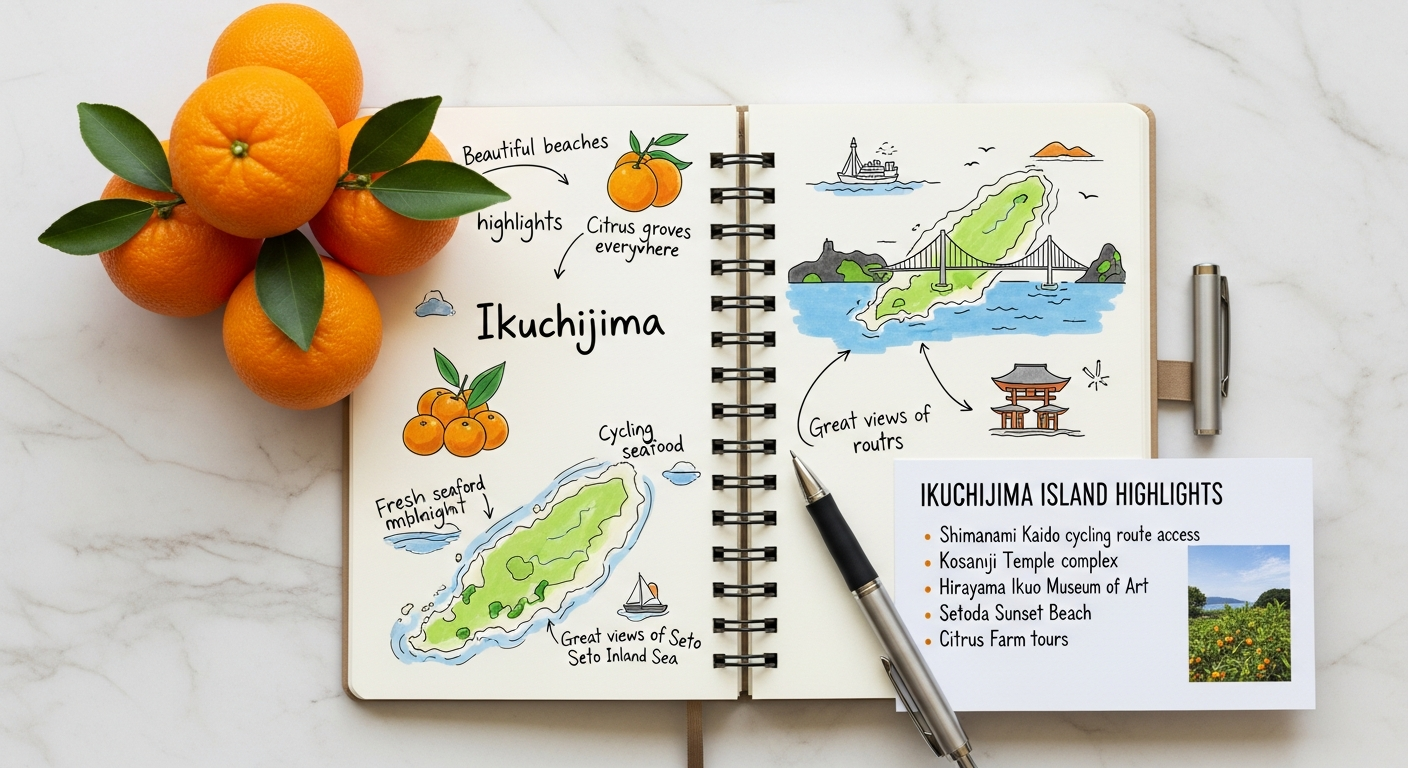
Ikuchijima isn’t just about art and food; it’s also a fantastic place to unwind, enjoy the natural beauty, and even take a dip.
Setoda Sunset Beach
Located on the western side of the island, Setoda Sunset Beach is a pristine, artificial white sand beach that lives up to its name, offering spectacular views of the sun dipping below the horizon. It’s an ideal spot for a break from cycling or a leisurely afternoon.
- Activities: Swimming (during summer months), sunbathing, picnicking, or simply relaxing with a book.
- Facilities: The beach is home to Michi-no-Eki Setoda, a roadside station offering shops selling local produce and souvenirs, restaurants, and clean public restrooms. There are also showers available for a small fee, which are a godsend for cyclists.
- Cycle Rest Stop: It’s a designated Shimanami Kaido cycle rental station, making it a convenient spot to pick up or drop off bikes, or simply take a break.
- Local Tip: Grab a lemon soft-serve from the Michi-no-Eki and find a spot on the sand to watch the sunset – it’s truly magical and a quintessential Ikuchijima experience.
Cycling the “Lemon Line”
While the main Shimanami Kaido route skirts the coast, Ikuchijima offers an additional, highly recommended cycling detour: the “Lemon Line.” This scenic route takes you inland, winding through the heart of the island’s lemon groves. It’s a bit hillier than the coastal path but offers breathtaking views of the terraced orchards and the glittering Seto Inland Sea beyond. It’s a great way to experience the island’s agricultural side and enjoy a different perspective.
- Pacing Your Ride: The main Shimanami route around Ikuchijima is relatively flat. Take your time, stop at viewpoints, and enjoy the tranquil atmosphere. The island is small enough that you can easily explore its main attractions in a day, even with a leisurely pace.
Accommodation Options
For those who wish to extend their stay and fully immerse themselves in Ikuchijima’s charm, there are several wonderful accommodation options:
- Guesthouse & Cafe WAKKA: Popular among cyclists, WAKKA offers comfortable dormitory and private rooms, a friendly atmosphere, and a cafe serving delicious meals. It’s conveniently located near Setoda Sunset Beach.
- Traditional Ryokan & Minshuku: Around Setoda Port and scattered across the island, you’ll find traditional Japanese inns (ryokan) and family-run guesthouses (minshuku) offering a taste of local hospitality, often with delicious home-cooked meals featuring local ingredients.
- Farm Stays: Some farms on the island offer unique farm stay experiences, allowing you to participate in citrus harvesting or other agricultural activities. These are often booked through specialized travel agencies or local tourism boards.
Staying overnight allows you to experience the island’s quiet evenings and early mornings, away from the day-tripper crowds.
Practicalities for Cyclists and Travelers
To ensure a smooth and enjoyable visit to Ikuchijima, here’s some essential practical information.
Getting There
- By Bicycle: The most popular way! Ikuchijima is directly on the Shimanami Kaido cycling route, easily accessible via the Ikuchi Bridge from Innoshima (north) or the Tatara Bridge from Omishima (south).
- By Ferry: Regular ferry services connect Onomichi to Setoda Port on Ikuchijima. This is a great option if you want to visit Ikuchijima without cycling the entire Shimanami Kaido, or if you prefer to transport your bike by ferry for part of the journey. The journey from Onomichi takes about 40-60 minutes depending on the type of ferry.
- By Bus: Limited local bus services operate on the island, connecting Setoda Port with other areas. However, cycling is by far the most convenient and enjoyable way to get around.
Bike Rentals
If you’re not bringing your own bike, the Shimanami Kaido Rental Bike system is incredibly convenient:
- Rental Stations: On Ikuchijima, you’ll find rental stations at Michi-no-Eki Setoda (Setoda Sunset Beach) and at Setoda Port.
- Costs: Standard bikes typically cost around ¥1,100 for a day, with an additional ¥1,100 refundable deposit. Electric-assist bikes are usually around ¥1,600-¥2,200 for a day (deposit often included or lower). Tandem bikes are also available.
- One-Way Rentals: The beauty of the Shimanami system is that you can pick up a bike at one station and drop it off at any other official station along the route, making it perfect for one-way journeys.
Luggage Transport Service
Don’t want to cycle with heavy bags? Sagawa Express offers a convenient “Shimanami Cycle Express” luggage delivery service. You can drop off your luggage at designated points (like Onomichi U2) in the morning, and it will be delivered to your accommodation further along the Shimanami Kaido by the evening. This service is invaluable for making your ride lighter and more enjoyable. Confirm current prices and drop-off/pick-up points with Sagawa Express or your accommodation.
Best Time to Visit
- Spring (March-May): Mild weather, cherry blossoms (late March to early April), and comfortable cycling conditions.
- Autumn (October-November): Pleasant temperatures, beautiful autumn foliage, and citrus harvest season.
- Summer (July-August): Can be hot and humid, but perfect for enjoying Setoda Sunset Beach and cooling off in the sea. Start cycling early in the morning to avoid the midday heat.
- Winter (December-February): Cooler temperatures but often sunny. Less crowded, but some smaller shops might have reduced hours.
Essential Gear for Cyclists
- Helmet: Always wear one. Rental bikes usually come with one.
- Water Bottle: Stay hydrated, especially on sunny days.
- Sunscreen and Hat: The Seto Inland Sea sun can be strong.
- Comfortable Cycling Clothes: Layered clothing is often best.
- Camera: You’ll want to capture the stunning scenery and unique art!
- Cash: While many places accept cards, some smaller shops or roadside stalls might be cash-only.
Local Etiquette
- Respect Private Property: Especially in citrus groves, refrain from touching or picking fruit without permission.
- Traffic Rules: Cycle on the left side of the road, follow traffic signals, and be mindful of pedestrians and cars.
- Greetings: A friendly “Konnichiwa” (hello) to locals can go a long way.
- Litter: Take all your trash with you or dispose of it in designated bins.