Tokyo to Onomichi: Quick Transport Comparison (2026)
| Method | Duration | Cost (one-way) | Frequency | Best For |
|---|---|---|---|---|
| Shinkansen (Nozomi/Hikari) + local train | ~3.5–4 hrs | ~¥18,000–¥20,000 | Every 15–30 min | Most comfortable, fastest |
| JR Pass (Hikari) + local | ~4–4.5 hrs | Included in pass | Every 30 min | Pass holders on multi-city trips |
| Highway Bus (Willer/JR Bus) | ~8–9 hrs (overnight) | ~¥5,000–¥8,000 | Nightly departures | Budget travelers, overnight savings |
| Domestic Flight (Hiroshima Airport) | ~1.5 hr flight + transfer | ~¥12,000–¥25,000 | 4–6 flights/day | When Shinkansen fully booked |
2026 Tip: With the JR Pass (7-day from ~¥50,000), the Shinkansen + San’yo Line combination to Onomichi represents excellent value if you’re visiting multiple Hiroshima region stops (Hiroshima, Miyajima, Onomichi, Fukuyama).
Step-by-Step: Tokyo Station to Onomichi (Shinkansen Route)
- Tokyo Station → Take Nozomi or Hikari Shinkansen to Fukuyama Station (~3h 20min)
- Fukuyama Station → Transfer to JR San’yo Line local train to Onomichi Station (~25 min, ¥330)
- Total journey: ~3h 45min | Cost: ~¥19,000–¥20,500 (standard seat)
Pro Tip (2026): Book Shinkansen tickets via the JR website or Smart EX app at least 1 month in advance for the best seat availability. Reserved seats are strongly recommended, especially on weekends and Golden Week.
Understanding Your Journey: Tokyo to Onomichi in 2026
Onomichi, while a prominent tourist destination, is not directly accessible by Shinkansen (bullet train) or major airports. This means that regardless of your chosen mode of transport from Tokyo, your journey will involve at least one transfer to a local train, bus, or car. The distance between Tokyo and Onomichi is significant, approximately 700 kilometers (435 miles), making it a journey that requires careful planning.
When deciding on the best way to travel, consider three primary factors: time, cost, and comfort. Each transportation method offers a different balance of these elements, catering to various travel styles and budgets for your 2026 trip.
- Time Efficiency: How quickly do you want to reach Onomichi? The Shinkansen is undoubtedly the fastest, while an overnight bus is the longest but offers a unique experience.
- Budget Constraints: Are you looking for the most economical way to travel, or are you willing to invest more for speed and convenience? Overnight buses are typically the cheapest, while Shinkansen tickets can be pricey without a Japan Rail Pass.
- Comfort Preferences: Do you prioritize a comfortable, spacious journey, or are you content with a more basic travel experience to save money? Shinkansen offers superior comfort, while buses can be more cramped, especially for longer journeys.
The main modes of transport we will explore are:
- Shinkansen (Bullet Train) + Local Train: The fastest and most popular option.
- Overnight Bus: The most budget-friendly choice.
- Flying + Local Transport: An alternative, particularly if combining with other destinations.
- Driving: For ultimate flexibility and those with an international driving permit.
Let’s delve into each option to help you make an informed decision for your unforgettable journey to Onomichi in 2026.
Option 1: The Fastest & Most Popular – Shinkansen + Local Train

For most travelers heading from Tokyo to Onomichi, the Shinkansen combined with a local train is the recommended method. It offers an excellent balance of speed, comfort, and reliability, getting you to the charming coastal town in just a few hours. This is especially true for those utilizing the Japan Rail Pass, a popular choice for international visitors in 2026.
Step-by-Step Shinkansen Journey (2026):
Your journey will typically involve two main legs: a long-distance Shinkansen ride and a shorter local train connection.
Leg 1: Tokyo to a Major Hub in Hiroshima Prefecture
From Tokyo Station or Shinagawa Station, you will board a Shinkansen on the Tokaido-Sanyo Shinkansen line. Your destination will be either Shin-Onomichi Station or Fukuyama Station.
-
Route 1: Tokyo/Shinagawa to Shin-Onomichi Station (Direct Shinkansen Stop)
- Shinkansen Type: You will need to take a Hikari or Sakura Shinkansen. The faster Nozomi Shinkansen does not stop at Shin-Onomichi Station. If you have a Japan Rail Pass, remember that the Nozomi is generally not covered, so Hikari or Sakura are your go-to trains.
- Travel Time: Approximately 4 to 4.5 hours.
- Frequency: Less frequent than Nozomi services, so check schedules in advance for 2026.
- Pros: A direct Shinkansen stop, minimizing transfers. Potentially slightly faster overall if the connection is smooth. Covered by the Japan Rail Pass (Hikari/Sakura).
- Cons: Shin-Onomichi Station is located further inland from the main town center (Onomichi Station). You will need to take a local bus or taxi from Shin-Onomichi Station to Onomichi Station, which adds another 10-15 minutes and extra cost (around 190-250 yen for the bus, or 1,000-1,500 yen for a taxi).
-
Route 2: Tokyo/Shinagawa to Fukuyama Station (More Common Transfer Point)
- Shinkansen Type: You can take any Shinkansen type (Nozomi, Hikari, Sakura) to Fukuyama. Nozomi trains are the most frequent and fastest, but remember the Japan Rail Pass restriction. If using a JR Pass, opt for Hikari or Sakura.
- Travel Time: Approximately 3.5 to 4 hours (Nozomi), or 4 to 4.5 hours (Hikari/Sakura).
- Frequency: Fukuyama is a larger hub, so Shinkansen services are very frequent.
- Pros: More frequent Shinkansen services, including Nozomi (if paying separately). Fukuyama Station is a major interchange, making the transfer to the local train straightforward.
- Cons: Requires an additional transfer to a local train.
Leg 2: Local Train from Shin-Onomichi or Fukuyama to Onomichi Station
-
From Shin-Onomichi Station:
- As mentioned, take a local bus or taxi to Onomichi Station. Buses are frequent and depart from outside the station.
- Travel time: 10-15 minutes by bus, slightly less by taxi.
-
From Fukuyama Station:
- Transfer to the JR Sanyo Line (local train). The platform for Onomichi will be clearly marked within Fukuyama Station.
- Travel Time: Approximately 20-25 minutes.
- Frequency: Local trains run very frequently.
- Pros: Seamless transfer within a major station. Arrives directly at Onomichi Station, which is centrally located and convenient for hotels, the port, and starting the Shimanami Kaido.
Estimated Costs and Booking (2026):
-
Shinkansen Ticket (One-way, Tokyo to Fukuyama/Shin-Onomichi):
- Non-reserved seat: Around 17,000 – 18,000 JPY.
- Reserved seat (Ordinary Car): Around 18,000 – 19,000 JPY.
- Green Car (First Class, reserved): Around 24,000 – 25,000 JPY.
- Note: Prices are estimates for 2026 and may vary slightly based on season, train type, and booking time.
- Local Train (Fukuyama to Onomichi): Approximately 420 JPY.
- Total Estimated Cost (One-way, without JR Pass): Roughly 18,000 – 20,000 JPY.
- Japan Rail Pass: If you have a 7, 14, or 21-day Japan Rail Pass, the Shinkansen (Hikari/Sakura) and local train portions are fully covered. This makes it an incredibly cost-effective option for travelers planning extensive rail travel throughout Japan in 2026.
Booking Your Shinkansen Tickets:
- Online: You can purchase tickets in advance via the JR Pass Official Website (if using a pass), JR East Train Reservation, or Smart EX (for Tokaido-Sanyo Shinkansen).
- At the Station: Tickets can be bought at any JR ticket office (Midori-no-Madoguchi) or from ticket machines at major JR stations like Tokyo or Shinagawa. Staff can assist you with routes and seat reservations.
Pros of Shinkansen + Local Train:
- Speed: Fastest way to reach Onomichi from Tokyo.
- Comfort: Spacious seats, ample legroom, quiet carriages, and amenities like power outlets and onboard food/drink sales.
- Reliability: Shinkansen are renowned for their punctuality.
- Scenic Views: Enjoy glimpses of Mount Fuji (on clear days) and the Japanese countryside.
- Japan Rail Pass Usability: Excellent value for JR Pass holders (using Hikari/Sakura trains).
Cons of Shinkansen + Local Train:
- Cost: Can be expensive if you’re not using a Japan Rail Pass.
- Transfers: Requires at least one transfer, either at Shin-Onomichi (to bus/taxi) or Fukuyama (to local train).
- Luggage: While Shinkansen offer overhead racks and some space behind the last row of seats, large luggage can still be cumbersome. Consider using a luggage forwarding service (Takuhaibin) if you have excessive bags.
Option 2: The Budget-Friendly Choice – Overnight Bus
Overnight Bus Journey Details (2026):
Overnight buses typically depart from major bus terminals in Tokyo in the evening and arrive in Onomichi the following morning.
-
Departure Points in Tokyo:
- Shinjuku Bus Terminal (Busta Shinjuku): A large, modern terminal above Shinjuku Station.
- Tokyo Station (Yaesu South Exit): Another major departure point.
- Other smaller terminals may also be available depending on the bus company.
-
Arrival Point in Onomichi:
- Most buses arrive at or near Onomichi Station, making onward travel very convenient.
- Travel Time: Approximately 9 to 12 hours, depending on the route, traffic, and number of rest stops.
- Bus Operators: Major operators include Willer Express, JR Bus (Kanto and Chugoku lines), and various local companies.
What to Expect on an Overnight Bus:
-
Seat Types: Buses come in various configurations, impacting comfort and price.
- Standard 4-row seats: Most basic and cheapest, similar to regular highway buses. Can be cramped for long journeys.
- Comfort/Relax 3-row seats: Wider seats with more legroom, often reclining further. A good balance of comfort and cost.
- Premium/Luxury 2-row seats: The most spacious and comfortable, often with amenities like privacy curtains, blankets, pillows, and personal entertainment systems. These are significantly more expensive but still cheaper than Shinkansen.
- Amenities: Most overnight buses offer a restroom onboard. Premium buses might also include power outlets, Wi-Fi, blankets, and eye masks.
- Rest Stops: Buses make several rest stops (typically 2-3) at service areas along the highway, allowing passengers to stretch their legs, use larger restrooms, and grab snacks.
Estimated Costs and Booking (2026):
-
One-way Ticket:
- Standard 4-row: Approximately 6,000 – 9,000 JPY.
- Comfort 3-row: Approximately 8,000 – 12,000 JPY.
- Premium 2-row: Approximately 10,000 – 15,000 JPY.
- Note: Prices are estimates for 2026 and fluctuate based on demand, day of the week, season, and how far in advance you book. Weekend and holiday travel will be more expensive.
Booking Your Overnight Bus Tickets:
-
Online:
- Willer Express: One of the largest and most popular bus companies, with an excellent English booking site.
- Japan Bus Online: An aggregator site that allows you to search and book tickets from various companies.
- Individual bus company websites (e.g., JR Bus).
- At Bus Terminals: Tickets can also be purchased at the bus terminals in Shinjuku or Tokyo Station, though booking in advance, especially for popular routes or seat types, is highly recommended for 2026.
Pros of Overnight Bus:
- Cost-Effective: Significantly cheaper than the Shinkansen, especially if you factor in the saved accommodation cost.
- Direct: Often a direct journey to Onomichi Station, eliminating transfers.
- Time-Saving (Daytime): Travel overnight means you don’t lose precious daytime hours.
- Convenient Arrival: Arrives early in the morning, allowing you to start your exploration of Onomichi right away.
Cons of Overnight Bus:
- Long Travel Time: The longest travel duration of all options.
- Comfort: Even premium seats are generally less comfortable than a Shinkansen seat, making a good night’s sleep challenging for some.
- Flexibility: Less flexible with departure times and routes compared to trains.
- Potential for Delays: Subject to traffic conditions, especially around major cities.
Option 3: The Alternative for Specific Needs – Flying + Local Transport
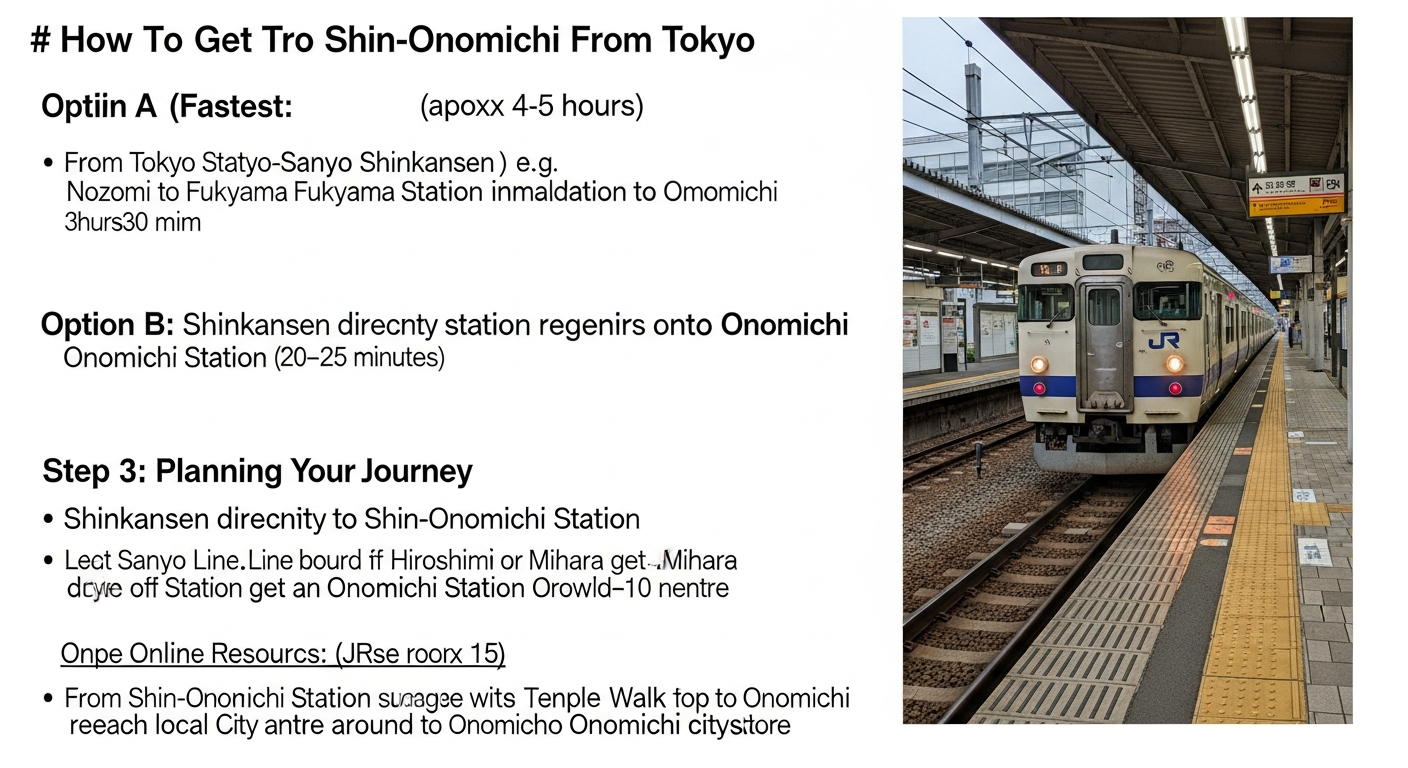
While not typically the most straightforward or cheapest option for Tokyo to Onomichi directly, flying can be a viable alternative for certain travelers in 2026, especially if you’re combining your trip with other destinations that are more conveniently reached by air, or if you find a particularly good flight deal. The closest major airports to Onomichi are Hiroshima Airport (HIJ) and Matsuyama Airport (MYJ). Hiroshima Airport is generally the more practical choice.
Flying Journey Details (2026):
Leg 1: Flight from Tokyo to Hiroshima Airport (HIJ)
-
Departure Airports in Tokyo:
- Haneda Airport (HND): Closer to central Tokyo, more domestic flights, generally preferred for convenience.
- Narita Airport (NRT): Further from Tokyo, but often hosts budget airlines offering cheaper fares.
-
Airlines:
- Full-service carriers: JAL (Japan Airlines), ANA (All Nippon Airways) offer frequent flights and good service.
- Low-cost carriers (LCCs): Peach Aviation, Jetstar Japan offer cheaper fares, especially when booked in advance, but may have stricter baggage policies and fewer amenities.
- Flight Time: Approximately 1 hour 20 minutes to 1 hour 30 minutes.
Leg 2: Transfer from Hiroshima Airport to Onomichi
This is where the journey becomes multi-modal. Hiroshima Airport is not directly connected to major train lines.
-
Airport Limousine Bus to Mihara Station:
- From Hiroshima Airport, take an airport limousine bus bound for Mihara Station. These buses are frequent and well-signed.
- Travel Time: Approximately 35-40 minutes.
- Cost: Around 840 JPY (as of 2026, subject to minor changes).
-
JR Sanyo Line from Mihara Station to Onomichi Station:
- At Mihara Station, transfer to a local JR Sanyo Line train heading towards Onomichi (one stop away).
- Travel Time: Approximately 10-15 minutes.
- Cost: Around 210 JPY.
Estimated Costs and Booking (2026):
-
Flight Ticket (One-way, Tokyo to Hiroshima):
- Full-service carriers: Can range from 10,000 JPY (promo fares) to 25,000+ JPY (standard fares).
- Low-cost carriers: Can be as low as 5,000 JPY, but typically 7,000 – 15,000 JPY, not including baggage fees.
- Airport Transfer + Local Train: Approximately 1,050 JPY.
- Total Estimated Cost (One-way): Highly variable, but generally in the range of 6,000 JPY (LCC promo) to 26,000+ JPY (full-service, standard fare).
Booking Your Flight and Transfers:
- Flights: Book directly through airline websites (JAL, ANA, Peach, Jetstar) or via online travel agencies like Skyscanner, Expedia, or Kayak. Booking well in advance (several months for 2026 travel) is crucial for securing the best LCC fares.
- Airport Bus: Tickets can be purchased at the airport bus ticket counter or from a ticket machine.
- Local Train: Use an IC card (Suica, Pasmo, Icoca) or purchase a paper ticket at Mihara Station.
Pros of Flying + Local Transport:
- Fastest “Air Time”: The actual flight duration is the shortest.
- Alternative Route: Useful if combining Onomichi with other destinations best reached by air.
- Potential for Deals: LCCs can offer very cheap flights if you’re flexible and book early.
Cons of Flying + Local Transport:
- Multiple Transfers: Requires transfers to/from airports, then bus, then local train, which can be cumbersome.
- Overall Travel Time: Door-to-door time often rivals or exceeds Shinkansen due to airport check-in, security, and transfers.
- Cost: Can be more expensive than the Shinkansen, especially if you don’t find a good LCC deal or if you have extra baggage.
- Environmental Impact: Flights have a higher carbon footprint than trains.
Option 4: The Flexible Adventure – Driving to Onomichi
For travelers seeking ultimate flexibility, the freedom to explore at their own pace, and perhaps a road trip adventure across Japan, driving from Tokyo to Onomichi is an option for 2026. This method is particularly suitable for groups or families with a lot of luggage, allowing for spontaneous stops and scenic detours. However, it’s also the longest and potentially most expensive option, factoring in tolls, gas, and car rental.
Driving Journey Details (2026):
- Distance: Approximately 700 kilometers (435 miles).
- Estimated Driving Time: 8 to 10 hours of pure driving time, not including stops for food, rest, or traffic. Expect the total journey to be 10-12+ hours.
-
Main Route: The primary route involves a significant portion of Japan’s extensive expressway network.
- Start from Tokyo and take the Tomei Expressway towards Nagoya.
- Transition to the Shin-Tomei Expressway, then the Isewangan Expressway, and then the Shin-Meishin Expressway, bypassing central Nagoya and Kyoto.
- Continue onto the Meishin Expressway towards Osaka.
- From Osaka, take the Sanyo Expressway towards Hiroshima.
- Exit the Sanyo Expressway at Onomichi Interchange (尾道IC).
Car Rental and Requirements:
- Car Rental Agencies: Major rental companies like Toyota Rent-a-Car, Nippon Rent-a-Car, Times Car Rental, and Orix Rent-a-Car have branches throughout Tokyo. Book well in advance for 2026, especially if traveling during peak season.
- International Driving Permit (IDP): Foreign visitors must possess a valid International Driving Permit (based on the 1949 Geneva Convention) in addition to their home country’s driving license. Ensure your IDP is issued by the appropriate authority in your home country before arriving in Japan.
- Navigation: Renting a car with an English-speaking GPS system is highly recommended. Many rental cars offer this feature. Alternatively, use smartphone navigation apps (Google Maps, Apple Maps) which work very well in Japan.
Costs Associated with Driving (2026):
-
Car Rental:
- Compact car: 8,000 – 12,000 JPY per day.
- Mid-size/SUV: 12,000 – 20,000+ JPY per day.
- Note: Prices vary based on rental duration, car type, insurance, and booking period.
-
Toll Fees: Japan’s expressways have significant tolls.
- Tokyo to Onomichi: Approximately 10,000 – 12,000 JPY one-way, depending on the exact route and discounts (e.g., ETC card discounts).
- Consider renting an ETC (Electronic Toll Collection) card with your car for smoother passage through toll gates and potential discounts.
-
Fuel Costs:
- A one-way trip of 700km will consume a substantial amount of fuel. Expect 7,000 – 10,000 JPY for gasoline, depending on your vehicle’s fuel efficiency and 2026 fuel prices.
- Parking: Onomichi has various parking lots, but they can fill up, especially during busy times. Expect to pay 100-200 JPY per hour or 500-1,500 JPY for overnight parking.
- Total Estimated Cost (One-way): A single driver could easily spend 25,000 – 35,000+ JPY on tolls, fuel
Recommended Resources
You might also enjoy How To Find The Best Vacation Rental Deals from Vacation Rental Planners.
Related reading: Mexico Vacation Guide Best Destinations (Vacation Rental Planners).