



Why a Train Pass is Essential for Exploring Hiroshima & the Chugoku Region
Hiroshima Prefecture, located in the heart of Japan’s Chugoku region, is a destination rich in history, natural beauty, and vibrant culture. While Hiroshima city itself offers poignant historical sites like the Peace Memorial Park and Museum, and the iconic Shukkei-en Garden, the allure of the region extends far beyond its urban core. Just a short ferry ride away lies Miyajima Island, home to the UNESCO World Heritage Itsukushima Shrine with its famous floating torii gate. Venturing further east, you’ll discover Onomichi, a charming hillside town renowned for its temple walk, literary heritage, and as the starting point of the Shimanami Kaido cycling route.
For travelers planning to immerse themselves in this diverse tapestry of experiences, a train pass often presents the most convenient and economical solution. Japan’s railway network, operated primarily by Japan Railways (JR), is famed for its punctuality, efficiency, and extensive coverage. Utilizing a train pass allows for unlimited travel within specified areas, significantly reducing the per-ride cost, especially for those venturing to multiple destinations. This becomes particularly advantageous when considering longer journeys, such as connecting Hiroshima with other major cities like Osaka or Kyoto, or exploring regional gems like Okayama or Yamaguchi. For your 2026 trip, a well-chosen train pass won’t just save you money; it will unlock unparalleled flexibility, allowing spontaneous detours and deeper exploration of the Chugoku region’s hidden treasures, from the scenic beauty of the Setouchi Inland Sea to the historical significance embedded in every town.
Key Train Passes Covering Hiroshima Prefecture in 2026

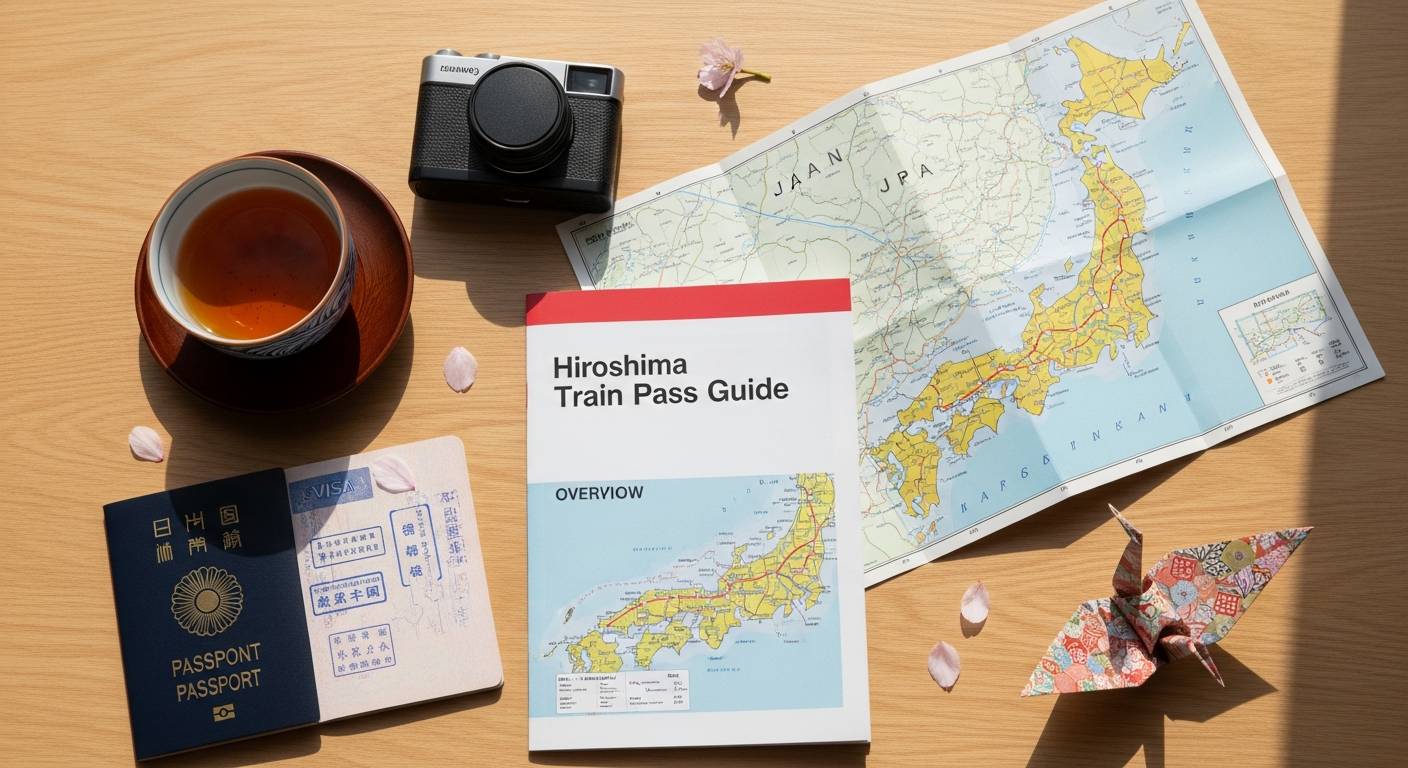
Navigating the array of train passes can seem daunting, but understanding their individual scopes and benefits is crucial for making an informed decision for your 2026 journey. Here, we break down the most relevant passes for travelers focusing on Hiroshima and the surrounding regions.
The All-Encompassing: Japan Rail Pass (JR Pass)
- Overview: The Japan Rail Pass is the undisputed king of Japanese train passes, offering unparalleled access to almost the entire JR network nationwide, including Shinkansen (bullet trains), limited express trains, local trains, and even some JR buses and ferries (like the one to Miyajima). It comes in 7, 14, or 21-day durations, with options for Ordinary Car or Green Car (first-class).
- Validity: Covers all of Japan, including all JR lines within Hiroshima Prefecture and connections to major cities like Tokyo, Kyoto, Osaka, and Fukuoka.
- Best For: Travelers planning an extensive, multi-region tour of Japan that includes Hiroshima as one of many stops. If your itinerary involves significant travel across distant regions, the JR Pass often provides the best value.
- Considerations: While comprehensive, its cost might be prohibitive if your travel is confined solely to the Chugoku region or a very small number of major cities. Ensure your itinerary justifies the investment.
Regional Focus: JR Sanyo-San’in Area Pass
- Overview: This pass offers unlimited travel on JR lines, including the Sanyo Shinkansen (between Shin-Osaka and Hakata), within the expansive Sanyo and San’in regions. This covers a vast area including Osaka, Okayama, Hiroshima, Yamaguchi, and Fukuoka (Hakata), as well as the coastal San’in region (Tottori, Shimane).
- Validity: 7 consecutive days. It covers Hiroshima extensively, including the Shinkansen to and from Osaka/Kyoto, making it excellent for those combining Kansai with Hiroshima and beyond. It also includes the JR ferry to Miyajima.
- Best For: Travelers whose primary focus is the Kansai region (Osaka, Kyoto) and the western Honshu island, including Hiroshima and potentially extending to Fukuoka or the less-explored San’in coast. It’s a fantastic option if you’re flying into Kansai and out of Fukuoka, or vice-versa, with Hiroshima as a central hub.
- Considerations: Does not cover destinations east of Shin-Osaka (e.g., Nagoya, Tokyo).
The Scenic Route: JR Setouchi Area Pass
- Overview: Designed for exploring the beautiful Setouchi Inland Sea region, this pass offers 7 consecutive days of unlimited travel on JR lines, including the Sanyo Shinkansen (between Shin-Osaka and Okayama), and several non-JR railway lines and ferries that crisscross the Seto Inland Sea.
- Validity: Covers Hiroshima, Okayama, Kagawa (Shikoku), and parts of Hyogo and Yamaguchi. Critically, it includes the JR ferry to Miyajima and various ferry routes to Setouchi islands, making it ideal for island hopping.
- Best For: Those keen on exploring the islands and coastal areas of the Seto Inland Sea, including art islands like Naoshima (though requires separate ferry tickets from Uno Port), Takamatsu, and destinations like Onomichi. It’s perfect if your 2026 trip prioritizes scenic coastal towns and island adventures.
- Considerations: The Shinkansen coverage is limited to Okayama from Shin-Osaka, meaning you’d use local or rapid JR lines from Okayama to Hiroshima, or pay extra for the Shinkansen segment between Okayama and Hiroshima. However, it offers unique access to specific local lines and ferries crucial for Setouchi exploration.
Hiroshima-Centric: JR Hiroshima Yamaguchi Area Pass
- Overview: This pass focuses specifically on Hiroshima and the neighboring Yamaguchi Prefecture, offering 5 consecutive days of unlimited travel on JR lines, including the Sanyo Shinkansen (between Mihara and Hakata).
- Validity: Covers all JR lines within Hiroshima and Yamaguchi prefectures, and the Shinkansen segment to Hakata (Fukuoka). It also includes the JR ferry to Miyajima.
- Best For: Travelers whose itinerary is concentrated on Hiroshima city, Miyajima, and the historical and scenic attractions of Yamaguchi Prefecture (e.g., Iwakuni, Hagi, Shimonoseki). It’s an excellent choice if you’re flying into or out of Fukuoka and want to explore Hiroshima and its immediate western neighbor.
- Considerations: Does not extend east of Mihara, meaning no coverage for Osaka or Kyoto.
Broader Regional Coverage: JR Okayama Hiroshima Yamaguchi Area Pass
- Overview: A slightly broader version of the Hiroshima Yamaguchi pass, this option covers 5 consecutive days of unlimited travel on JR lines within Okayama, Hiroshima, and Yamaguchi prefectures, including the Sanyo Shinkansen (between Shin-Osaka and Hakata).
- Validity: Encompasses a significant chunk of western Honshu, including Okayama, Hiroshima, Yamaguchi, and the Shinkansen connection to Osaka and Fukuoka. Includes the JR ferry to Miyajima.
- Best For: Ideal for travelers exploring the wider Chugoku region, specifically combining major cities like Okayama (known for Korakuen Garden), Hiroshima, and Yamaguchi, with convenient Shinkansen access to Osaka and Fukuoka. If you’re looking for a regional pass that covers these key areas and offers good Shinkansen coverage, this is a strong contender for your 2026 trip.
- Considerations: While offering excellent value for its coverage area, ensure your itinerary aligns with these specific prefectures to maximize its benefits.
Detailed Analysis of Top Recommendations for Hiroshima & Chugoku Region in 2026
Scenario 1: Comprehensive Japan Tour Including Hiroshima
If your 2026 trip involves extensive travel across multiple regions of Japan, perhaps starting in Tokyo, moving to Kyoto and Osaka, then down to Hiroshima and potentially Kyushu, the Japan Rail Pass remains the gold standard. Its nationwide coverage and flexibility for long-distance Shinkansen travel offer unmatched convenience and often significant savings over individual tickets. For instance, a return Shinkansen trip from Tokyo to Hiroshima alone covers a substantial portion of the 7-day JR Pass cost. If you plan to visit Hiroshima, then head further south or back north across the country, this pass is designed for you.
Scenario 2: Focus on Kansai (Osaka/Kyoto) and Western Honshu (Hiroshima, Okayama, Yamaguchi)
For travelers flying into Kansai International Airport (KIX) and planning to explore Osaka, Kyoto, Nara, and then venture west to Hiroshima and possibly Fukuoka, the JR Sanyo-San’in Area Pass or the JR Okayama Hiroshima Yamaguchi Area Pass are excellent choices. The Sanyo-San’in Pass is particularly robust, covering the Shinkansen all the way to Hakata (Fukuoka) and extending north to the San’in coast. This is ideal if you envision a loop through Kansai, Hiroshima, and perhaps a scenic journey along the Sea of Japan coast. The Okayama Hiroshima Yamaguchi Pass offers slightly less coverage but is more cost-effective if your western exploration is limited to these three prefectures, still providing vital Shinkansen links to Osaka and Fukuoka.
Scenario 3: Deep Dive into the Setouchi Inland Sea & Chugoku’s Coastal Gems (e.g., Onomichi, Innoshima)
If your 2026 travel dreams include leisurely exploring the picturesque Setouchi Inland Sea, cycling the Shimanami Kaido, visiting art islands, and soaking in the atmosphere of towns like Onomichi, the JR Setouchi Area Pass is your best friend. While its Shinkansen coverage is limited to Okayama from Shin-Osaka, its unique inclusion of various non-JR lines and ferries makes it invaluable for true Setouchi exploration. Imagine taking a train facilitated by this pass to Onomichi, where you can capture stunning Onomichi Photography Spots from the Senkoji Temple Park, then embarking on a cycling adventure across the Shimanami Kaido, perhaps even spending a night on Innoshima Japan Travel Guide‘s charming island. This pass offers the flexibility to combine train travel with essential ferry connections, opening up a world of island adventures that other passes might overlook. It’s perfect for a slower, more immersive experience in this captivating region, giving you the freedom to discover What To Do In Onomichi Japan and its surrounding islands at your own pace.
Scenario 4: Hiroshima & Immediate Surroundings (Miyajima, Yamaguchi)
For those whose 2026 itinerary is tightly focused on Hiroshima city, Miyajima, and the nearby attractions of Yamaguchi Prefecture (like Iwakuni’s Kintaikyo Bridge or Hagi’s samurai district), the JR Hiroshima Yamaguchi Area Pass offers excellent value. It provides 5 days of unlimited JR travel within these prefectures, including the Shinkansen connection to Fukuoka if you’re flying in or out of that city. This pass is ideal for a dedicated exploration of Hiroshima’s poignant history and Yamaguchi’s scenic beauty without venturing too far east or west.
Always remember to calculate the approximate cost of individual train tickets for your planned itinerary versus the price of a pass. JR’s online fare calculators can be incredibly helpful for this comparison. Consider the convenience factor too: unlimited travel means no need to buy tickets for each journey, saving time and hassle.
Maximizing Your Pass: Itineraries & Practical Tips for 2026 Travel
Once you’ve chosen your ideal pass for your 2026 adventure, the next step is to plan how to make the most of it. Here are some itinerary ideas and practical advice.
Sample Itineraries Leveraging a Regional Pass
Let’s assume you’ve opted for a regional pass like the JR Sanyo-San’in Area Pass or the JR Okayama Hiroshima Yamaguchi Area Pass for your 7-day adventure, allowing you to explore beyond Hiroshima.
- Day 1-2: Hiroshima & Miyajima. Arrive in Hiroshima. Dedicate your first day to the Peace Memorial Park, Museum, and Atomic Bomb Dome. In the evening, explore Hiroshima city’s vibrant food scene. Day two, take the JR Sanyo Line to Miyajimaguchi and the JR ferry (covered by your pass) to Miyajima Island. Spend the day exploring Itsukushima Shrine, Daisho-in Temple, and enjoying the deer.
- Day 3: Onomichi & Shimanami Kaido. Take the Shinkansen or local JR train east to Onomichi. Explore the charming temple walk, visit Senkoji Temple for panoramic views (perfect for Onomichi Photography Spots), and soak in the nostalgic atmosphere. If time permits, rent a bicycle and cycle a portion of the Shimanami Kaido, perhaps to Mukaijima or even as far as Innoshima, a fantastic way to experience the Setouchi region. Our What To Do In Onomichi Japan guide offers more detailed suggestions.
- Day 4: Innoshima & Setouchi Exploration. Dedicate this day to deeper exploration of the Shimanami Kaido, perhaps focusing on Innoshima Japan Travel Guide‘s unique attractions like the Murakami Suigun Castle remains or enjoying the island’s citrus farms. You can easily access Innoshima by cycling from Onomichi or taking a local bus/ferry.
- Day 5: Okayama & Kurashiki. Head east to Okayama. Visit Korakuen Garden, one of Japan’s top three landscape gardens, and Okayama Castle. In the afternoon, take a short train ride to Kurashiki’s Bikan Historical Quarter, famous for its picturesque canal, willow trees, and traditional architecture.
- Day 6-7: Return to Kansai or Explore Yamaguchi. Depending on your flight schedule, you could return to Osaka or Kyoto for last-minute sightseeing or shopping. Alternatively, use your pass to explore Yamaguchi Prefecture, visiting Iwakuni’s stunning Kintaikyo Bridge, or venturing to Hagi for its samurai residences and pottery.
Practical Tips for Your 2026 Journey
- Booking & Activation: Most regional passes (and the JR Pass) must be purchased before you arrive in Japan, either online or through authorized agents. You’ll receive an exchange order which you then present at a JR ticket office in Japan (e.g., at major airports or train stations) to receive your actual pass. Do this as soon as you arrive to activate it.
- Seat Reservations: While many local trains allow free seating, Shinkansen and limited express trains often have reserved seats. Your pass typically covers these reservations. It’s highly recommended to reserve seats, especially during peak travel seasons (e.g., Golden Week, Obon, New Year’s) or for popular routes. You can make reservations at any JR ticket office (Midori-no-Madoguchi) or sometimes via machines.
- Validity Period: Passes are typically valid for consecutive days. Plan your itinerary to maximize these days, grouping your longer journeys together.
- Non-JR Lines: Be aware that passes generally only cover JR lines. If your itinerary involves private railways (e.g., some lines to specific attractions, or many city subways), you’ll need to purchase separate tickets or use an IC card.
- IC Cards as Supplements: Even with a pass, having a rechargeable IC card (like Icoca, Suica, or Pasmo) is incredibly useful for local non-JR transport, buses, streetcars (like Hiroshima Electric Railway), and even vending machines or convenience stores. Load it up for seamless smaller transactions.
- Check Train Schedules: Use apps like Japan Transit Planner (Jorudan) or Navitime for Japan Travel to check train schedules, platforms, and connections. They can also tell you if a route is covered by your specific pass.
- Keep Your Pass Safe: Your pass is valuable and cannot be reissued if lost or stolen. Treat it like cash and keep it secure.
Beyond the JR Network: Local Transport & Alternative Passes in Hiroshima for 2026
While JR passes are fantastic for inter-city travel, your 2026 exploration of Hiroshima will inevitably involve local transport options that complement the JR network. Understanding these can further enhance your mobility within the city and to immediate surroundings.
Hiroshima Electric Railway (Hiroden) – The Streetcar Network
Hiroshima boasts Japan’s largest streetcar network, operated by Hiroden. These charming trams are an iconic part of the city’s landscape and an incredibly convenient way to get around the main attractions within Hiroshima city. From Hiroshima Station, you can easily reach the Peace Memorial Park, Hondori shopping street, and Shukkei-en Garden using the streetcars.
- Fares: Most rides within the city center cost a flat fare. You can pay with cash (exact change often required, or use the change machine on board), or tap your IC card (Icoca, Suica, Pasmo, etc.).
- 1-Day Streetcar Pass: For extensive streetcar use, consider the 1-Day Streetcar Pass. It offers unlimited rides on all Hiroden streetcar lines for a single day. This can be a cost-effective option if you plan to visit multiple city attractions.
- 1-Day Streetcar & Ferry Pass: An even better option for Miyajima visitors is the 1-Day Streetcar & Ferry Pass, which includes unlimited streetcar rides and round-trip travel on the Hiroden ferry to Miyajima Island. This is a great alternative if your JR Pass doesn’t cover the Miyajima ferry or if you don’t have a JR Pass at all.
Local Buses
Hiroshima also has an extensive bus network, operated by various companies including Hiroden Bus, Hiroshima Bus, and Geiyo Bus. Buses are useful for reaching areas not covered by the streetcar, or for more direct routes. Again, IC cards are widely accepted, and cash payment is possible.
Visit Hiroshima Tourist Pass
For visitors without a JR Pass or those needing broader local coverage, the Visit Hiroshima Tourist Pass (available in various durations and tiers) can be a good option. These passes offer unlimited rides on designated JR local trains within Hiroshima Prefecture, Hiroden streetcars, local buses, and the JR/Hiroden ferries to Miyajima. Check the official Hiroshima tourism website for the latest versions and coverage details for 2026, as these passes are periodically updated.
- Type: Often comes in Small, Medium, and Large Area versions, catering to different travel scopes.
- Best For: Tourists primarily staying within Hiroshima Prefecture and not needing long-distance Shinkansen travel. It’s particularly useful for maximizing your exploration of Hiroshima city, Miyajima, and nearby towns like Iwakuni (depending on the pass type).
- Considerations: While comprehensive for local travel, it does not offer the same inter-regional Shinkansen access as the JR regional passes.
IC Cards: Your Everyday Travel Companion
Regardless of whether you purchase a train pass, having an IC card is highly recommended for your 2026 Japan trip. Cards like Icoca (Western Japan), Suica (Tokyo), and Pasmo (Tokyo) are interoperable across most of Japan. You can purchase them at major train stations, including Hiroshima Station. Simply load them with yen, tap to enter and exit train gates or board buses/streetcars, and avoid the hassle of buying individual tickets. They are also accepted at many convenience stores and vending machines, making small purchases incredibly convenient.
Ferries to Miyajima
To reach Miyajima Island from Miyajimaguchi Station, you have two ferry options:
- JR Miyajima Ferry: This ferry is covered by most JR Passes and the Visit Hiroshima Tourist Pass. It offers a slightly longer route that passes directly in front of the iconic floating torii gate.
- Hiroden Ferry: This ferry is covered by the 1-Day Streetcar & Ferry Pass and some Visit Hiroshima Tourist Pass versions. It offers a direct route to the island.
Both ferries depart frequently and take about 10 minutes. Check which one aligns with your chosen pass.
Planning Your Trip for 2026: When to Buy and Where to Go
Effective planning for your 2026 Japanese adventure involves not just choosing the right pass, but also considering the timing of your purchase and the seasonal nuances of your destinations.
When to Purchase Your Pass
For most JR Passes and regional passes, it’s generally recommended to purchase your exchange order well in advance of your departure to Japan. This allows ample time for delivery if buying online or through a travel agent. While you can typically exchange the order for your physical pass within three months of the issue date, securing it early ensures peace of mind, especially if you’re traveling during peak seasons in 2026.
- Online Purchase: Many official JR websites and authorized resellers offer online purchasing. Compare prices and check for any promotions.
- Travel Agents: Local travel agencies that specialize in Japan travel can also assist with pass purchases and often provide valuable advice.
Remember that the exchange order needs to be converted into the actual pass at a JR ticket office in Japan. You’ll need your passport and the exchange order for this process.
Seasonal Considerations for Your 2026 Itinerary
The Chugoku region, including Hiroshima and Onomichi, offers distinct beauty in every season:
- Spring (March-May): Cherry blossoms (sakura) paint the landscape in delicate pinks and whites. Hiroshima’s Peace Memorial Park, Shukkei-en Garden, and Onomichi’s Senkoji Park are spectacular. This is a very popular time, so expect crowds and book accommodations and train reservations well in advance.
- Summer (June-August): Warm and humid, but vibrant with festivals (e.g., Hiroshima Flower Festival). The Setouchi Inland Sea is beautiful for island hopping and cycling the Shimanami Kaido. Consider visiting Innoshima Japan Travel Guide for its refreshing coastal breezes. Early summer (June) is rainy season, but it often clears up by July.
- Autumn (September-November): Arguably one of the best times to visit, with comfortable temperatures and stunning autumn foliage. Miyajima’s Momijidani Park is famous for its fiery reds and golds, and the hills around Onomichi offer picturesque views. Ideal for Onomichi Photography Spots.
- Winter (December-February): Cooler temperatures, sometimes with light snow, especially in mountainous areas. Fewer crowds mean a more tranquil experience. Miyajima’s floating torii against a snowy backdrop is magical. Enjoy seasonal seafood and illuminations.
No matter when you choose to visit in 2026, tailoring your train pass to your specific itinerary and seasonal interests will ensure an unforgettable journey through the heart of western Japan.
Final Thoughts & Making the Right Choice for Your 2026 Journey
Choosing the ideal train pass for your 2026 Hiroshima adventure and beyond is a pivotal step in planning a seamless and enriching journey. The decision ultimately hinges on the scope of your travel: are you embarking on a grand nationwide tour, focusing intensely on the Chugoku and Kansai regions, or dedicating your time to the serene beauty of the Setouchi Inland Sea, including gems like Onomichi and Innoshima?
Remember to:
- Map Your Itinerary: List all the cities and regions you plan to visit.
- Calculate Individual Fares: Use online JR fare calculators to estimate the cost of point-to-point tickets for your planned routes.
- Compare Pass Costs: Pit the total individual fares against the price of various passes.
- Consider Convenience: The value of a pass isn’t just monetary; it’s also the ease of unlimited travel, no need for constant ticket purchases, and the flexibility to spontaneously hop on a train.
Whether you opt for the extensive reach of the Japan Rail Pass, the regional depth of a Sanyo-San’in or Okayama Hiroshima Yamaguchi Pass, or the unique Setouchi Area Pass that unlocks coastal and island exploration from What To Do In Onomichi Japan to Innoshima Japan Travel Guide, a well-chosen train pass will be your key to unlocking the wonders of Hiroshima and its captivating surroundings. We at Onomichi Guide wish you an incredible and well-traveled journey through Japan in 2026!
Frequently Asked Questions
Can I use the Japan Rail Pass for the ferry to Miyajima?▾
Are there any passes specifically for just Hiroshima city’s local transport?▾
Do I need to make seat reservations for Shinkansen with a train pass?▾
Can I buy these train passes once I arrive in Japan in 2026?▾
Recommended Resources
Related reading: Florida Vacation Spots Worth Visiting (Vacation Rental Planners).
Explore Best Ski Resorts In The Us 2026 for additional insights.