


The Ultimate Guide to Senko-ji Temple Ropeway and Onomichi’s Iconic Hillside Views
Nestled along the shores of the Seto Inland Sea, Onomichi is a town that feels as though it has been frozen in a more poetic era of Japanese history. Known as the “Town of Slopes,” its narrow, winding alleys and steep stone staircases have inspired countless writers, directors, and artists for decades. At the heart of this cinematic landscape lies Senko-ji Temple, a spiritual sanctuary perched high above the port, offering what many consider to be the most beautiful panoramic views in all of Japan.
For travelers exploring the Hiroshima or Setouchi region, a visit to Senko-ji is more than just a temple tour; it is an immersion into the nostalgic soul of the country. Whether you are arriving by the Shimanami Kaido cycling route or taking a day trip from Hiroshima City, the journey up the Senko-ji Ropeway provides an effortless ascent into a world of vermillion temples, ancient rock formations, and the shimmering blue waters of the Onomichi Channel. In this comprehensive guide, we will explore everything you need to know about navigating the ropeway, exploring the temple grounds, and finding the hidden gems tucked away in Onomichi’s hillside.
Navigating the Senko-ji Ropeway: Tickets, Hours, and Experience
The Senko-ji Ropeway is the most popular way to reach the summit of Mt. Senko-ji, and for good reason. As the glass-walled gondola rises from the base station near the Nagae-guchi intersection, the town of Onomichi unfolds beneath you like a living map. The three-minute journey is short but spectacular, offering a bird’s-eye view of the dense cluster of traditional houses, the winding railway tracks of the JR Sanyo Line, and the labyrinthine paths you will soon explore on foot.
Practical Information for Visitors:
The ropeway is wheelchair and stroller accessible, making it an excellent option for families and those with limited mobility who still wish to enjoy the summit’s panoramic observatory.
Exploring Senko-ji Temple: History, Legends, and Architecture
Founded in 806 AD by the legendary monk Kobo Daishi (the founder of Shingon Buddhism), Senko-ji Temple is the crown jewel of Onomichi’s 25-temple pilgrimage. The temple is famous for its striking red lacquer Main Hall (Hondo), which appears to cling precariously to the side of the cliff. Unlike many traditional Japanese temples that sit on flat grounds, Senko-ji is integrated into the rugged granite terrain of the mountain.
One of the most distinctive features of the temple is the **Tama-iwa (Jewel Rock)**. Legend has it that a massive, glowing gem once sat atop this rock, serving as a lighthouse for sailors navigating the Seto Inland Sea. While the original “jewel” is long gone, the rock remains a focal point of the temple grounds. Nearby, you will find the **Kusari-yama (Chain Mountain)**, where adventurous visitors can use heavy iron chains to scale a steep rock face for a meditative (and adrenaline-pumping) challenge.
Take a moment to listen to the sounds of the temple. Senko-ji’s bell is ranked among the “100 Best Soundscapes of Japan.” Its resonance, combined with the distant whistles of ships in the harbor below, creates an atmosphere of profound tranquility that has remained unchanged for centuries.
The Path of Literature and Cat Alley: A Stroll Through Onomichi’s Soul
After enjoying the temple, begin your descent toward the town via the **Path of Literature (Bungaku no Michi)**. This winding trail features 25 large stone monuments inscribed with poems and excerpts from famous Japanese authors who lived in or were inspired by Onomichi, such as Shiga Naoya and Fumiko Hayashi. Even if you cannot read Japanese, the path is incredibly scenic, weaving through giant boulders and offering shaded viewpoints of the sea.
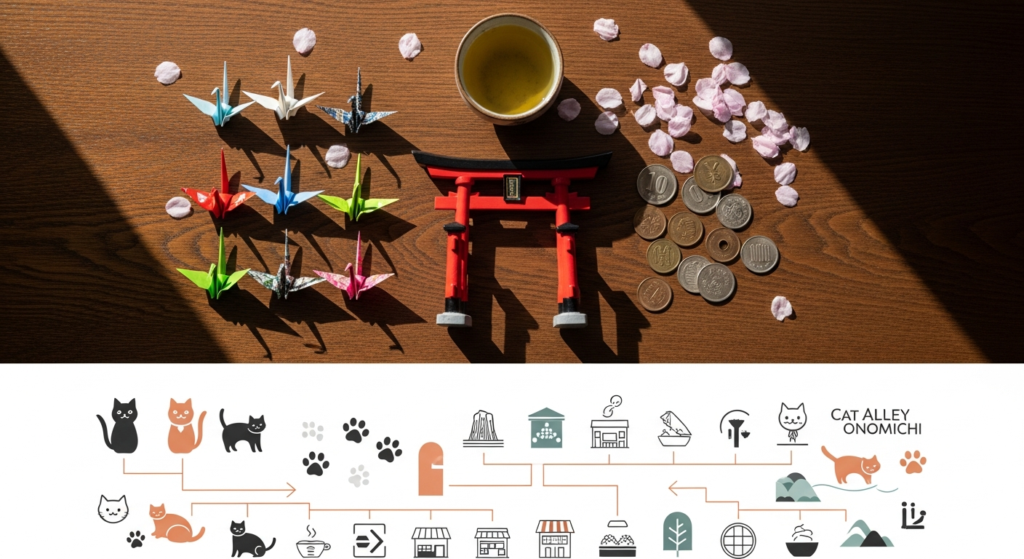
As you continue downward, keep an eye out for signs leading to **Neko no Hosomichi (Cat Alley)**. Onomichi is famously known as a “Cat Town,” and this particular stretch of the hillside is a sanctuary for both real feline residents and artistic interpretations of them.
The Best Viewpoints: From the PEAK Observatory to the Granite Boulders
While the ropeway offers a moving view, the summit of Mt. Senko-ji provides several stationary vantage points that are perfect for photography.
1. **Senko-ji Park PEAK Observatory:** Recently renovated, this sleek, modern bridge-like structure offers a 360-degree unobstructed view. From here, you can see the Shimanami Kaido’s Innoshima Bridge in the distance and the intricate dance of ferries crossing the Onomichi Channel. It is especially breathtaking at sunset when the islands of the Seto Inland Sea turn into dark silhouettes against an orange sky.
2. **The Observation Deck at the Ropeway Station:** Located right at the top of the lift, this is the easiest spot for a quick photo, featuring a “Lover’s Sanctuary” monument that is popular with couples.
3. **The Kyoyu-iwa (Mirror Rock):** This massive flat rock face within the temple grounds reflects the sunlight in a way that creates a natural glow, providing a unique foreground for photos of the red temple buildings against the blue sea.
For the best light, try to reach the summit in the late afternoon. The “Golden Hour” in Onomichi is magical, as the sun reflects off the water and the terracotta tiles of the hillside houses.
Where to Eat and Drink: Onomichi Ramen and Hillside Cafes
Exploring the slopes of Onomichi is sure to work up an appetite. Fortunately, the town is home to one of Japan’s most celebrated regional varieties of noodles: **Onomichi Ramen**.
If you prefer a quieter break, the hillside is dotted with “cliffside cafes” that offer spectacular views. **Common (Cafe & Gallery)** is a popular spot located near the Path of Literature, known for its waffles and floor-to-ceiling windows. For a more traditional experience, look for small tea houses near the temple that serve *warabi-mochi* (brackish starch dumplings) and chilled green tea.
For those heading back toward the station, don’t miss the **Onomichi U2** complex. A converted maritime warehouse, it now houses a stylish bakery, restaurant, and boutique hotel, catering heavily to the cycling community of the Shimanami Kaido.
Seasonal Magic: Cherry Blossoms and Festivals
While Senko-ji is a year-round destination, certain seasons elevate the experience to something truly extraordinary.
FAQ: Common Travel Questions About Senko-ji
1. Is the ropeway necessary, or can I walk both ways?
You can certainly walk both ways! However, the climb is quite steep and involves hundreds of stairs. Taking the ropeway up saves your energy for exploring the sprawling temple grounds and the various side paths. Walking down is highly recommended so you don’t miss the Path of Literature or Cat Alley.
2. How much time should I allocate for Senko-ji?
To truly appreciate the ropeway, the temple, the observatory, and a slow walk back down through the hillside cafes, you should set aside at least 2 to 3 hours. If you plan to eat ramen at the base and browse the shopping arcade, a half-day (4-5 hours) is ideal.
3. Is Onomichi a good day trip from Hiroshima or Okayama?
Yes, it is very accessible. From Hiroshima, it takes about 40-50 minutes via the Shinkansen (to Shin-Onomichi Station) or about 90 minutes via local JR trains. From Okayama, it’s roughly an hour by local train. It is a perfect addition to a regional itinerary.
4. Are there luggage storage facilities?
Yes, JR Onomichi Station has plenty of coin lockers. There is also a luggage delivery service (Sagawa Express) located near the station that can transport your bags to your next hotel or across the Shimanami Kaido if you are cycling.
5. Is the area accessible for travelers with limited mobility?
The ropeway itself and the summit observatory (PEAK) are accessible. However, the temple grounds and the paths leading down the mountain are very steep with many uneven stone steps. Those with mobility issues should consider taking the ropeway for a round-trip rather than attempting the descent on foot.
Conclusion: Planning Your Onomichi Adventure
Senko-ji Temple and its iconic ropeway offer a rare glimpse into the “Old Japan” that many travelers hope to find. It is a place where the pace of life slows down, dictated by the rhythm of the tides and the ringing of temple bells. Whether you are a photography enthusiast looking for that perfect shot of the Seto Inland Sea, a cat lover seeking feline friends in the alleyways, or a history buff exploring ancient Buddhist sites, Onomichi delivers an unforgettable experience.
As you plan your 2026 trip to the Setouchi region, remember that Onomichi is best enjoyed with a spirit of exploration. Don’t be afraid to wander off the main path—often the most beautiful view or the most charming cafe is just one extra flight of stairs away. Pack comfortable walking shoes, keep your camera ready, and prepare to fall in love with the nostalgic hillside charm of Senko-ji.