


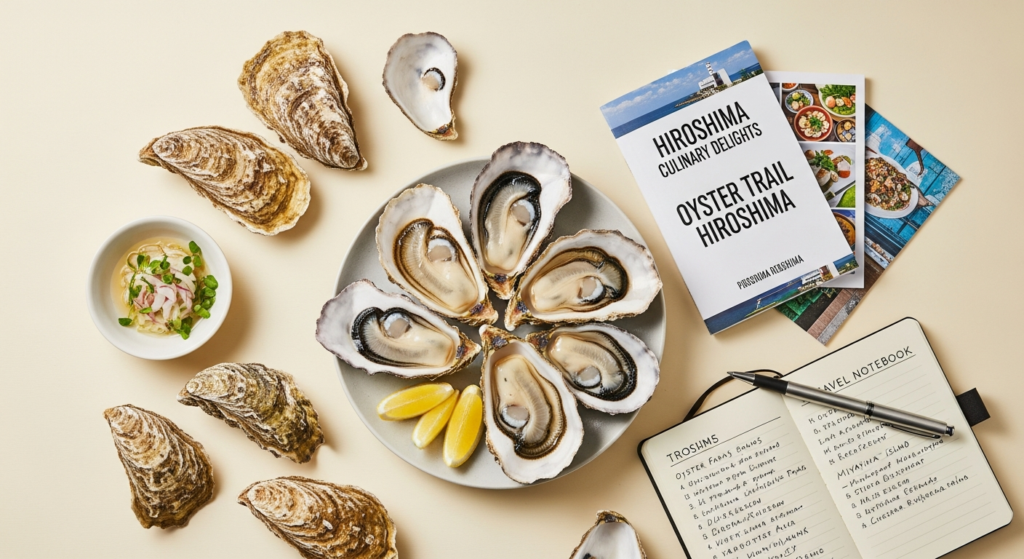
Hiroshima’s Briny Treasures: Your Ultimate Guide to Eating Oysters in the Oyster Capital
The Briny Heart of Hiroshima: Why Oysters Reign Supreme
Hiroshima Prefecture isn’t just known for its stunning landscapes and rich history; it’s also the undisputed capital of oyster cultivation in Japan, accounting for over 60% of the nation’s total production. But what makes Hiroshima oysters so special? It all comes down to a perfect confluence of natural conditions and centuries of expertise.
Quick Facts: Eating Oysters in Hiroshima
| Best season | October–March (peak: December–February) |
| Top experience | Miyajima street stalls, kaki-goya on Etajima Island, Kanawa restaurant Hiroshima City |
| Budget range | ¥500 (street grilled) to ¥10,000+ (upscale restaurant) |
| From Onomichi | Miyajima: ~2 hours by train + ferry | Hiroshima City: ~1h 40min by JR Sanyo Line |
| Raw oyster safety label | 生食用 (nama-shokuyou) = certified safe for raw consumption |
| Japan’s largest producer | Hiroshima Prefecture: ~65% of Japan’s total oyster output (65,000+ tonnes/year) |
The unique geography of Hiroshima Bay, with its calm, nutrient-rich waters fed by numerous rivers, provides an ideal environment for oyster farming. The waters are a delicate balance of salinity and fresh water, fostering plankton growth that oysters thrive on. Farmers here employ a traditional raft cultivation method, where oysters are suspended from rafts, allowing them to grow efficiently while benefiting from the rich marine ecosystem. This method, perfected over more than 400 years, contributes to their distinct flavor profile.
Hiroshima oysters are renowned for their impressive size, plump texture, and a complex flavor that’s both sweet and intensely umami, with a clean finish. They tend to be less metallic than some other varieties, making them incredibly approachable even for those new to raw oysters. The season typically runs from October to March, with the colder months yielding the largest, fattest, and most flavorful oysters, particularly from December through February. During this peak time, they are at their absolute best, packed with nutrition and flavor. While you can find oysters year-round in various forms, the magic truly happens during the cooler months when they are enjoyed raw, grilled, fried, and in countless other delicious preparations.
Miyajima: Island of Oysters and Grandeur

No discussion of Hiroshima oysters is complete without a pilgrimage to Miyajima Island. Famous for its iconic “floating” torii gate of Itsukushima Shrine, Miyajima is also an oyster lover’s paradise, with numerous restaurants and street food stalls dedicated to these marine delicacies. The island’s fresh air, stunning scenery, and the aroma of grilling oysters create an unforgettable culinary experience.
Getting to Miyajima from Onomichi is straightforward:
1. Train: Take the JR Sanyo Main Line from Onomichi Station to Miyajimaguchi Station (approx. 1 hour 45 minutes to 2 hours, depending on connections).
2. Ferry: From Miyajimaguchi, it’s a short walk to the ferry terminal. Both JR and Matsudai ferries offer frequent service to Miyajima (approx. 10 minutes). The JR ferry is covered by the Japan Rail Pass, if you have one.
Once on the island, you’ll be spoiled for choice. Here are a couple of must-visit spots:
* Kaki-ya (かき屋): This is Miyajima’s most famous oyster restaurant, and for good reason. Kaki-ya offers a refined dining experience with a focus on fresh, high-quality oysters prepared in various ways. Their signature dish is the “Kakiya Teishoku,” a set meal that includes raw oysters, grilled oysters (yakigaki), fried oysters (kaki-furai), and oyster rice. The atmosphere is elegant yet welcoming.
* Address: 1162-2 Miyajima-cho, Hatsukaichi-shi, Hiroshima (just a short walk from the ferry terminal).
* Opening Hours: Typically 10:30 AM – 5:00 PM (L.O. 4:00 PM), but hours can vary seasonally and by day. Always check their current schedule online.
* Cost: Expect to pay around ¥2,500 – ¥4,000+ for a satisfying set meal. Individual dishes are available.
* Local Tip: Kaki-ya can get very busy, especially during lunch hours and on weekends. Arriving just before opening or later in the afternoon can help avoid the longest queues. Their grilled oysters are particularly superb, perfectly charred and juicy.
* Yakigaki-no Hayashi (焼がきのはやし): Another highly-regarded establishment specializing in grilled oysters, Hayashi offers a more casual, lively atmosphere. You can watch the chefs expertly grilling oysters over an open flame right in front of you. Their grilled oysters are famously plump and succulent, served simply with a squeeze of lemon or ponzu sauce.
* Address: 505-2 Miyajima-cho, Hatsukaichi-shi, Hiroshima (also very close to the ferry terminal).
* Opening Hours: Generally 10:30 AM – 5:00 PM, but confirm current timings.
* Cost: Grilled oysters are often sold in sets (e.g., 3 for ¥1,000-¥1,500). Set meals are also available, similar in price to Kaki-ya.
* Local Tip: Their raw oysters are also excellent, served with traditional condiments. Don’t miss trying their oyster gratin for a rich, creamy indulgence. They often have a faster turnover than Kaki-ya, making it a good option if you’re short on time.
Beyond these restaurants, numerous street stalls line the approach to Itsukushima Shrine, offering freshly grilled oysters for a quick, delicious snack. These are perfect for savoring while exploring the island. Prices are very reasonable, typically ¥500-¥800 for a couple of freshly grilled oysters.
Hiroshima City: Urban Oyster Adventures
While Miyajima offers a charming, island-specific oyster experience, Hiroshima City itself boasts a fantastic array of oyster restaurants, from upscale establishments to casual izakayas, offering diverse preparations. This is where you can truly dive into the versatility of Hiroshima oysters. A day trip to Hiroshima City from Onomichi is incredibly convenient.
Getting to Hiroshima City from Onomichi:
1. Shinkansen (Bullet Train): The fastest option. Take a local train from Onomichi to Shin-Onomichi Station (a few minutes by taxi or local bus), then catch a Shinkansen (Kodama or Hikari) to Hiroshima Station (approx. 20-30 minutes).
2. JR Sanyo Main Line: A more budget-friendly option. Take the local JR Sanyo Main Line directly from Onomichi Station to Hiroshima Station (approx. 1 hour 30 minutes to 2 hours).
Once in Hiroshima City, head towards the city center (Hondori, Hatchobori, Nagarekawa areas) for the highest concentration of dining options.
* Kanawa (かなわ): Considered one of Hiroshima’s premier oyster restaurants, Kanawa offers a luxurious dining experience. They boast their own oyster cultivation beds, ensuring incredibly fresh and high-quality oysters. The restaurant has a sophisticated atmosphere, perfect for a special meal. They offer a wide range of preparations, from exquisite raw oysters to creative cooked dishes.
* Address: 1-8-12 Kakomachi, Naka Ward, Hiroshima (near Peace Memorial Park). They also have a location inside Hiroshima Station.
* Opening Hours: Typically 11:30 AM – 2:30 PM (lunch) and 5:00 PM – 10:00 PM (dinner), but check their website for the most current schedule.
* Cost: Kanawa is on the pricier side, with lunch sets starting around ¥3,000-¥5,000 and dinner courses easily exceeding ¥7,000-¥10,000 per person.
* Local Tip: Reservations are highly recommended, especially for dinner. Their “Kaki Nabe” (oyster hot pot) is a fantastic seasonal dish if you’re visiting in winter. Their Hiroshima Station branch is convenient for travelers.
* Kakitei (かきてい): A slightly more casual but equally beloved oyster specialist, Kakitei provides a cozy environment to enjoy a wide variety of oyster dishes. They are particularly known for their hearty oyster-based meals and excellent value.
* Address: 2-10-25 Otemachi, Naka Ward, Hiroshima (a short walk from Hondori shopping street).
* Opening Hours: Generally 11:30 AM – 2:00 PM (lunch) and 5:00 PM – 9:00 PM (dinner), with varying closing days. Confirm current hours.
* Cost: More affordable than Kanawa, with lunch sets typically ranging from ¥1,800 – ¥3,000 and dinner options from ¥3,000 – ¥5,000+.
* Local Tip: Their “kaki-don” (oyster rice bowl) is a popular and satisfying lunch option. They also offer excellent sake pairings that complement the oysters beautifully.
Many other izakayas and local restaurants in Hiroshima City will feature oysters on their seasonal menus, especially during winter. Don’t hesitate to look for “かき” (kaki) on menus or ask staff for recommendations!
Beyond the Tourist Trail: Seasonal Kaki-Goya and Local Markets
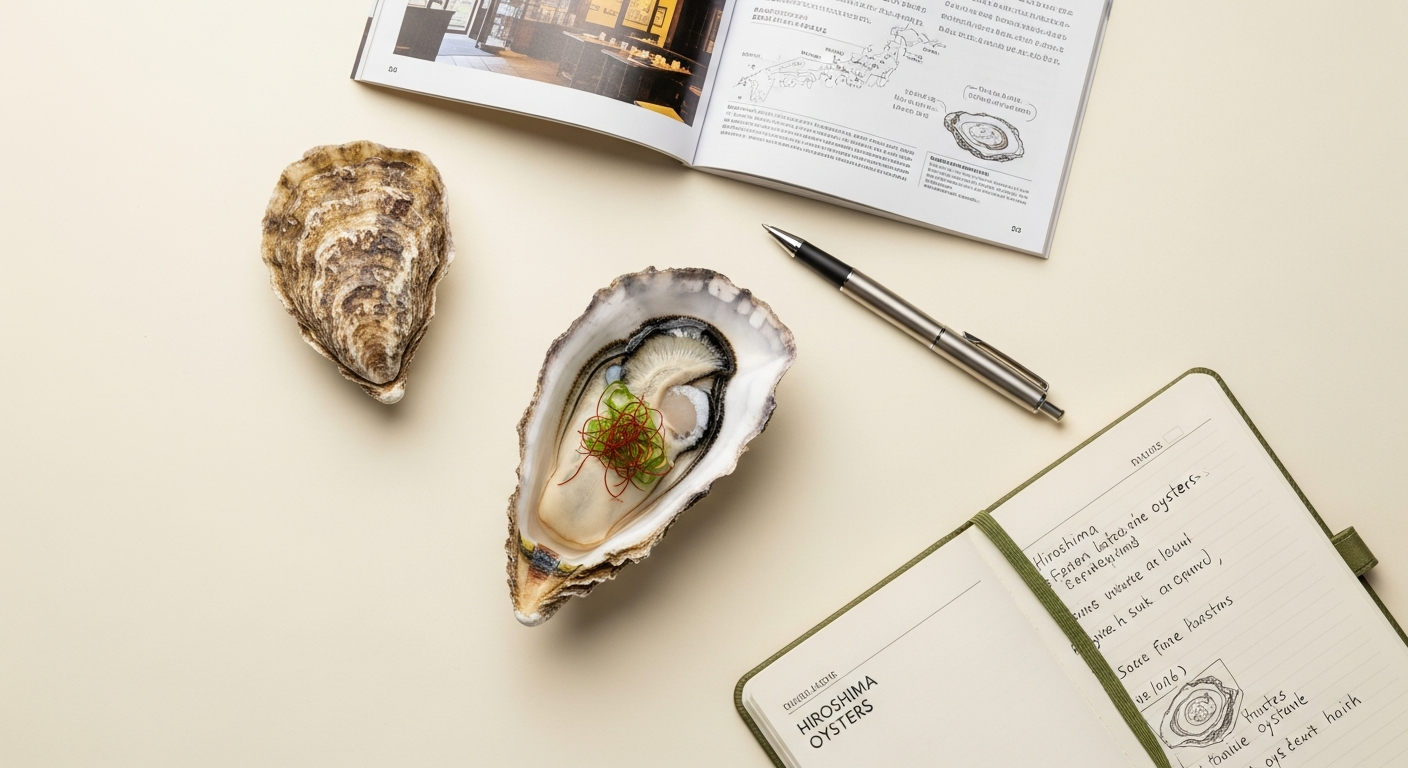
For a truly authentic and often more budget-friendly oyster experience, especially during the peak winter season, venturing slightly off the main tourist routes to a “Kaki-Goya” (oyster hut) or local market is highly recommended. These provide a rustic, communal, and incredibly fresh way to enjoy oysters directly from the source.
While specific kaki-goya locations can vary slightly year to year and are often seasonal pop-ups, the general concept remains the same: a large, often tented or open-sided hut where you can grill your own oysters over charcoal. It’s a wonderfully interactive and delicious experience, perfect for a group or adventurous solo traveler.
* Kaki-Goya Experience: These temporary restaurants typically open from November/December to March. You usually pay a fixed price for a bucket of oysters (or by weight), and then you grill them yourself at your table. It’s messy, fun, and incredibly rewarding as you crack open perfectly cooked, smoky oysters.
* Locations: Kaki-goya often pop up in coastal areas around Hiroshima Bay. Popular spots include areas near Etajima Island (accessible by ferry from Hiroshima Port), or even temporary installations in larger shopping complex parking lots like Marina Hop in Hiroshima City (though Marina Hop’s specific kaki-goya can vary). While not directly in Onomichi, these are accessible by combining train/bus with a local ferry or even a rental car for a scenic drive.
* Transport from Onomichi: For places like Etajima, you’d typically take a train to Hiroshima Station, then a streetcar or bus to Hiroshima Port, and finally a ferry to Etajima. For Marina Hop, it’s a bus from Hiroshima Station. A rental car offers the most flexibility for exploring various coastal towns.
* Cost: Very reasonable! Expect to pay around ¥2,000 – ¥4,000 per person for a generous amount of oysters, plus drinks and any side dishes.
* Local Tip: Wear clothes you don’t mind getting smoky! Many kaki-goya also offer other grilled seafood, rice, and drinks. It’s a fantastic way to mingle with locals and enjoy a true taste of Hiroshima’s winter. Check local Hiroshima tourism websites (like the official Hiroshima Tourism site or local city tourism boards) in late autumn for information on specific kaki-goya openings for the current/upcoming season.
* Local Seafood Markets: For those who prefer to buy fresh oysters to prepare at home (if you have accommodation with cooking facilities) or simply want to see the incredible variety, visiting a local seafood market is a great option.
* Locations: While not as numerous as, say, Tsukiji in Tokyo, many coastal towns in Hiroshima Prefecture have small markets or direct sales points near their fishing ports. For visitors from Onomichi, exploring towns like Takehara (竹原市) or Mihara (三原市) – both easily accessible by JR Sanyo Main Line – might yield some local finds.
* Example (though not exclusively oyster-focused): The “道の駅みはら神明の里” (Michi no Eki Mihara Shinmei no Sato) roadside station in Mihara often has fresh local produce and seafood, including oysters during the season. It’s a short train ride from Onomichi.
* Cost: Varies by weight and quality, but generally excellent value for fresh seafood.
* Local Tip: If you buy shelled oysters, make sure to ask for an oyster knife if you don’t have one, and learn how to shuck them safely! Many vendors can also tell you the best way to prepare them.
A Symphony of Flavors: Exploring Oyster Cuisine Beyond Raw
While the pristine flavor of raw Hiroshima oysters is unparalleled, it would be a culinary disservice not to explore the incredible versatility of these bivalves in Japanese cuisine. Hiroshima locals have perfected numerous ways to enjoy oysters, each offering a distinct and delicious experience.
* Yakigaki (焼がき) – Grilled Oysters: Simple yet sublime. Oysters are grilled in their shells over charcoal or an open flame until they just begin to open and their juices bubble. Often served with a squeeze of lemon or a dash of ponzu (citrus soy sauce), the grilling process concentrates their umami flavor and gives them a wonderful smoky char. This is a staple on Miyajima and in many oyster restaurants.
* Kaki-furai (かきフライ) – Fried Oysters: A beloved comfort food! Plump oysters are lightly breaded in panko (Japanese breadcrumbs) and deep-fried to a golden crisp. The exterior is crunchy, while the inside remains juicy and tender. Served with tartar sauce or Worcestershire sauce (tonkatsu sauce), kaki-furai is a surprisingly addictive dish that even those hesitant about raw oysters will adore. It’s a common item in set meals (teishoku) and at izakayas.
* Kaki-no-Dotenabe (牡蠣の土手鍋) – Oyster Miso Hot Pot: A hearty and warming winter specialty. Oysters are cooked in a rich, flavorful miso-based broth with vegetables like tofu, shiitake mushrooms, and green onions. The “dote” (levee) refers to the miso paste lining the rim of the pot, which gradually melts into the broth, intensifying the flavor as you eat. It’s a communal dish, perfect for sharing on a chilly evening.
* Oyster Gratin (牡蠣グラタン): A decadent fusion dish. Fresh oysters are baked in a creamy, cheesy white sauce until golden and bubbly. The richness of the gratin beautifully complements the oyster’s natural sweetness. You’ll find this on menus at slightly more upscale oyster restaurants.
* Kaki-don (牡蠣丼) – Oyster Rice Bowl: A satisfying and flavorful rice bowl topped with oysters cooked in a savory dashi (broth) and soy sauce mixture, often with egg, similar to an oyakodon. The juices soak into the rice, creating a comforting and delicious meal.
* Oyster Okonomiyaki (牡蠣お好み焼き): While not as common as the standard pork and cabbage variety, some Hiroshima-style okonomiyaki restaurants offer a seasonal oyster version. The oysters are cooked right on the griddle with the layers of batter, cabbage, noodles, and egg, lending their unique flavor to this iconic Hiroshima dish. A true local specialty to seek out!
Don’t be afraid to experiment with these different preparations. Each method brings out a different facet of the Hiroshima oyster’s incredible flavor, ensuring that your oyster journey in Hiroshima will be a diverse and unforgettable one.
Frequently Asked Questions
Q1: When is the best season to eat oysters in Hiroshima?▾
Q2: Is it safe to eat raw oysters in Japan?▾
Q3: How much does an oyster meal cost in Hiroshima?▾
Q4: Can I buy fresh oysters to take home from Hiroshima?▾
Q5: What drinks pair well with Hiroshima oysters?▾
Hiroshima’s Oyster Industry: Scale, Safety & Seasonality
Hiroshima Prefecture produces over 65,000 tonnes of oysters annually — roughly 65% of Japan’s entire oyster output — making it the undisputed national leader. The industry is overseen by the Hiroshima Prefectural Fisheries Cooperative Association (広島県漁業協同組合連合会), which coordinates more than 800 licensed oyster farming operations across Hiroshima Bay.
Raft Cultivation: 400 Years of Expertise
The traditional raft cultivation (筏式垂下養殖, ikadashiki suikayoshoku) method involves suspending oyster seed on ropes from floating bamboo-and-pipe rafts anchored in the bay. The Seto Inland Sea — fed by the Ota, Nishida, and Kurose river systems — delivers mineral-rich freshwater runoff that stimulates exceptional phytoplankton growth, the primary feed for oysters. Salinity levels sit at an ideal 25–30 ppt, producing the region’s signature sweet, plump flavour profile.
Food Safety Labels: Raw vs. Cooking Grade
When buying oysters at markets or shops, always check the label:
| Label | Japanese | Meaning |
|---|---|---|
| Nama-shokuyou | 生食用 | Certified safe for raw consumption; meets strict MHLW purification standards |
| Kanetsu-yo | 加熱用 | For cooking only; fresher flavour but must be thoroughly heated (centre temp 85–90°C for 90 sec) |
Restaurants serving raw oysters are legally required to use nama-shokuyou-certified stock. Reputable establishments display this certificate upon request. Pregnant travellers and immunocompromised individuals should opt for fully cooked preparations.
Hiroshima Kaki Matsuri (Oyster Festival) & Farm Experiences
Hiroshima Oyster Festival
Held annually in early February (typically the first or second weekend) at Ujina Port / Hiroshima Port area, the Hiroshima Kaki Matsuri (広島かき祭り) is the region’s premier oyster celebration. Highlights include:
- All-you-can-eat freshly grilled oyster sessions (timed entry, ¥1,000–¥2,000 per person)
- Oyster shucking demonstrations by local fishermen
- Stalls selling kaki-furai, kaki-nabe, and oyster sashimi direct from farming cooperatives
- Over 15,000–20,000 visitors annually — arrive early (gates open ~9:00 AM) to avoid queues
Getting there from Onomichi: JR Sanyo Main Line to Hiroshima Station (~1h 40 min, ¥1,520), then Astramline or bus to Ujina (~20 min, ¥250).
Oyster Farm Tours & Direct Sales
For a hands-on experience direct from the source, Etajima Island — accessible by ferry from Hiroshima Port (20–35 min, ¥420–¥700) — hosts several farms that offer seasonal direct sales (直売, chokubai) and occasional guided tours during peak season (Nov–Feb). Look for signs reading カキ直売 (kaki chokubai) at small harbours. The Nii Fisheries Cooperative (仁井地区漁業協同組合) on Etajima is known among locals for excellent quality oysters at farm-gate prices (~¥1,000/kg shelled).
From Onomichi, combine with a Hiroshima City day trip: train to Hiroshima → ferry to Etajima → return via Hiroshima Port ferry → evening in Hiroshima City.
More Oyster Questions Answered
Where can I join a kaki-goya (oyster grilling hut) experience near Onomichi?
The closest kaki-goya to Onomichi operate on Etajima Island (ferry from Hiroshima Port, ~20-35 min). From Onomichi, take the JR Sanyo Line to Hiroshima Station (~1h 40min), streetcar to Hiroshima Port, then ferry to Etajima. Look for seasonal kaki-goya opening November–March at small harbour-side stalls. The island’s Nii district is known for direct-sale oyster huts. Marina Hop (a shopping complex in Hiroshima City, bus from Hiroshima Station) also hosts a seasonal kaki-goya typically from December–February. Budget ¥2,000–¥4,000 per person for a full bucket. Wear clothes you don’t mind getting smoky!
What is the difference between yakigaki and kaki-furai?
Yakigaki (焼がき) are oysters grilled in their shells over charcoal — the heat concentrates the natural juices and gives a smoky, briny flavour. They are usually served with lemon or ponzu and eaten immediately. Kaki-furai (かきフライ) are oysters breaded in panko breadcrumbs and deep-fried to a golden crisp — the exterior is crunchy while the inside stays creamy and sweet, usually served with tartar sauce or Worcestershire sauce. Yakigaki shows the oyster’s natural character; kaki-furai is the comfort-food crowd-pleaser. Both are found throughout Miyajima and Hiroshima City restaurants.
Do I need to book oyster restaurants in Hiroshima in advance?
For casual stalls and kaki-goya, no reservation is needed — just arrive and queue. For popular Miyajima restaurants like Kaki-ya, walk-in is possible but arrive at opening (10:30 AM) on weekdays to avoid long waits on weekends. For upscale Hiroshima City restaurants like Kanawa, reservations are strongly recommended especially for dinner and during peak season (December–February). Kanawa’s Hiroshima Station branch is more walk-in friendly at lunchtime.
Species, Safety & Allergy Guide
Species: Virtually all Hiroshima oysters are the Pacific oyster (Crassostrea gigas), the world’s most widely farmed oyster species. Hiroshima’s cool, plankton-rich bay waters are ideal for C. gigas, producing exceptionally large, meaty specimens.
Shellfish allergy warning: Oysters are a known allergen. People with shellfish allergies should avoid all oyster preparations, including soups and sauces that may contain oyster extract. If in doubt, inform restaurant staff of your allergy — most Hiroshima oyster restaurants are experienced in handling allergy queries.
Higher-risk groups: Pregnant women, elderly individuals, young children, and immunocompromised individuals should consume only fully cooked oysters (kaki-furai, yakigaki, kaki-nabe) and avoid raw preparations, even at reputable establishments. The Ministry of Health, Labour and Welfare (MHLW) recommends cooking oysters to an internal centre temperature of 85–90°C for at least 90 seconds to eliminate norovirus risk.
Red tide advisory: During rare red tide (harmful algal bloom) events, Hiroshima Prefectural authorities issue temporary bans on oyster harvesting. Restaurant-grade oysters are monitored daily; buying directly from uncertified markets during a red tide advisory is not recommended.