


What Makes the Onomichi Temple Walk So Special?
Onomichi has long been known as a “Temple Town” (寺の街, tera no machi), and for good reason. Dating back to its prosperity as a vital port during the medieval period, the city saw a proliferation of temples, many of which were built by wealthy merchants to pray for safe passage and thriving trade. Today, these temples, numbering around 25, are meticulously preserved and clustered along the hillside, creating a unique urban landscape. What sets the Onomichi temple walk apart is not just the sheer number of temples, but their intimate integration into the fabric of daily life. You’ll navigate narrow, stone-paved alleys, climb steep staircases, and discover unexpected viewpoints where the Seto Inland Sea stretches out before you, dotted with islands.
This walk is more than just sightseeing; it’s an experience that awakens all your senses. You’ll hear the gentle rustle of leaves, the distant clang of temple bells (時の鐘, Toki no Kane), and perhaps the soft meow of one of Onomichi’s famous feline residents. The air often carries the scent of incense, mingling with the fresh sea breeze. Each temple has its own story, its own distinct architecture, and its own atmosphere, ranging from grand and imposing to small and tranquil. The synergy between nature, history, and spirituality creates an ambiance that is profoundly moving and uniquely Onomichi. It’s a journey of discovery, offering both cultural enrichment and physical exhilaration, culminating in some of the most stunning views you’ll find anywhere in Japan.
Preparing for Your Onomichi Temple Walk Adventure
To fully enjoy your Onomichi temple walk, a little preparation goes a long way. This is not a flat, easy stroll, but a moderately challenging ascent and descent through hilly terrain. The rewards, however, are immeasurable!
Best Time to Visit
- Spring (March-May): Cherry blossoms (桜, sakura) transform the hillsides, especially around Senkoji Park, making it a truly magical time. The weather is generally mild and pleasant.
- Autumn (October-November): Cooler temperatures and vibrant autumn foliage (紅葉, koyo) create a spectacular backdrop for your walk. Clear skies offer excellent visibility for panoramic views.
- Summer (June-August): Can be hot and humid, but early mornings or late afternoons offer respite. Hydration is crucial.
- Winter (December-February): Cooler and sometimes chilly, but fewer crowds and crisp air can make for a serene experience.
What to Wear and Bring
- Comfortable Walking Shoes: This is non-negotiable! You’ll be climbing many steps and navigating uneven paths.
- Layered Clothing: Onomichi’s weather can change, and you’ll be exerting yourself. Layers allow you to adjust.
- Water Bottle: Stay hydrated, especially on warmer days. Vending machines are available but can be sparse on higher paths.
- Camera/Smartphone: For capturing those incredible views and charming street scenes.
- Small Backpack: To carry your essentials.
- Map: While signs are generally good, a physical map (available at Onomichi Station) or a reliable map app can be very helpful.
- Cash: Especially for purchasing a Goshuin (御朱印, temple stamp/calligraphy) or small snacks from local shops.
- Sunscreen/Hat: Important during sunny months, as much of the walk is exposed.
Starting Your Journey
The most common and convenient starting point for your Onomichi temple walk is Onomichi Station (尾道駅). From here, you can choose to:
- Walk Eastward: Begin at temples closer to the station, like Jikokuji Temple (持光寺), and gradually ascend.
- Take the Senkoji Ropeway: A quick and scenic option to reach Senkoji Park (千光寺公園) at the summit, allowing you to walk downhill through the temples. This is highly recommended for those who prefer an easier descent or wish to conserve energy for exploring the temples themselves. The ropeway station is a short walk from Onomichi Station.
Essential Temples to Discover on the Onomichi Temple Walk
While there are dozens of temples, a handful stand out as must-visits for their historical significance, unique features, or stunning views. Here’s your guide to some of the most iconic stops on the Onomichi temple walk.
Jikokuji Temple (持光寺)
Often considered the unofficial starting point for many temple walkers, Jikokuji Temple is a short walk from Onomichi Station. Its most famous feature is the “Nigiri Jizo” (握り地蔵), a unique Jizo Bodhisattva statue that grants wishes to those who hold its smooth, round stone. It’s a gentle introduction to the spiritual journey ahead, offering a moment of quiet reflection before the ascent begins.
Komyoji Temple (光明寺)
As you wind your way up the hillside, you’ll encounter Komyoji Temple. While beautiful in its own right, Komyoji is perhaps best known for its proximity to the entrance of the legendary Neko no Hosomichi (猫の細道), or “Cat Alley.” This charming, narrow path, adorned with countless cat-themed artworks (especially the “Fukuishi Neko” — painted stone cats) and actual feline residents, leads directly towards Senkoji Park, offering a delightful detour.
Tenneiji Temple (天寧寺)
Tenneiji Temple is instantly recognizable by its striking three-storied pagoda (三重塔, Sanjunoto), which gracefully punctuates the Onomichi skyline. From the temple grounds, you can enjoy fantastic views of the pagoda against the backdrop of the city and the Seto Inland Sea. It is also famous for its “Bell of Time” (時の鐘, Toki no Kane), whose resonant sound has marked the passing hours in Onomichi for centuries, adding to the city’s nostalgic charm.
Senkoji Temple (千光寺) and Senkoji Park (千光寺公園)
Undoubtedly the crown jewel of the Onomichi temple walk, Senkoji Temple sits perched dramatically atop Mount Senkoji. Reached by the Senkoji Ropeway or a scenic climb, the temple grounds offer unparalleled panoramic views of Onomichi city, its harbor, and the myriad islands of the Seto Inland Sea. The vibrant red main hall (本堂, hondo) provides a striking contrast against the blue sky and sea.
Adjacent to the temple is Senkoji Park (千光寺公園), a designated “Japan Heritage” site and one of the “Top 100 Cherry Blossom Viewing Spots.” Here, you’ll also find the Literature Path (文学の道, Bungaku no Michi), a winding trail adorned with stones inscribed with poems and writings by famous Japanese literary figures associated with Onomichi. The Onomichi City Museum of Art is also located within the park, housing a collection of local and modern art.
Saikokuji Temple (西國寺)
Further along the eastern stretch of the temple walk, Saikokuji Temple is one of Onomichi’s oldest and largest temples, boasting a history that dates back to the 8th century. What truly captivates visitors here are the enormous straw sandals (草履, zori) that hang on either side of its imposing Nio-mon (仁王門) gate. These sandals, weighing up to 150kg each, are said to ward off evil and protect the temple, symbolizing the strength of the guardian deities. The vast temple complex also features beautiful gardens and several important cultural properties.
Jodoji Temple (浄土寺)
While slightly off the main “Temple Path” (requiring a short bus ride or a longer walk further east from Saikokuji), Jodoji Temple is absolutely worth the detour for serious cultural enthusiasts. It is home to two National Treasure buildings: the main hall (本堂, hondo) and the pagoda (多宝塔, tahoto), both exemplary specimens of Muromachi-period architecture. The serene atmosphere and the historical significance of its structures make it a profound experience for those with extra time.
Beyond the Temples: Exploring Onomichi’s Charms
The Onomichi temple walk is just one facet of this multi-layered city. After you’ve descended from the heights and experienced the spiritual serenity of its temples, take time to explore the other enchanting aspects of Onomichi.
The Allure of Neko no Hosomichi (Cat Alley)
Even if you didn’t start your ascent via this route, make sure to explore the whimsical Neko no Hosomichi (猫の細道) near Tenneiji and Komyoji temples. This narrow, winding path is a celebration of all things feline. You’ll find “Fukuishi Neko” (福石猫), unique stone cats painted by artist Shunji Sonoyama, as well as several cat-themed shops and cafes. It’s a delightful, quirky side trip that perfectly encapsulates Onomichi’s playful spirit.
Onomichi’s Literary Legacy
Onomichi has inspired numerous Japanese writers, poets, and filmmakers, earning it a reputation as a “town of literature.” The Literature Path (文学の道, Bungaku no Michi) in Senkoji Park is a testament to this, featuring inscribed stones with excerpts from literary works. Beyond the park, you can visit the Shiga Naoya Former Residence, where the famous author lived and wrote. This deep literary connection adds another layer of depth to your visit, inviting you to see the city through the eyes of its celebrated artists.
Retro Cafes and Quaint Shops
Onomichi’s main shopping street, a covered arcade (商店街, shotengai), offers a nostalgic glimpse into old Japan. Here, you’ll find a delightful mix of traditional shops, modern boutiques, and charming retro cafes housed in renovated old buildings. Take a break, enjoy a local coffee, or browse for unique souvenirs. The blend of old and new creates a truly unique atmosphere.
Savoring Onomichi Cuisine
No visit to Onomichi is complete without indulging in its local delicacies. The most famous is Onomichi Ramen (尾道ラーメン), characterized by its soy sauce-based broth, flat noodles, and distinctive cubes of pork back fat (背脂, seabura). Being a port town, fresh seafood is also abundant. Look for local eateries serving grilled fish (焼き魚, yakizakana), sashimi, and other regional specialties.
Practical Tips for a Rewarding Onomichi Temple Walk
To ensure your Onomichi temple walk is as enjoyable and seamless as possible, keep these practical tips in mind.
Pace Yourself and Enjoy the Detours
The beauty of the Onomichi temple walk lies in its meandering nature. Don’t feel pressured to rush through every temple or stick rigidly to a single path. Allow yourself to get “lost” down charming side alleys, discover hidden shrines, and simply soak in the atmosphere. Take breaks to admire the views, rest your feet, and enjoy a quiet moment of contemplation.
Hydration is Key
Especially during warmer months, the uphill climbs and numerous steps can be tiring. Carry enough water with you, and utilize the vending machines often found near larger temples or in the city center to replenish your supply. Staying hydrated will significantly enhance your comfort and energy levels.
Respect Temple Etiquette
Japanese temples are places of worship and reflection. While generally welcoming to visitors, it’s important to observe proper etiquette:
- Bow slightly when entering and exiting the temple grounds through the gate (山門, sanmon).
- Wash your hands and rinse your mouth at the purification fountain (手水舎, temizuya) before approaching the main hall.
- Remove your shoes if entering temple buildings (signposted).
- Speak softly and be mindful of other worshippers.
- Photography: Generally allowed on temple grounds, but often restricted inside temple buildings, especially where statues or altars are housed. Look for signs or ask if unsure.
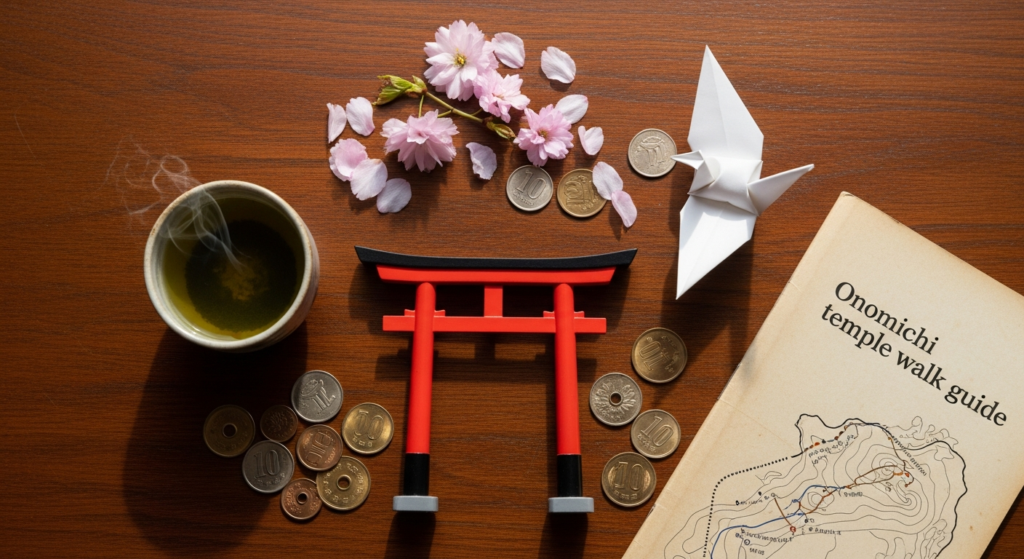
- Offerings: It is customary to make a small monetary offering (usually a 5 or 10 yen coin) when praying at the main hall.
Collecting Goshuin (御朱印)
For a unique souvenir and a deeper connection to the temples, consider collecting Goshuin. These are handwritten calligraphy and stamps specific to each temple, often including the temple’s name, date of visit, and a special seal. You’ll need a special book called a Goshuincho (御朱印帳), which can be purchased at larger temples or stationery stores. Present your book at the temple office (納経所, nokyosho or 寺務所, jimusho), and for a small fee (typically 300-500 yen), a monk or staff member will beautifully inscribes your book. It’s a wonderful way to commemorate your spiritual journey.
Utilizing the Senkoji Ropeway
As mentioned, the Senkoji Ropeway offers a fantastic way to reach the summit of Mount Senkoji quickly. If you want to maximize your time exploring the temples rather than climbing, take the ropeway up and then enjoy a leisurely descent, stopping at temples along the way. It’s a scenic ride and a convenient option for many.
Accessibility Notes
Given the hilly terrain and numerous steps, the full Onomichi temple walk can be challenging for those with limited mobility or strollers. However, certain areas, like the base of the mountain near Onomichi Station and parts of Senkoji Park (accessible via ropeway), are more manageable. Plan your route accordingly if accessibility is a concern.