


Onomichi Ramen: A Deep Dive into Hiroshima’s Iconic Noodle Dish
The Soul of Onomichi: What Makes Onomichi Ramen Unique?
When you hear “ramen” in Japan, you might think of rich tonkotsu, hearty miso, or delicate shio. But Onomichi Ramen stands in a league of its own, a distinctive regional style that captivates with its deceptively simple appearance and profoundly satisfying taste. So, what exactly sets it apart?
-
The Broth: Shoyu-Based Perfection
At its core, Onomichi Ramen boasts a clear, dark brown broth, primarily soy sauce (shoyu) based. But don’t let the clarity fool you into thinking it’s light. This broth is a masterful blend, typically derived from chicken bones, pork bones, and often, a secret blend of local seafood, reflecting Onomichi’s heritage as a port town. The result is a savory, umami-rich concoction that is surprisingly deep and complex, yet never heavy or cloying.
-
The Defining Feature: Senaka Abura (Pork Back Fat)
This is where Onomichi Ramen truly distinguishes itself. Glistening atop the broth, you’ll find small, irregular globules of senaka abura—rendered pork back fat. Before you recoil, understand that this isn’t greasy in the way you might imagine. These tiny nuggets melt delicately on the tongue, imparting an incredible richness, sweetness, and a silky texture that coats the noodles and enhances every sip of the broth. It’s the secret weapon, transforming a simple shoyu broth into something truly extraordinary and unforgettable.
-
The Noodles: Hirauchi Men
Onomichi Ramen typically features thin, flat, and often slightly wavy noodles, known as hirauchi men. These noodles are usually made from local flour and have a delightful chewiness (harigane) that perfectly complements the broth. Their flat shape allows them to pick up more of that delicious broth and senaka abura with each slurp, ensuring a harmonious balance of flavors and textures in every bite.
-
The Toppings: Classic Simplicity
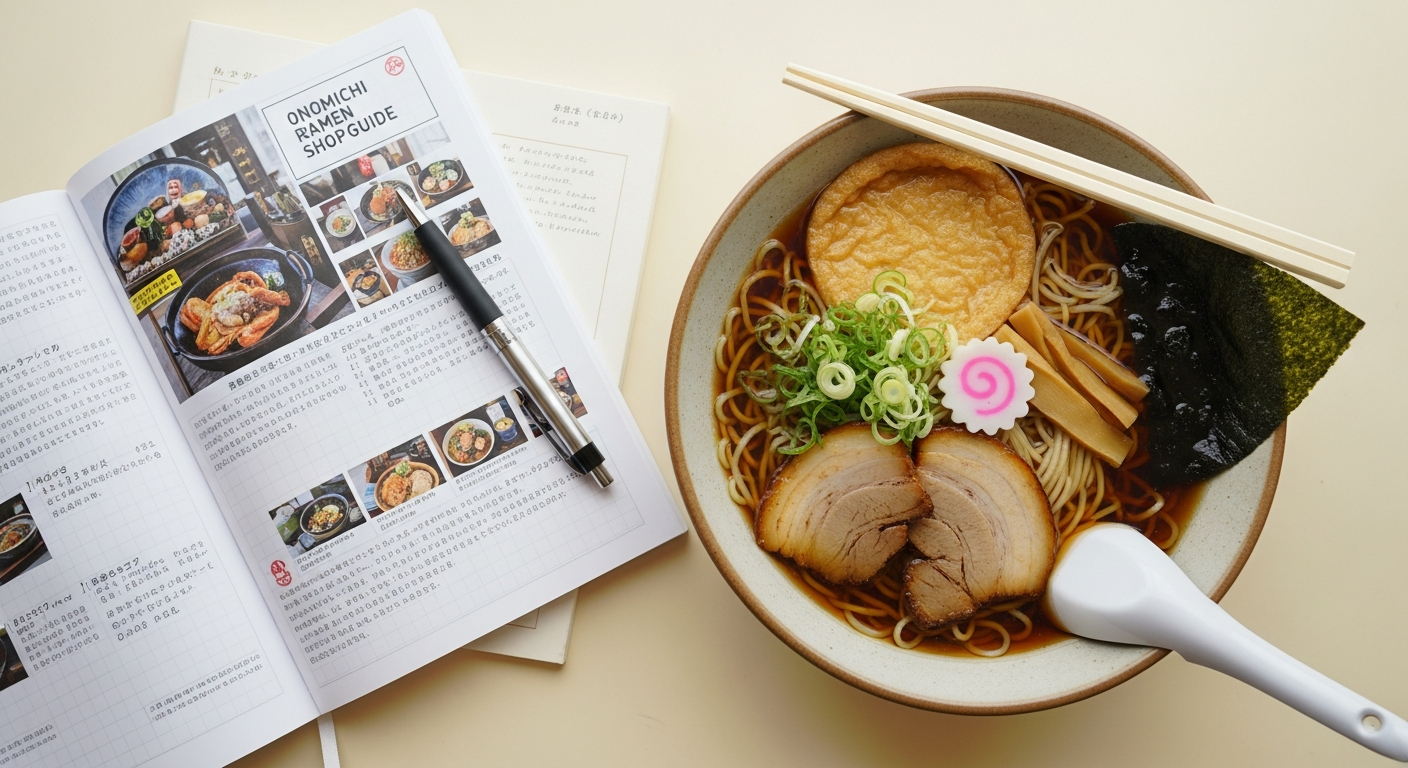
The toppings in Onomichi Ramen are kept wonderfully classic, allowing the broth and noodles to shine. You’ll typically find tender slices of chashu (braised pork belly), often thinly cut and meltingly soft. Alongside these, expect crisp menma (fermented bamboo shoots) for a textural contrast and a scattering of finely chopped green onions (negi) for freshness and a subtle bite. Sometimes, a sheet of nori (seaweed) might make an appearance, adding another layer of umami.
The overall impression is a beautifully balanced bowl: a deep, savory broth enhanced by the lusciousness of the senaka abura, perfectly matched with chewy noodles and classic toppings. It’s a comforting, addictive flavor that embodies the honest, unpretentious spirit of Onomichi itself.
A Taste of History: The Origins and Evolution of Onomichi Ramen

Like many regional ramen styles, the history of Onomichi Ramen is intertwined with post-war Japan and the evolving culinary landscape. Its roots can be traced back to the decades following World War II, a period of rebuilding and cultural exchange.
The initial concept of ramen in Japan largely originated from Chinese noodle dishes, often introduced by Chinese immigrants or Japanese returnees from China. In Onomichi, a bustling port town, these influences were particularly strong. Early noodle shops began to adapt these recipes to local tastes and available ingredients. The Seto Inland Sea, rich in seafood, likely played a role in the evolution of the broth, adding a distinct local character.
While various shops contributed to its development, the style as we know it today truly began to crystallize with the emergence of key establishments. One name that often comes up in historical discussions is Shunkaen (朱華園). Although this legendary shop is no longer operating today, it played a pivotal role in popularizing and defining the Onomichi Ramen style from its founding. It was here, and in similar pioneering establishments, that the unique combination of shoyu-based broth, thin noodles, and crucially, the distinctive senaka abura, became the signature of Onomichi Ramen.
For many years, Onomichi Ramen remained a beloved local secret, a comfort food for fishermen, port workers, and residents. However, as Japan’s ramen culture boomed in the late 20th century, regional specialties began to gain national recognition. Onomichi Ramen, with its distinct flavor profile and memorable senaka abura, quickly captured the attention of food critics and travelers. Its popularity soared, cementing its place as one of Japan’s must-try regional ramen styles. Today, it stands as a delicious testament to Onomichi’s rich history and enduring culinary ingenuity.
Beyond the Classic Bowl: Exploring Onomichi Ramen Variations
While Onomichi Ramen is celebrated for its consistent, iconic style, it’s also true that each ramen shop, much like a chef with a signature dish, adds its own subtle twist. This is where the true joy of exploring Onomichi Ramen lies – discovering your personal favorite among the nuanced variations.
The core elements – shoyu broth, senaka abura, and thin, flat noodles – remain sacrosanct. However, you might notice differences in:
-
Broth Depth and Flavor:
Some shops lean into a slightly richer, more intensely savory broth, perhaps with a higher concentration of pork or chicken bones, or a bolder seafood element. Others might offer a lighter, cleaner finish, allowing the soy sauce to sing. The balance of sweetness from the senaka abura can also vary, with some bowls offering a more pronounced sweetness that balances the savory notes.
-
Noodle Texture and Firmness:
While the noodles are generally thin and flat, their exact texture can differ. Some shops might serve them a touch firmer (katame), offering more bite, while others might prefer a slightly softer, more yielding noodle. The exact width and waviness can also subtly change the mouthfeel and how much broth the noodles carry.
-
Chashu and Topping Personalities:
The chashu (braised pork) is another area for variation. Some shops might offer thicker, more substantial slices, while others pride themselves on thinly sliced, melt-in-your-mouth pork. The seasoning of the menma or the freshness of the negi can also add distinct character. Occasionally, you might find shops offering optional toppings like a seasoned soft-boiled egg (ajitama) or extra nori, though these are less traditional to the core Onomichi style.
-
Modern Takes and Seasonal Specials:
While less common for traditional Onomichi Ramen, some modern establishments or fusion spots might experiment with spicy versions, tsukemen (dipping noodles), or seasonal ingredients. However, if you’re seeking the quintessential Onomichi experience, stick to the classic ramen on the menu. These variations are more about a shop’s individual creativity rather than a distinct sub-genre of Onomichi Ramen.
Ultimately, these variations are what make the “Onomichi Ramen pilgrimage” so rewarding. Each bowl, while unmistakably Onomichi, offers a slightly different experience, inviting you to compare, contrast, and eventually, discover the bowl that speaks directly to your ramen-loving soul. It’s truly a testament to the versatility and depth of this iconic dish.
Your Culinary Quest: Top Onomichi Ramen Spots to Savor
Ready to embark on your Onomichi Ramen adventure? The city is dotted with fantastic ramen shops, each with its loyal following. Here are some of my personal recommendations, offering a range of experiences from bustling local favorites to more traditional settings. Remember that opening hours and closing days can change, so it’s always a good idea to check their current status online or via Google Maps before heading out.
-
Ichibankan (壱番館)
Often considered one of the most popular and accessible Onomichi Ramen shops, Ichibankan is a must-visit. Its location, very close to Onomichi Station, makes it a convenient stop for cyclists finishing the Shimanami Kaido or visitors arriving by train. Expect a lively atmosphere and often a queue, especially during lunch hours, but the wait is well worth it for their impeccably balanced broth and perfect noodles.
- Location: 1-1-14 Higashigoshocho, Onomichi, Hiroshima (just a few minutes walk from Onomichi Station).
- Typical Hours: 11:00 AM – 8:00 PM (L.O. 7:30 PM). Often closed on Tuesdays.
- Cost: A standard bowl is usually around ¥850-¥1000.
- Local Tip: If you want to avoid the longest lines, try visiting right at opening time or in the late afternoon between lunch and dinner rushes. They also offer a popular “Onomichi Ramen & Mini Chashu Don” set for a complete meal.
-
Miyachi (みやち)
For a taste of traditional Onomichi Ramen in a slightly more intimate setting, Miyachi is an excellent choice. This cozy spot is known for its faithful rendition of the classic style, often with a broth that feels deeply comforting and authentic. It’s a favorite among locals seeking a straightforward, delicious bowl without fuss.
- Location: 1-1-17 Higashigoshocho, Onomichi, Hiroshima (also very close to Onomichi Station, just a stone’s throw from Ichibankan).
- Typical Hours: 11:00 AM – 3:00 PM. Often closed on Wednesdays. Note that they often close once soup runs out, so early lunch is recommended.
- Cost: Expect to pay around ¥800-¥950 for a bowl.
- Local Tip: Miyachi often has shorter hours and might close early if they sell out, so it’s best to aim for an early lunch. It’s a great spot if you prefer a quieter, more traditional atmosphere.
-
Ramen Shop Hanamaru (ラーメンショップ 花まる)
A little further afield from the main station area, Hanamaru is a beloved local gem that often flies under the radar of first-time tourists but is highly recommended by those in the know. Their ramen is robust and satisfying, perfect for refueling after a long walk or bike ride. It offers a slightly different take while staying true to the Onomichi style.
- Location: 2-3-22 Higashioshimocho, Onomichi, Hiroshima (a short bus ride or a pleasant 15-20 minute walk east along the waterfront from Onomichi Station).
- Typical Hours: 11:00 AM – 3:00 PM, 5:00 PM – 8:00 PM. Often closed on Mondays.
- Cost: A bowl typically ranges from ¥850-¥1050.
- Local Tip: This shop is a fantastic option if you’re exploring the eastern part of Onomichi or coming back from the first leg of the Shimanami Kaido. It offers a more neighborhood-centric feel.
-
Deguchi (出入口)
While newer than some of the long-standing establishments, Deguchi has quickly earned a stellar reputation for its refined and delicious Onomichi Ramen. It offers a bright, clean interior and a meticulously crafted bowl that some argue takes the classic style to new heights. It’s a great choice for those looking for a contemporary take on the traditional.
- Location: 1-1-3 Kubo, Onomichi, Hiroshima (located along the main shopping arcade, a short walk from Onomichi Station).
- Typical Hours: 11:00 AM – 3:00 PM, 5:00 PM – 8:00 PM. Often closed on Thursdays.
- Cost: Expect prices around ¥900-¥1100.
- Local Tip: Deguchi is often a good alternative if the lines at Ichibankan or Miyachi are too long. Its location in the shopping street makes it easy to combine with some souvenir shopping or exploring the local boutiques.
The Onomichi Ramen Experience: Practical Tips for Your Visit
To fully enjoy your Onomichi Ramen experience, here are some practical tips from someone who’s navigated these noodle-filled waters many times:
-
Ordering: Ticket Machines vs. Direct Order
Many ramen shops in Japan, including some in Onomichi, use a ticket vending machine (shokkenki) located near the entrance. You insert cash, select your ramen (and any extra toppings or sides like gyoza or rice), and a ticket will be dispensed. Hand this ticket to the staff. If there’s no machine, simply find a seat and order directly from the staff.
-
Ramen Etiquette: Slurp Away!
Don’t be shy – slurping your noodles is not only acceptable but often a sign of enjoyment in Japan! It helps cool the hot noodles and enhances the flavor. Feel free to drink the broth directly from the bowl. Finishing your broth is also considered a compliment to the chef. Remember, tipping is not customary in Japan.
-
Navigating Onomichi:
Most of the popular ramen spots are within easy walking distance of Onomichi Station or along the main shopping street. If you’re renting a bicycle for the Shimanami Kaido, many shops have space outside for bike parking. For shops slightly further out, local buses are efficient and easy to use, or a leisurely walk will get you there while soaking in the city’s atmosphere.
-
What to Expect:
Ramen shops are generally casual, bustling places. Many have counter seating, which is great for solo diners. Service is usually quick and efficient. Don’t expect a long, drawn-out meal; ramen is often enjoyed briskly.
-
Pairing Your Ramen:
While a bowl of Onomichi Ramen is a complete meal in itself, many enjoy pairing it with a side of gyoza (pan-fried dumplings), a small bowl of white rice, or a refreshing beer (especially after a long day of cycling!).
-
Souvenirs:
If you’ve fallen in love with Onomichi Ramen, you can often find instant ramen versions or souvenir packs (sometimes with fresh noodles and concentrated broth) at local souvenir shops or larger supermarkets. They make great gifts or a way to relive the flavor at home!