


Mastering the Shimanami Kaido: The Ultimate Guide to Luggage Delivery Services for Cyclists
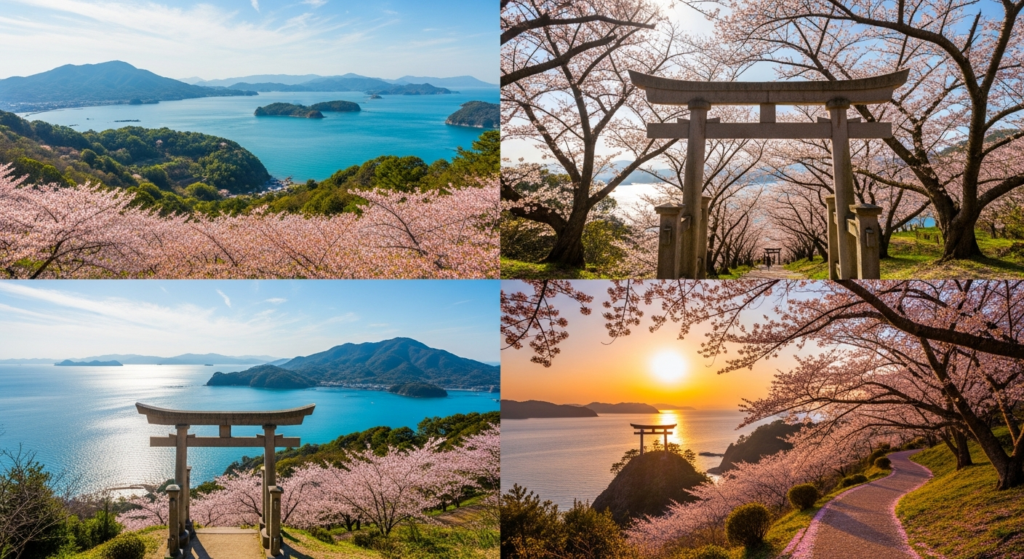
Imagine pedaling across a series of magnificent suspension bridges, the salty breeze of the Seto Inland Sea brushing against your face as you traverse emerald islands and citrus-scented hillsides. The Shimanami Kaido is world-renowned as a “cyclist’s sanctuary,” a 70-kilometer route connecting Japan’s main island of Honshu to the island of Shikoku. However, there is one logistical hurdle that can turn this dream ride into a grueling chore: heavy luggage. Carrying a 10kg backpack or panniers while climbing the winding ramps of the Kurushima-Kaikyo Bridge is a recipe for sore shoulders and missed photo opportunities.
To truly experience the magic of the Setouchi region, savvy travelers utilize Japan’s incredibly efficient luggage delivery systems. Whether you are a hardcore road racer or a casual explorer on a rental e-bike, having your suitcases magically appear at your hotel in Imabari or Onomichi allows you to focus on the scenery rather than your center of gravity. As you plan your 2026 cycling adventure, understanding the nuances of “Hands-Free Travel” is the key to a seamless journey. This guide covers everything you need to know about luggage delivery services for Shimanami Kaido cyclists, ensuring your trip is as light and breezy as the Seto winds.
1. The Logistics of Same-Day Luggage Delivery: Sagawa and Yamato
The backbone of Japan’s convenience is its courier network, and the Shimanami Kaido has specialized services tailored specifically for cyclists. The two primary players are Sagawa Express and Yamato Transport (often called *Takkyubin*), but for the Shimanami route, the “Sagawa Same-Day Delivery” is the gold standard.
Between Onomichi and Imabari, a dedicated partnership exists to shuttle bags across the islands while you ride. In Onomichi, the primary drop-off point is often located near the station or at the “Onomichi Port” baggage window. To ensure same-day arrival, you typically must drop off your bags before 10:00 AM. Your luggage will then be transported by van across the expressway and delivered to your destination hotel in Imabari (or vice versa) by 6:00 PM the same evening.
It is important to note that this specific same-day service usually operates from March through November, the peak cycling season. If you are traveling in the deep winter, you may need to use the standard overnight *Takkyubin* service, which means you would ship your bag one day in advance. Always confirm with your hotel if they are a “participating facility,” as this makes the paperwork significantly easier.
2. Wakka: The Premium, Flexible Alternative
While the large courier companies are excellent for station-to-station or hotel-to-hotel transfers, a local company called **Wakka** has revolutionized the Shimanami experience. Based on Omishima Island (the midpoint of the route), Wakka offers a more bespoke luggage service that caters to the specific needs of cyclists who might not be doing the full 70km in one go.
Unlike the rigid 10:00 AM cutoff of the major couriers, Wakka often provides more flexible windows and can deliver to smaller guesthouses, Minshuku (traditional B&Bs), or even specific “Cycle Oasis” points along the route. If you are planning a multi-day trip—perhaps staying overnight on Ikuchijima to see the Kosanji Temple or on Omishima to visit the Oyamazumi Shrine—Wakka is often the better choice. They understand the “cyclist’s rhythm” and can even provide emergency support or bicycle transport if you find yourself unable to finish the route due to weather or fatigue. For those planning a luxury or highly customized 2026 itinerary, booking through Wakka provides a safety net that standard couriers simply cannot match.
3. Shipping from Major Hubs: Hiroshima and Okayama
Many travelers do not start their journey directly in Onomichi. You might be spending a few days in Hiroshima City or Okayama before heading to the islands. If you have large suitcases that you won’t need during your 1–2 days of cycling, the best strategy is to ship them directly from your Hiroshima hotel to your post-cycling destination (like Matsuyama or Takamatsu) using the standard Yamato Transport service.
This is a “Next Day” service. For example, if you ship your large suitcase from Hiroshima on Monday morning, it will arrive at your hotel in Matsuyama on Tuesday afternoon. You can then pack a small, lightweight “cycling overnight bag” containing only your essentials (change of clothes, toiletries, chargers) and use the same-day delivery service for that smaller bag while you are on the Shimanami Kaido. This “two-tiered” shipping strategy is the secret to stress-free travel in Japan; it keeps your heavy bulk moving through the main transport arteries while you keep your immediate gear accessible on the islands.
4. How to Fill Out the Waybill (A-fuda)
The most intimidating part of luggage delivery for non-Japanese speakers is the waybill, the carbon-copy form you must fill out. For the Shimanami-specific same-day service, you will often use a simplified tag called an *A-fuda*.
Here is what you need to have ready:
Most staff at the Onomichi Port or the Imabari Station “Cycling Terminal” are accustomed to international tourists and will guide you through the form. The cost is typically between 2,000 and 3,000 JPY per bag, depending on size and weight. Pro tip: Take a photo of the tracking number on your waybill before you hand over your bag. If there is any delay, your hotel concierge can use that number to track the status.
5. Strategic Packing: What Stays with You vs. What Goes in the Bag
When you utilize a delivery service, you are essentially “separated” from your belongings for 8 to 10 hours. Because the Shimanami Kaido is a rural route with varying weather, your day-pack (the bag you carry on the bike) must be carefully curated.
What to keep on your bike:
What to send in the delivery luggage:
6. Starting Points and Drop-off Locations
For those starting in **Onomichi**, the primary hub is the **Onomichi Port (Ekimae Port Terminal)**. It is located just a 3-minute walk from the JR Onomichi Station. There is a clearly marked luggage counter. If you are staying at a major hotel like the *Hotel Cycle (ONOMICHI U2)*, they have their own internal logistics to help guests with bag transfers.
For those starting in **Imabari**, the main hub is the **i-bike Station** (Imabari Cycling Terminal) located near the station, or the **Sunrise Itoyama** cycling center located at the foot of the Kurushima-Kaikyo Bridge. Note that Sunrise Itoyama is about 6km from the actual Imabari Train Station, so if you are arriving by train, it is usually easier to drop your bags at the station terminal before heading to the bridge.
In 2026, expect these hubs to be busy, especially during the Golden Week (early May) and the Silver Week (September) holidays. Arriving 15–20 minutes before the 10:00 AM cutoff is highly recommended to avoid the queue of fellow cyclists.
—
FAQ: Frequently Asked Questions
Q1: Can I ship my bicycle box or a bike bag using these services?
A: Yes, but with caveats. Standard luggage delivery covers suitcases and duffel bags. If you are shipping a full hard-shell bike case, you will likely need to use the standard Yamato Transport “Large Size” service, which is not same-day. It usually takes 1–2 days and costs more. For same-day transfers of bike boxes, Wakka is the most reliable provider.
Q2: What happens if I don’t reach my destination hotel until late?
A: Don’t worry. Once the courier delivers your bag to the hotel front desk, the hotel will hold it securely in their luggage room. When you check in, simply show them your delivery receipt, and they will either bring the bag to your room or hand it to you at the counter.
Q3: Is there a weight or size limit for the same-day delivery?
A: Generally, the limit is 25kg to 30kg per bag, and the total linear dimensions (length + width + height) should be under 160cm. This covers almost all standard checked suitcases. If you have an oversized musical instrument or specialized sports equipment, check with the service provider in advance.
Q4: Can I use the luggage delivery service if I am staying at an Airbnb?
A: This is tricky. Most couriers require a “staffed” location (like a hotel front desk or a convenience store) to drop off the bag. If your Airbnb host is not there to receive the bag, the courier will not leave it at the door. If staying at an Airbnb, it is often better to ship your bags to a nearby Konbini (convenience store) that accepts Yamato deliveries, though this requires some Japanese language ability to arrange.
Q5: Is it safe to leave my bags at the delivery counters?
A: Absolutely. Japan’s luggage handling is among the most professional and trustworthy in the world. Instances of lost or stolen bags are incredibly rare. The staff will provide you with a serialized receipt that acts as your insurance and proof of ownership.
—
Conclusion: Planning Your Perfect Light-Weight Ride
The Shimanami Kaido is meant to be a journey of discovery, not a test of physical endurance against heavy baggage. By utilizing the same-day delivery services available in Onomichi and Imabari, or the premium flexibility of Wakka, you unlock the ability to stop at hidden beaches, climb to the Kirosan Observatory for a panoramic sunset, and linger over a bowl of fresh Setouchi sea bream ramen without being tethered to your luggage.
As you plan your 2026 trip, remember these three golden rules:
1. **Check the cutoff times:** 10:00 AM is the magic hour for same-day delivery.
2. **Verify your hotel:** Ensure your destination is a participating facility.
3. **Pack a smart day-pack:** Keep your essentials with you and let the professionals handle the rest.
The Seto Inland Sea is one of the most beautiful regions in the world. Give yourself the freedom to enjoy it properly—unburdened, energized, and ready for the next bridge. Whether you are riding for the fitness challenge or the cultural immersion, a “hands-free” approach is the ultimate travel hack for the Shimanami Kaido.