Timeless Setouchi: A Guide to Kurashiki Bikan Historical Quarter and Onomichi
This journey bridges two distinct atmospheres: Kurashiki, with its elegant willow-lined canals and white-walled storehouses, and Onomichi, a vertical labyrinth of narrow alleys, ancient temples, and breathtaking coastal views. Located just an hour apart by train, these destinations represent the heart of Okayama and Hiroshima Prefectures, offering a sophisticated blend of art, gastronomy, and adventure. Whether you are a photography enthusiast, a history buff, or a traveler seeking a slower pace, this combined guide provides everything you need to navigate these two jewels of Western Japan. From the “Venice of Japan” to the gateway of the Shimanami Kaido, let’s explore why this pairing is a must for your next Japanese excursion.
—
1. Navigating the Setouchi Region: Getting to Kurashiki and Onomichi
The beauty of combining Kurashiki and Onomichi lies in their accessibility. Both are located along the Sanyo Shinkansen line, making them easy additions to a trip originating in Osaka, Kyoto, or Hiroshima.
Reaching Kurashiki:
The gateway to the Bikan Historical Quarter is **JR Kurashiki Station**. If you are arriving via Shinkansen, you will likely get off at **Shin-Kurashiki Station** and take a short, 10-minute local train ride to the main Kurashiki Station. From the station’s south exit, the historical area is a pleasant 10-minute walk.
Reaching Onomichi:
Onomichi is located roughly 60 kilometers west of Kurashiki. You can take a local JR Sanyo Line train directly from Kurashiki to **JR Onomichi Station**, which takes about an hour and offers scenic glimpses of the countryside. Alternatively, if you are coming from further away via Shinkansen, the nearest high-speed stop is **Shin-Onomichi Station**. Note that Shin-Onomichi is about 3 kilometers from the waterfront; a bus or taxi is required to reach the town center.
**Pro Travel Tip:** If you are traveling with heavy luggage, consider using Japan’s *Takkyubin* (luggage forwarding) service. While Kurashiki is flat and easy to navigate, Onomichi is famous for its steep stairs and narrow slopes. Moving between the two is much more enjoyable if you only have a daypack.
—
2. Exploring the Kurashiki Bikan Historical Quarter: The Venice of Japan
Stepping into the Kurashiki Bikan Historical Quarter is like stepping back into the Edo Period (1603–1867). “Kurashiki” literally translates to “town of storehouses,” and the area was once a vital hub for the rice trade.
The Canal and Boat Rides:
The centerpiece of the district is the Kurashiki River. Lined with weeping willows and iconic white-walled *kura* (storehouses) with black tiled roofs, the canal is exceptionally photogenic. For a few hundred yen, you can take a traditional boat ride (*Kurashiki Kawabune Nagashi*). Wearing a traditional conical straw hat, you’ll glide under stone bridges as a punter shares local history.
Art and Culture at the Ohara Museum:
Kurashiki isn’t just about old buildings; it is a bastion of high culture. The **Ohara Museum of Art** was the first museum in Japan to feature a permanent collection of Western art. Founded in 1930, it houses masterpieces by El Greco, Monet, and Picasso. The juxtaposition of European fine art against the backdrop of a traditional Japanese merchant town is uniquely Kurashiki.
Ivy Square and Local Crafts:
A short walk from the canal leads to **Kurashiki Ivy Square**, a red-brick complex built on the site of Japan’s first modern cotton mill. Today, it houses workshops, museums, and a hotel. This area is the perfect place to explore Okayama’s famous “Bizen-yaki” pottery. Kurashiki is also the birthplace of Japanese denim. Don’t miss **Denim Street**, where you can buy high-quality indigo-dyed clothing or even try “Blue Jeans” flavored soft-serve ice cream.
—
3. Onomichi: The City of Slopes and Cinematic Views
If Kurashiki is a refined painting, Onomichi is a vibrant, sprawling novel. This port town is built into a steep hillside overlooking the Onomichi Channel and the islands of the Seto Inland Sea.
The Temple Walk:
Onomichi is famous for its “Temple Walk” (*Koji-dera Meguri*), a 2.5-kilometer route that connects 25 different temples. The most famous is **Senko-ji Temple**, founded in the 9th century. Its vermillion main hall clings to the cliffside, offering the most iconic view of the town and the bridge that marks the start of the Shimanami Kaido.
The Path of Cats (Neko no Hosomichi):
As you wind your way through the narrow “slopes” of Onomichi, you will inevitably encounter the town’s unofficial mascots: cats. The **Path of Cats** is a whimsical section of the hillside adorned with “fuku-ishi-neko” (lucky stone cats) painted by artist Shunji Sonoyama. It is a quiet, magical area filled with tiny cafes and hidden galleries.
The Shimanami Kaido Gateway:
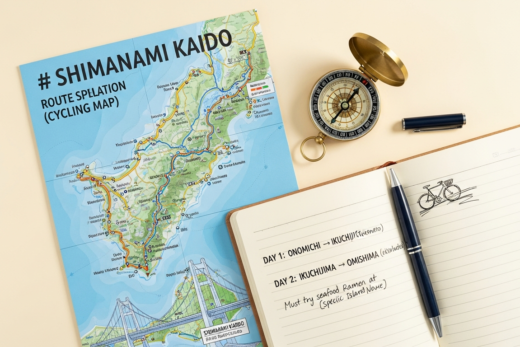
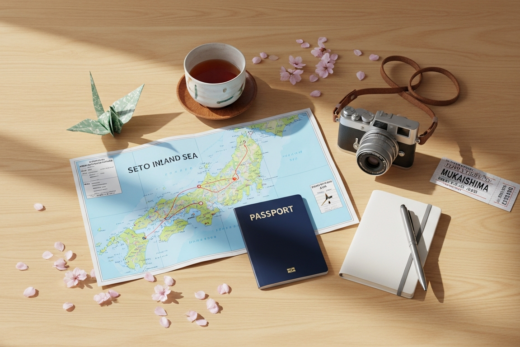
Onomichi is the northern terminus of the **Shimanami Kaido**, a world-renowned 70-kilometer cycling route that crosses six islands via a series of spectacular bridges. Even if you aren’t a serious cyclist, renting a bike for a few hours to ride across the first bridge to Mukaishima Island provides a unique perspective of the maritime traffic and the shimmering Seto Inland Sea.
—
4. Gastronomy of the Setouchi: From Ramen to Fruit Parfaits
Traveling through Okayama and Hiroshima Prefectures is a feast for the senses. Both Kurashiki and Onomichi have distinct culinary identities shaped by their geography.
Onomichi Ramen:
You cannot visit Onomichi without trying its namesake ramen. **Onomichi Ramen** is characterized by a soy-sauce-based fish broth enriched with chicken and pork, but its defining feature is the addition of large chunks of melted backfat. The noodles are usually flat and chewy. Popular spots like *Shuyuen* or *Tayasu* often have lines, but the savory, umami-rich soup is worth the wait.
The Fruit Kingdom of Kurashiki:
Okayama Prefecture is known as the “Fruit Kingdom” of Japan, famous for its white peaches and Muscat grapes. In the Bikan District, look for “Parlors” that serve elaborate fruit parfaits. These are not just desserts; they are architectural feats of seasonal fruit, cream, and gelatin that change depending on what is being harvested.
Setouchi Seafood:
Being coastal towns, both areas offer incredible seafood. Look for *Anago* (conger eel) in Onomichi, often served grilled over rice (*Anago-meshi*). In Kurashiki, try *Mamari-zushi*, a local style of sushi using small fish from the Seto Inland Sea that are said to be so delicious you’ll want to “borrow rice” from your neighbor to eat more of them.
—
5. A Perfect 2-Day Itinerary: Combining the Two
To fully appreciate both locations without rushing, a two-day itinerary is recommended.
Day 1: The Elegance of Kurashiki
Day 2: The Slopes of Onomichi
—
6. Practical Planning and Local Etiquette
To make the most of your trip, keep these practical details in mind:
—