


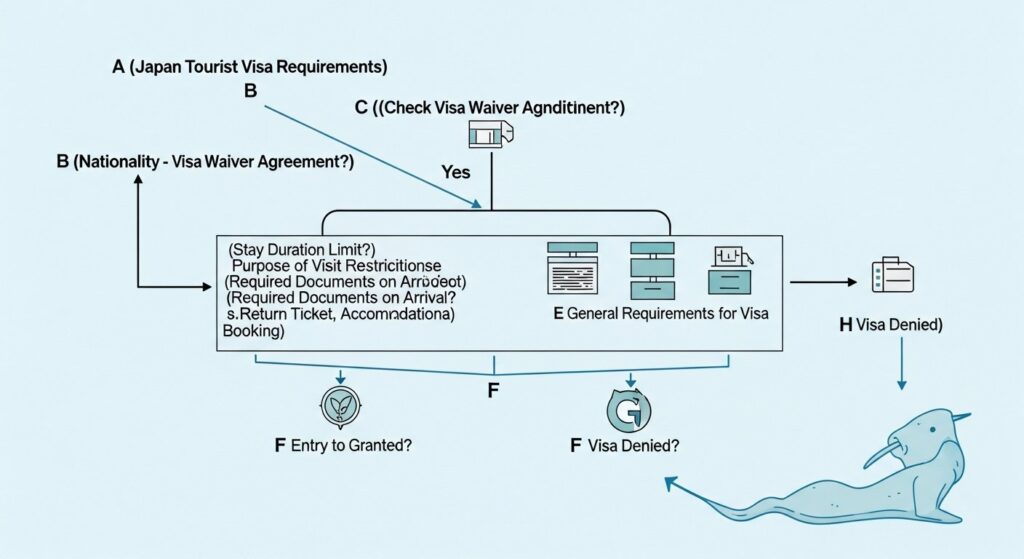
Japan Visa Requirements for Tourists: Check Eligibility
What are the General Visa-Exempt Entry Rules for Tourists?
Navigating the entry rules for Japan can seem complex, but for many international visitors, the process is surprisingly straightforward. The **Japan visa requirements for tourists** often begin with understanding the visa exemption program, which allows citizens from a substantial number of countries to enter Japan for short-term tourism without needing to apply for a formal visa in advance. This privilege is granted based on bilateral agreements and is primarily intended for activities such as sightseeing, visiting relatives, or attending unpaid business meetings.
The Japanese government stipulates a maximum duration for these visa-free stays, which varies by nationality but commonly extends up to 90 consecutive days. It is crucial for every traveler to confirm their specific country’s status before departure. These regulations are uniformly applied across all entry points in Japan, meaning your journey to the captivating Setouchi region, including the historic port town of Onomichi and the poignant city of Hiroshima, will adhere to these general guidelines.
Do I need a visa to visit Japan from the USA, UK, Canada, Australia, or the EU?
For citizens of many countries, including the United States, the United Kingdom, Canada, Australia, and most nations within the European Union (Schengen Area), a specific visa for tourism is generally not required for short stays. These nationalities are part of Japan’s extensive visa exemption program, which simplifies travel planning significantly. However, it is imperative to possess a valid passport, an onward or return ticket, and sufficient funds for your stay.
How long can I stay in Japan without a visa?
The duration permitted for visa-exempt stays varies depending on the traveler’s nationality. The most common period is 90 days, which applies to citizens of countries like the United States, Canada, Australia, New Zealand, the UK, and nearly all EU member states. Some countries, however, have shorter exemption periods, such as 15 days (e.g., Brunei, Indonesia – though Indonesia now often also gets 30 days) or 30 days. It’s essential to consult the official MOFA Japan website for the most accurate and up-to-date information pertaining to your country of citizenship. Overstaying your permitted duration, even by a single day, can lead to severe penalties, including fines, deportation, and a ban from future entry into Japan.
To help clarify, here’s a summary table for some common visa-exempt nationalities:
| Country/Region | Maximum Stay Duration | Key Requirement | Notes |
|---|---|---|---|
| United States | 90 days | Valid Passport, Return/Onward Ticket | No extensions typically granted for tourism. |
| Canada | 90 days | Valid Passport, Return/Onward Ticket | May be extended once for an additional 90 days under specific conditions. Check MOFA Japan for details. |
| United Kingdom | 90 days | Valid Passport, Return/Onward Ticket | Extension for up to 6 months possible for specific purposes. Check MOFA Japan for details. |
| Australia | 90 days | Valid Passport, Return/Onward Ticket | No extensions typically granted for tourism. |
| New Zealand | 90 days | Valid Passport, Return/Onward Ticket | No extensions typically granted for tourism. |
| EU Schengen Area Countries | 90 days | Valid Passport, Return/Onward Ticket | Cumulative 90 days within any 180-day period. |
| South Korea | 90 days | Valid Passport, Return/Onward Ticket | No extensions typically granted for tourism. |
| Singapore | 90 days | Valid Passport, Return/Onward Ticket | No extensions typically granted for tourism. |
What Documents are Required for Visa-Free Travel to Japan?
Even if you are from a visa-exempt country, successful entry into Japan as a tourist requires more than just your passport. Japanese immigration officials expect all visitors to possess specific documentation to confirm their travel intent and eligibility for short-term stay. Presenting these items readily can significantly smooth your arrival process and ensure a hassle-free start to your Japanese adventure.


The Japanese government’s clear regulations ensure that every visitor can legitimately enter and enjoy their trip. Here are the essential items you must have:
- **A Valid Passport:** Your passport is the most critical document. It must be valid for the entire duration of your intended stay in Japan. While there isn’t a strict “six-month rule” often found in other countries, it is widely recommended that your passport has at least six months of validity remaining beyond your planned departure date. This provides a buffer against unforeseen circumstances or travel delays. Ensure your passport has at least one blank page for immigration stamps.
- **Confirmed Return or Onward Ticket:** Immigration officials need assurance that you intend to leave Japan within your permitted stay. A confirmed flight ticket out of Japan, whether back to your home country or to another destination, serves as this proof. Digital tickets are generally acceptable, but having a printout can sometimes expedite the process.
- **Proof of Sufficient Funds:** While specific amounts are not always stated, you must be able to demonstrate that you have adequate financial resources to cover your expenses during your trip without engaging in unauthorized paid work. This could include bank statements, credit card statements, or even a reasonable amount of cash. The goal is to show you can support yourself throughout your visit.
- **Accommodation Details:** Having a clear itinerary with confirmed hotel bookings, guesthouse reservations, or an invitation letter from a host (if staying with friends/family) is highly recommended. This helps to validate your tourist intent and shows immigration officials that you have a planned stay within the country.
- **Completed Immigration Forms:** Upon arrival, you will be required to fill out an Arrival Card (Disembarkation Card for Foreigner) and a Declaration Form for Customs. These forms collect basic personal information, your address in Japan, and details about your baggage. They are typically provided on your flight or available at the immigration counter.
How Does the Japan Tourist Visa Application Process Work?
For citizens of countries not included in Japan’s visa exemption program, or for those planning stays that exceed the permitted visa-free duration, obtaining a Temporary Visitor Visa (often referred to as a tourist visa) is a mandatory step. This process requires careful preparation and adherence to specific guidelines set by the Ministry of Foreign Affairs of Japan. The application aims to confirm your genuine intent for tourism and your ability to comply with Japan’s immigration laws.
What is the validity period for a Japanese tourist visa?
A typical Temporary Visitor Visa for tourism is issued for a single entry and allows for a stay of up to 15, 30, or 90 days, depending on the applicant’s nationality and the specific embassy/consulate’s discretion. The visa itself usually has a validity period of three months from the date of issuance, meaning you must enter Japan within that three-month window. Once you enter, your permitted stay duration (e.g., 90 days) begins. Multiple-entry visas for tourists are rare but can be granted under specific circumstances for certain nationalities, often allowing for stays of up to 15 or 30 days per entry over a period of 1 to 5 years.
Where do I apply for a Japan tourist visa?
Applications for a Japan tourist visa must be submitted to the Japanese Embassy or Consulate General located in your country of citizenship or legal residence. It’s important to apply well in advance of your intended travel date, as processing times can vary. Some embassies may require appointments, while others operate on a walk-in basis. Always check the specific requirements and procedures of the Japanese diplomatic mission responsible for your region. Applications submitted by mail are generally not accepted, requiring an in-person visit or submission through an authorized travel agency.
The general steps involved in applying for a Japan tourist visa are as follows:
- **Identify Your Embassy/Consulate:** Determine which Japanese Embassy or Consulate General has jurisdiction over your residence.
- **Check Requirements:** Visit their official website to review the precise list of required documents, application forms, and any specific instructions. These can sometimes vary slightly by location.
- **Gather Documents:** Collect all necessary documents, ensuring they meet the specified criteria (e.g., photo size, passport validity).
- **Complete Application Form:** Fill out the official visa application form accurately and completely.
- **Submit Application:** Submit your application package to the embassy/consulate. This often requires an in-person visit, and you may be fingerprinted and photographed.
- **Pay Fees:** Pay the applicable visa application fee. Fees vary by nationality and visa type and are typically non-refundable.
- **Await Processing:** Processing times can range from a few business days to several weeks, depending on the embassy’s workload and the complexity of your case.
- **Collect Passport:** Once processed, you will be notified to collect your passport, hopefully with your new visa affixed inside.
What are the Key Documents for a Japan Tourist Visa Application?
Securing a Japan tourist visa demands a meticulous approach to documentation. The specific requirements can be quite detailed, and missing even a single item or providing incorrect information can lead to significant delays or even rejection of your application. The goal of the embassy or consulate is to verify your identity, your intent to visit purely for tourism, and your financial capability to support your trip without becoming a burden on the state.

It is imperative to check the website of the specific Japanese Embassy or Consulate where you intend to apply, as document requirements can have minor variations based on your country of residence. However, the following table outlines the universally essential documents for a Temporary Visitor Visa application:
| Document Name | Description/Purpose | Specific Requirements | Notes/Tips |
|---|---|---|---|
| Valid Passport | Proof of identity and nationality. | Original, valid for at least 6 months beyond intended stay, with at least two blank pages. | Photocopy of passport (bio-page) often required. |
| Visa Application Form | Official request for a visa. | Completed accurately, signed, and dated. | Downloadable from embassy website. Fill out digitally if possible for clarity. |
| Passport-sized Photos | Identification for the visa. | Recent (within 6 months), white background, 4.5 cm x 3.5 cm (or specified size), clear, no glasses/headwear (unless religious). | Attach one to the application form. |
| Confirmed Flight Itinerary | Proof of entry/exit and travel dates. | Round-trip tickets or onward tickets clearly showing travel dates to and from Japan. | Do not purchase non-refundable tickets until your visa is approved. |
| Proof of Financial Capability | Demonstrates ability to cover expenses. | Bank statements (last 3-6 months), tax return documents, or letter from employer stating salary. | Ensure account balance is sufficient for your stay. |
| Detailed Itinerary in Japan | Outline of your travel plans. | Daily schedule including hotels, activities, and transportation. | Be realistic and demonstrate tourist intent. |
| Accommodation Proof | Confirmation of where you will stay. | Hotel bookings, Airbnb reservations, or a Letter of Invitation from a host in Japan. | Must cover the entire duration of your stay. |
| Letter of Guarantee/Invitation (if applicable) | For those staying with residents or if a sponsor is involved. | Original letter, guarantor’s bank statements/tax certificates, Certificate of Residence (Juminhyo). | Specific format required; often for family visits, not typical tourism. |
What are the Entry Procedures and What to Expect at Japan Immigration?
Once your flight lands in Japan, whether you’re arriving at Tokyo Narita, Kansai International, or another port of entry, the final step in your journey to explore the Land of the Rising Sun involves clearing immigration and customs. Even with a valid visa or visa-exempt status, your entry is ultimately at the discretion of the immigration officer. Understanding the typical procedures and having all your documents readily accessible will ensure a smooth and swift process.
Upon arrival, you will typically follow these steps:
- **Arrival Card Completion:** If you haven’t already filled out the Disembarkation Card for Foreigner on your flight, you’ll find them available in the arrival hall. Complete this card accurately, including your intended address in Japan.
- **Immigration Counter:** Proceed to the immigration counter. Have your passport and completed arrival card ready. The officer will typically ask about the purpose of your visit, your length of stay, and possibly your accommodation details. Answer truthfully and concisely.
- **Fingerprints and Photo:** All foreign visitors entering Japan are required to have their fingerprints scanned and a facial photograph taken at the immigration counter. This biometric data collection is a standard procedure.
- **Passport Stamping:** If your entry is approved, the immigration officer will stamp your passport with your entry date and the permitted length of stay. For visa-exempt travelers, this stamp is crucial as it indicates your legal stay duration. For visa holders, the stamp confirms your entry and activates your visa period.
- **Customs Declaration:** After clearing immigration, you will collect your baggage and proceed to the customs area. You must fill out a Customs Declaration Form (also usually distributed on your flight or available at the hall) for all accompanied and unaccompanied baggage.
- **Customs Inspection:** Present your declaration form to a customs officer. Most travelers pass through quickly, but some may be selected for a random baggage inspection.
What are Common Reasons for Entry Issues in Japan?
While the process is generally efficient, issues can arise. Common reasons for difficulties at Japanese immigration include:
- **Incomplete or Inaccurate Information:** Any discrepancies between your arrival card, visa application (if applicable), and your verbal answers can raise red flags.
- **Lack of Required Documents:** Not having a confirmed return ticket, sufficient funds, or accommodation details can lead to further questioning or denial of entry.
- **Suspicion of Overstaying/Illegal Work:** If immigration officials suspect you intend to overstay your visa or engage in unauthorized paid work, entry may be denied.
- **Criminal Record:** Individuals with certain criminal records may be denied entry, even if they have a valid visa.
- **Previous Visa Violations:** A history of overstaying visas or other immigration violations in Japan or other countries can lead to entry refusal.
What Common Mistakes Should Tourists Avoid When Planning Japan Entry?
Careful planning is paramount when preparing for international travel, especially when it involves navigating another country’s immigration policies. When it comes to Japan’s entry regulations, several common pitfalls can turn an exciting trip into a stressful ordeal. Being aware of these errors can help you ensure a smooth journey.
- **Underestimating Passport Validity:** One of the most frequent mistakes is not checking the validity of your passport carefully. While Japan typically only requires your passport to be valid for the duration of your intended stay, many airlines and connecting countries have a “six-month rule.” This means your passport should be valid for at least six months beyond your departure date from Japan. Not meeting this requirement can result in being denied boarding even before you reach Japan.
- **Not Having a Confirmed Onward/Return Ticket:** Even for visa-exempt travelers, proof of onward travel is a strict requirement. Some tourists attempt to enter Japan with a one-way ticket, intending to book their return later. This immediately flags you at immigration as a potential overstayer and can lead to refusal of entry. Always have a confirmed ticket showing your departure from Japan within your permitted stay.
- **Lack of Sufficient Funds Proof:** While you might have enough money for your trip, proving it to immigration can sometimes be overlooked. Not having readily accessible proof of funds, such as bank statements, credit card limits, or a reasonable amount of cash, can raise questions about your ability to support yourself.
- **Assuming All Countries are Visa-Exempt:** Never assume your nationality is automatically part of the visa exemption program. Visa policies can change, and what applies to your friend from a different country might not apply to you. Always verify your specific country’s requirements through official channels well in advance.
- **Incorrect Visa Type for Intent:** If you are required to apply for a visa, ensure you are applying for the correct category. For instance, attempting to enter on a tourist visa when your primary purpose is to engage in paid business activities or long-term study will lead to rejection. Be honest and accurate about your travel intent.
- **Overlooking Customs Regulations:** Japan has strict rules regarding what can be brought into the country, including certain medications, food items, and even certain electronic devices. Failing to declare restricted items or attempting to bring prohibited goods can lead to fines, confiscation, and even legal action. Always check customs regulations before packing.
How Do Japan Visa Requirements Apply to Planning a Trip to Onomichi & Hiroshima?
When planning your visit to the picturesque Setouchi region, with its captivating blend of history, culture, and stunning landscapes—from Onomichi’s scenic temples to Hiroshima’s profound Peace Memorial Park—it’s important to remember that the general **Japan visa requirements for tourists** apply uniformly across the entire country. There are no special visa categories or different entry rules specifically for visitors destined for these beautiful prefectures.
Your entry into Japan, whether visa-free or with a specific Temporary Visitor Visa, will be processed at your initial port of entry, typically a major international airport like Narita (Tokyo), Haneda (Tokyo), Kansai (Osaka), or Fukuoka. Once you have successfully cleared immigration and customs, your status as a tourist is valid for travel anywhere within Japan. This means that after your arrival, your visa or visa-exempt status allows you to freely explore the Shimanami Kaido cycling route from Onomichi, delve into Hiroshima’s moving history, or savor the local delicacies of the Setouchi Inland Sea without any further immigration checks.
The focus for your Onomichi and Hiroshima journey, therefore, shifts from immigration hurdles to enriching your experience with local insights and practical travel tips. We at OnomichiGuide.com are dedicated to helping you discover the best of this region. While your visa status remains consistent from your initial entry, specific regional travel planning becomes paramount. This includes understanding local transportation (such as the Japan Rail Pass for inter-city travel to Hiroshima or local train lines to Onomichi), booking accommodations, and planning your activities.
What are Important Updates and Resources for Japan Travel?
Staying informed about the latest travel advisories and official requirements is paramount for a smooth journey to Japan. Government policies, especially those pertaining to international travel, can evolve. Therefore, always consult the most current information directly from authoritative sources.
What are the latest COVID-19 related entry rules for Japan?
As of 2026, Japan has significantly eased its COVID-19 related entry restrictions, largely returning to pre-pandemic immigration procedures. The requirement for proof of vaccination or a negative COVID-19 test result prior to entry has generally been lifted for most travelers. However, it is always prudent to check the very latest announcements from the Ministry of Foreign Affairs of Japan or the Ministry of Health, Labour and Welfare, as global health situations can change. Travelers experiencing symptoms upon arrival may still be subject to health screening or specific recommendations. For the most up-to-date information, regularly visit the official government websites listed below.
For official and reliable information on Japan entry requirements, we strongly recommend the following resources:
- **Ministry of Foreign Affairs of Japan (MOFA Japan):** This is the primary official source for all visa and entry regulations. Their website provides detailed information specific to each country, application forms, and embassy/consulate contacts.
- **Japan Immigration Services Agency:** Provides information on immigration procedures, customs, and forms required upon arrival.
- **Japanese Embassy or Consulate in Your Home Country:** The specific diplomatic mission in your country will have the most precise and localized requirements for visa applications, processing times, and fees.
Regularly consulting these resources will ensure you have the most accurate information for your travel preparations.
Sources & References
- Ministry of Foreign Affairs of Japan. (2026). *Guide to Japanese Visas*. Retrieved from https://www.mofa.go.jp/j_info/visit/visa/index.html
- Immigration Services Agency of Japan. (2026). *Procedures for Landing and Residence*. Retrieved from https://www.isa.go.jp/en/applications/procedures/index.html
- Embassy of Japan in the United States. (2026). *Visa Application Procedures*. Retrieved from https://www.us.emb-japan.go.jp/itpr_en/travel_and_visa.html
Understanding the **Japan visa requirements for tourists** is the first step towards an unforgettable journey to this incredible nation. By ensuring you meet all passport, visa (if applicable), and documentation criteria, you can look forward to exploring Japan’s unique blend of ancient traditions and futuristic innovations with complete peace of mind.
Whether your dream involves cycling the Shimanami Kaido, reflecting on history in Hiroshima, or simply soaking in the serene beauty of Onomichi, meticulous preparation of your travel documents will pave the way for a truly enriching experience. Start your planning early, consult official sources, and prepare for an adventure of a lifetime!
Quick FAQ on Japan Tourist Visas
- **Do I need a visa for Japan if I’m from the USA/UK/EU?** Generally, no, citizens from these regions are part of Japan’s visa exemption program for short-term tourism (typically up to 90 days).
- **How long can I stay in Japan without a visa?** Most visa-exempt nationalities can stay for up to 90 days. Some countries have shorter periods (e.g., 15 or 30 days). Always check the official MOFA Japan website for your specific nationality.
- **What documents are essential for visa-free entry?** You’ll need a valid passport, a confirmed return or onward ticket, proof of sufficient funds, and accommodation details.
- **Where do I apply for a Japan tourist visa if I need one?** You must apply at the Japanese Embassy or Consulate General in your country of citizenship or legal residence.
- **What are common reasons for entry denial?** Incomplete documents, suspicion of overstaying or illegal work, a criminal record, or previous visa violations are common reasons.
For more detailed planning advice and regional guides, explore our main section on Japan Travel Planning Guide.
About the Author
Sarah Jenkins, Regional Travel Specialist, Chugoku Region — Sarah has spent years exploring the hidden gems and poignant history of the Onomichi & Hiroshima region, sharing her discoveries with an emphasis on authentic local experiences. As a Certified Japan Travel Specialist (JTS) with Advanced Japanese Language Proficiency (JLPT N2) and a professional travel photographer, her insights into Japanese culture and travel logistics are invaluable for visitors planning their adventure.
Reviewed by Kenji Nakamura, Local Tourism Consultant, Hiroshima Prefecture — Last reviewed: March 30, 2026 (Please note: Travel regulations are subject to change. Always verify the latest information with official government sources.)
Reviewed by Kenji Nakamura, Local Tourism Consultant, Hiroshima Prefecture — Last reviewed: March 30, 2026